Prague
The city of a hundred spires is technically abroad, but for a Slovak not quite. I have been going every year since 2009 — for WebExpo, for friends and for the little cakes in a Cubist house. A year without Prague would not be a year.
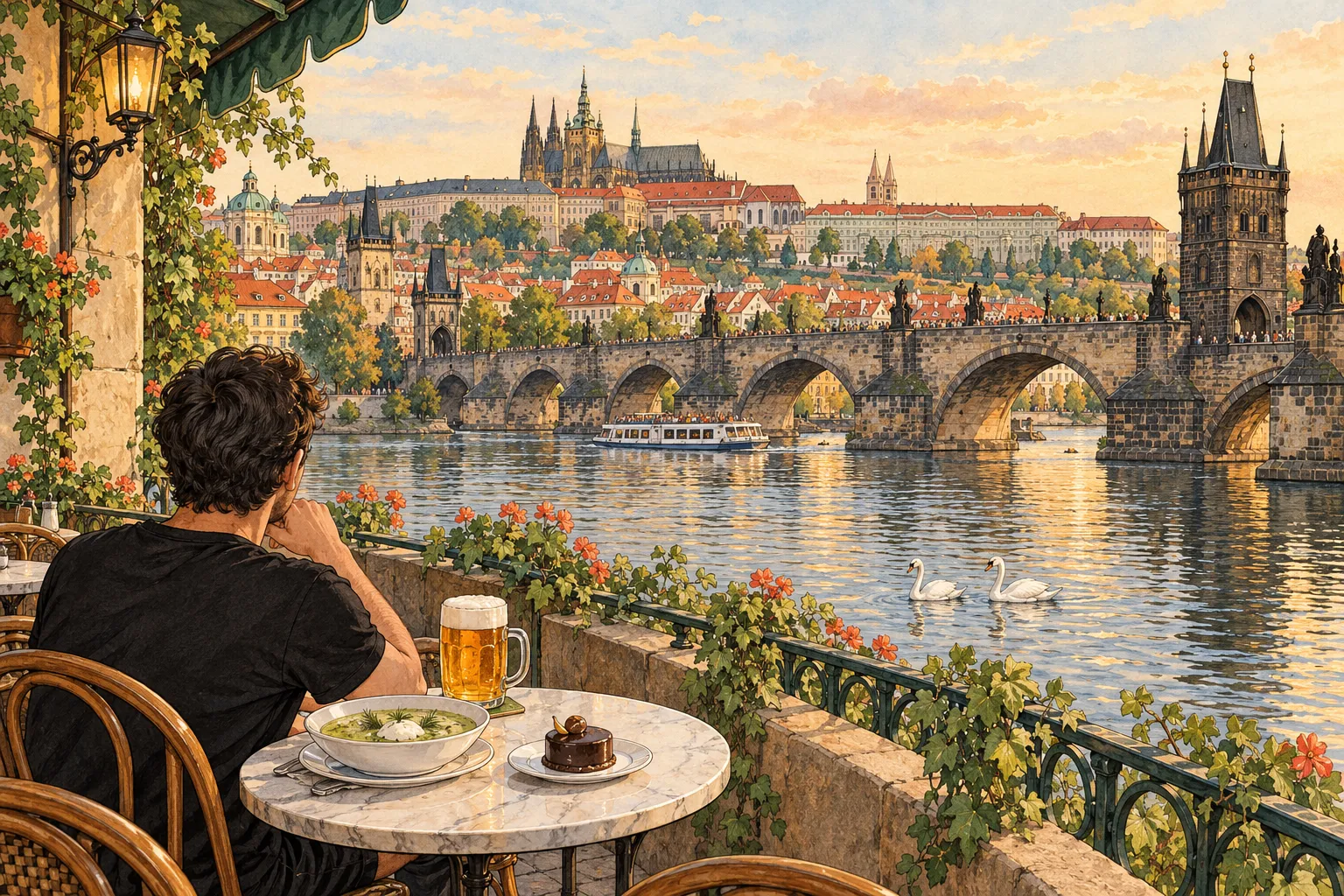
Mother Prague, the city of a hundred spires. Technically it is abroad, but for us Slovaks not quite. I understand everyone and they understand me, although the younger generation no longer follows Slovak quite as well as their parents do. That is not just my impression. According to a 2009 CVVM study, only 41% of Czechs aged 15 to 19 had an active command of Slovak, compared with more than 74% of those aged 45 to 59. A lot of my friends and acquaintances live here, and they are in good company — at the end of 2024 more than 120,000 Slovaks were registered residents of Czechia, around 31,000 of them in Prague alone. I keep coming back. A year without Prague would not be a year.
Somebody did count those spires, by the way. The mathematician Bernard Bolzano got to 103 in the 19th century, leaving out water towers and private houses. Today nobody can count them precisely and the estimates run into the thousands. The hundred survives only in the nickname.
How many times, and why
I have been in Prague every year since 2009, almost thirty times in total. Mostly for work — WebExpo, HCPP back in the day, the odd other conference — and I always make some time of my own while I am there. This entry sums up all of those trips and it will keep growing.
The means of transport is not up for debate. The RegioJet train, business class, with prosecco. It has run directly from Žilina to Prague since December 2011 and the journey takes a little over five hours. Business class is a quiet four-seat compartment. The attendant comes to your seat, drinks are included and there is a glass of bubbles to welcome you aboard. Five hours pass quickly that way. When the train is on time. Sometimes it is seriously late.
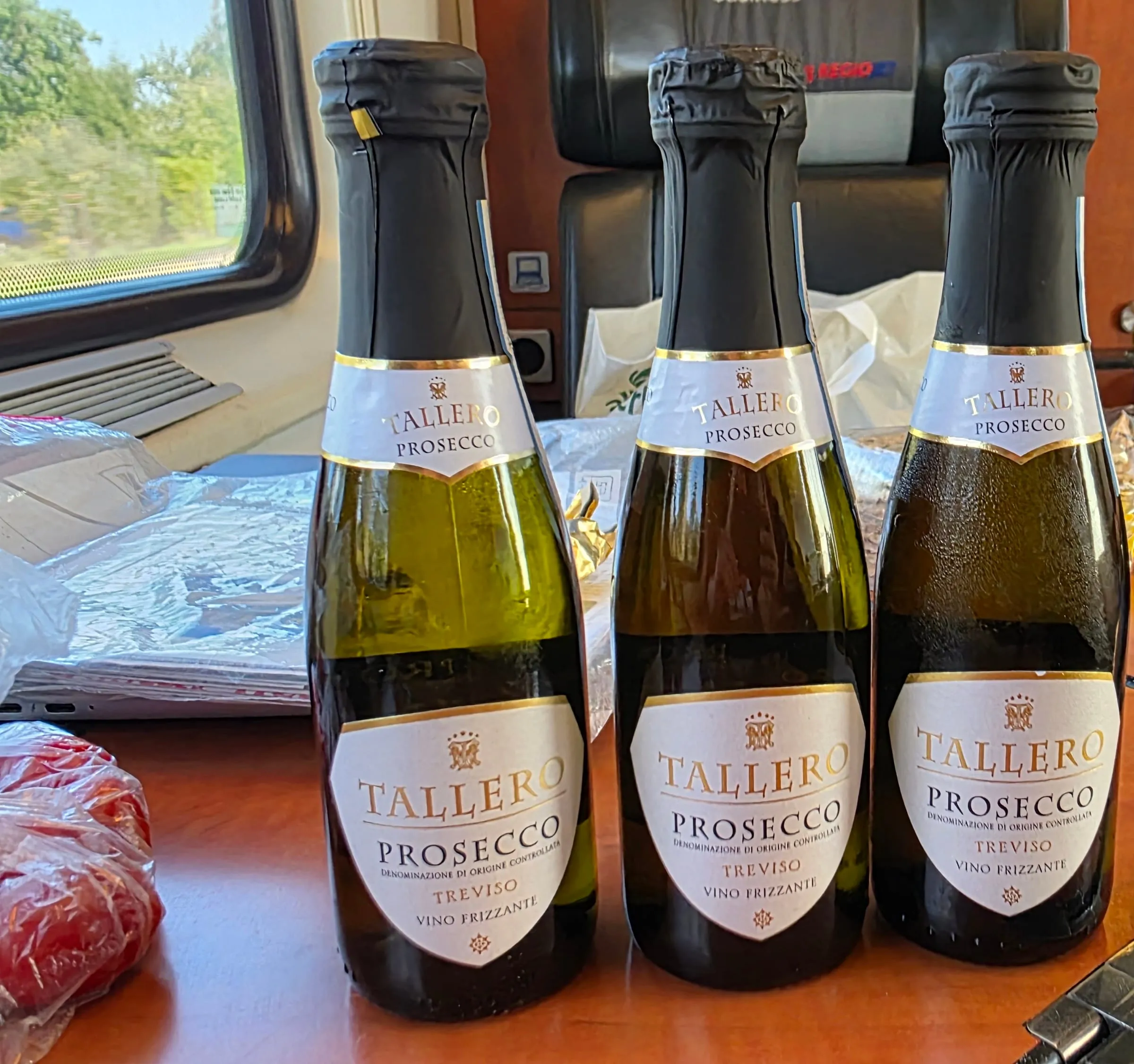
Business class, September 2025. Prosecco to welcome you aboard and five hours of peace.
Work footprint
WebExpo is a must. The conference for web people was born in October 2008 on the campus of the Czech University of Life Sciences, has been at home in the Lucerna Palace since 2015 and these days draws around 1,600 attendees and more than seventy speakers — web, UX, marketing, business, AI. I have been to it fifteen times, the first in 2009. More on Lucerna below.
HCPP too. The Hackers Congress Paralelní Polis ran in Holešovice from 2014, traditionally on the first weekend of October. I went from 2019 onwards and for the last time in October 2024. Right after that the Ztohoven collective announced that Paralelní Polis was closing after ten years, and with it, at least for me, the era of hacker conferences came to an end. My friends grew up and the young ones somehow never caught the bug. Prague used to be a blast.
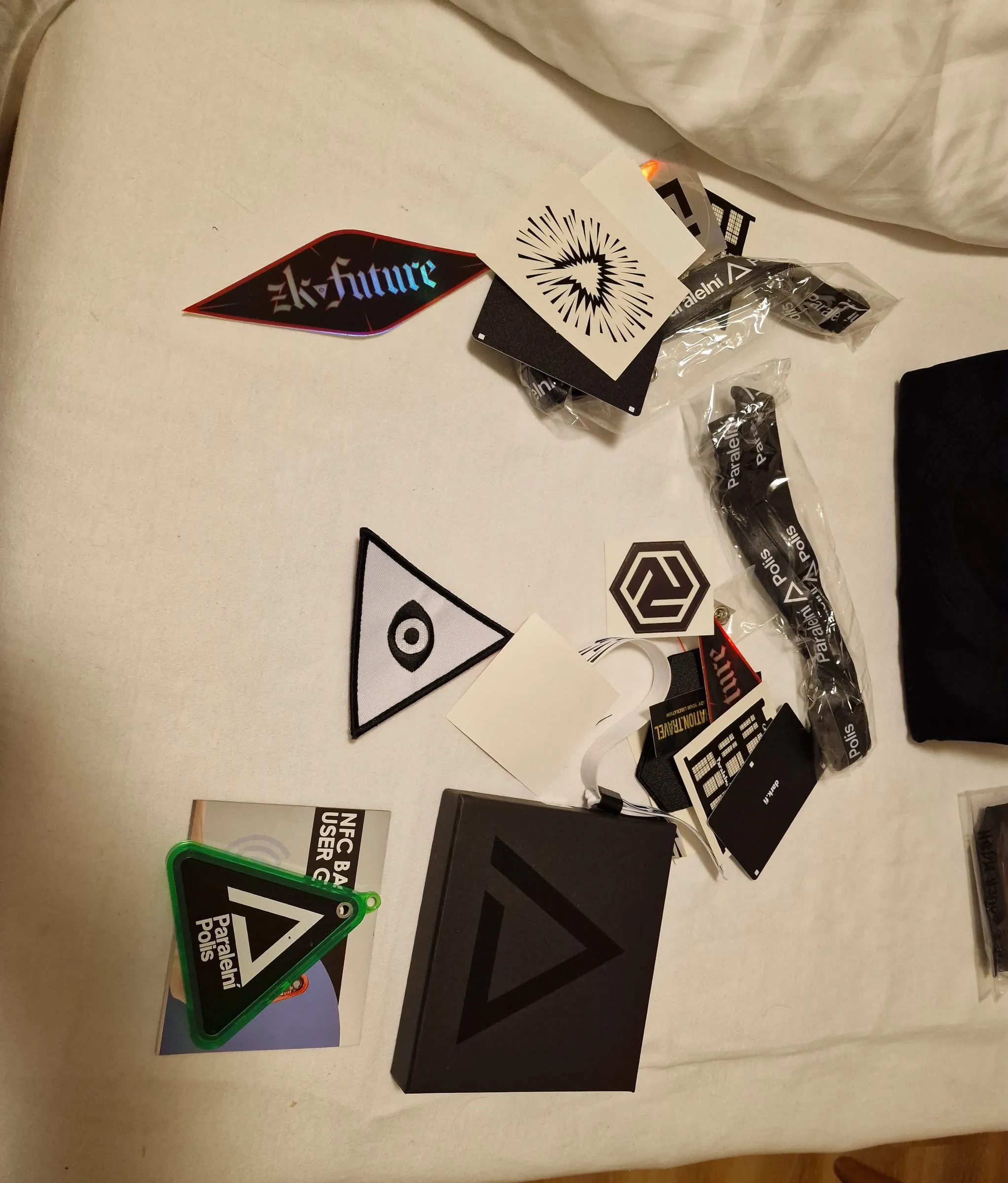
HCPP kit, October 2022. Lanyard, badge, stickers and a T-shirt.
And the rest, all of them in person. TEDx Prague in 2010 and 2014, Marketing Festival in 2017 and 2019, New Media Inspiration 2018, MoneyExpo 2019, Demo Day and the XTB investment conference in November 2022, the Alternativní metody výuky conference in 2011, where I gave a talk on e-learning, Teaching, Learning and Education 2025 and, most recently, ShopCamp 2026 — a conference for e-shop owners at the Faculty of Architecture of the Czech Technical University in Dejvice, in September 2026.
My top 10
The order is mine and subjective. As always.
- WebExpo in Lucerna
- The views behind Strahov Monastery — and a quick look into the souvenir shop and the library.
- Cakes in the House of the Black Madonna
- Prague Castle — occupational hazard. The post office at the Castle is always on my list. And a glass of wine below the Castle.
- Wandering the Old Town
- Poker on Wenceslas Square — once upon a time. Gone now.
- Charles Bridge
- Náplavka — and the nutrias, or whatever those creatures on the island are.
- Prague Zoo — free-roaming lemurs.
- Parks — Letná, Grébovka, Strahov and Petřín.
New Town
Lucerna Palace
Lucerna stands between Wenceslas Square and Vodičkova street. The reinforced concrete skeleton went up between 1907 and 1921 and the builder was Vácslav Havel, grandfather of President Václav Havel. The Great Hall spans three underground levels, measures 54 by 25 metres and holds 2,500 people standing. Since 1999 David Černý’s Horse has hung in the passage — Saint Wenceslas sitting on the belly of a dead horse suspended upside down, a few hundred metres from Myslbek’s equestrian statue at the top of the square.
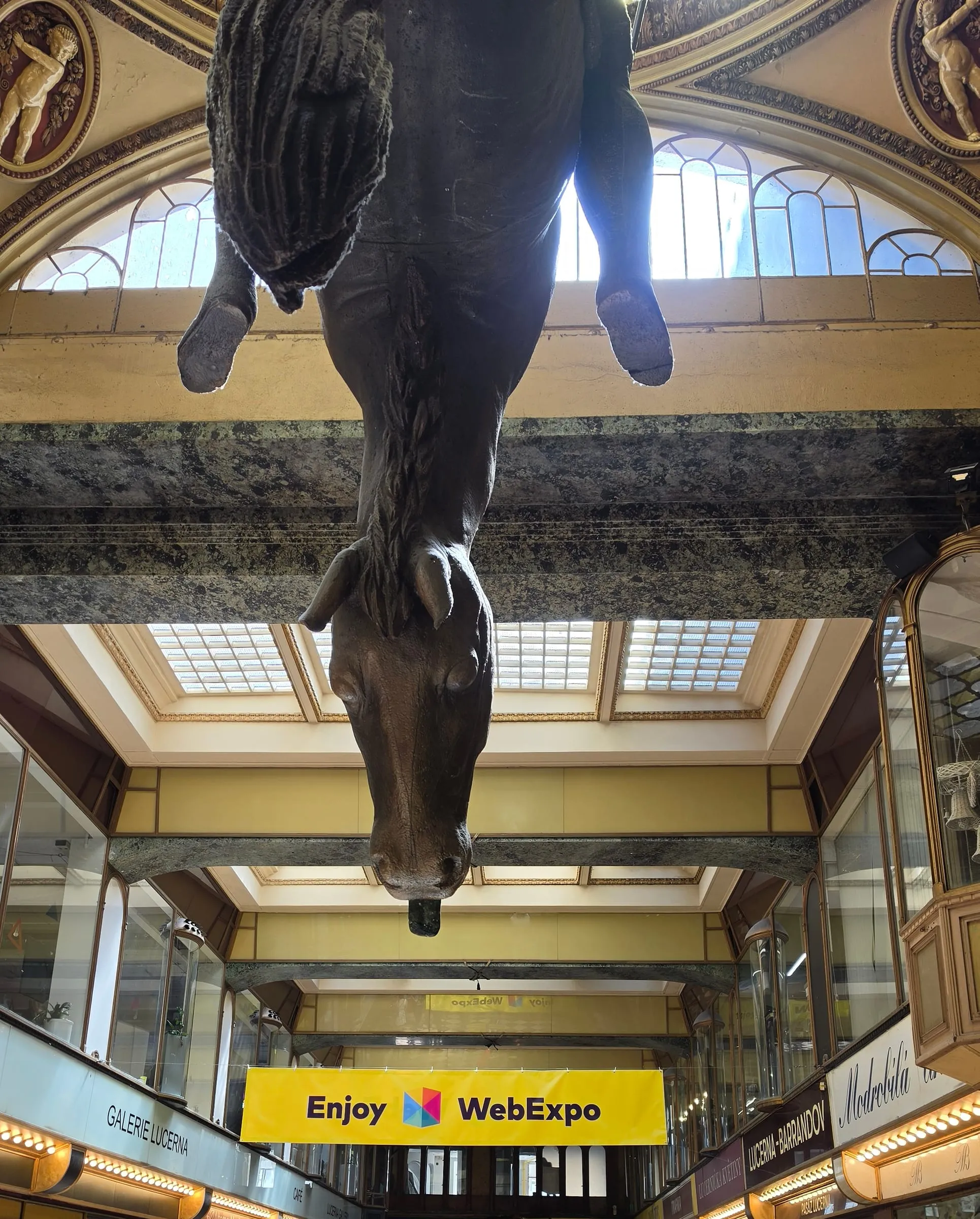
David Černý’s Horse, May 2026. The horse the wrong way up, Wenceslas in the saddle and WebExpo underneath.
I have come here for WebExpo ever since it moved to Lucerna in 2015. Before that I followed it to other venues, fifteen editions in all. And after every one I leave with a T-shirt, often with several. Shirts from earlier editions can be won at the conference by throwing a dart at a wheel. Conference T-shirts make up a decent share of my wardrobe.
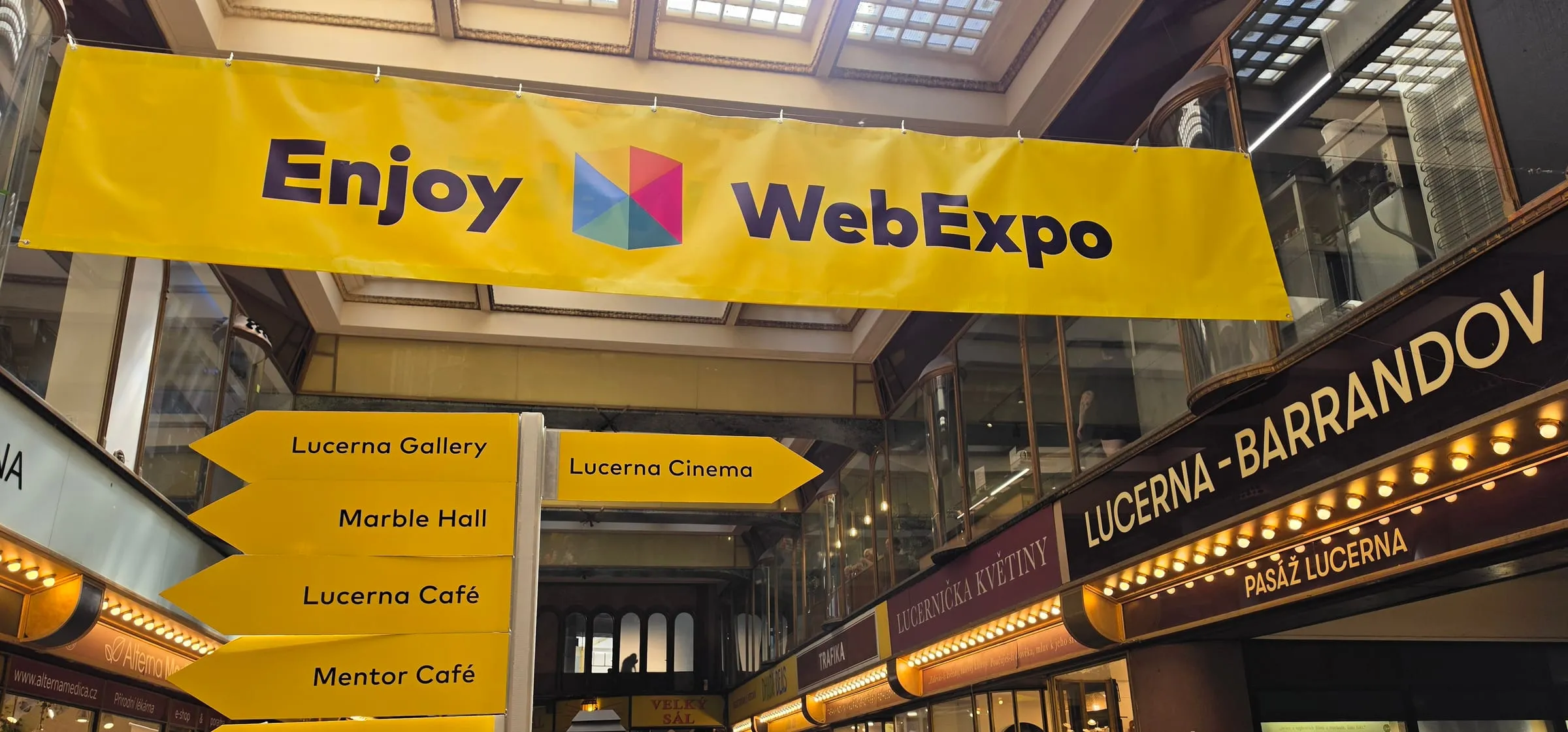
The Lucerna passage in May 2026. Signposts for sixteen hundred people.
Wenceslas Square
The statue of Saint Wenceslas, the National Museum and 750 metres of boulevard that is a square in name only. For me it holds two items, both of them history. The first was poker. I used to play at a casino on Wenceslas Square and one session lasted seven hours. A friend left twelve thousand crowns richer. I will keep my own result to myself. The casino is gone now, so number six in my top 10 is pure nostalgia.
The second is the Wenceslas sausage. Sausage stands belonged to the square for decades, but the city gradually pushed them out — it terminated the contracts at the end of 2012 and the last stands disappeared in April 2020 when the reconstruction of the lower part of the square began. You will not buy a Wenceslas sausage from a stand on the square today. A little further on is the Světozor passage with its canteen and its ice cream, both of which appear under Food. And when you need quiet, the Franciscan Garden across the street from Lucerna, through the Světozor passage, is a few steps from the crowd and a world away.
Old Town and Josefov
Wandering the Old Town is number five and needs no plan. I know the Astronomical Clock by heart. Now and then I walk past it, but I no longer make a special trip to see it. For the record — the first document mentioning it dates from 1410. The clockmaker Mikuláš of Kadaň built the mechanism, probably to a design by the astronomer Jan Šindel, and it is the oldest astronomical clock in the world still working. The apostles appear on the hour from nine in the morning until eleven at night and the whole show lasts under a minute. The crowd stands there anyway.
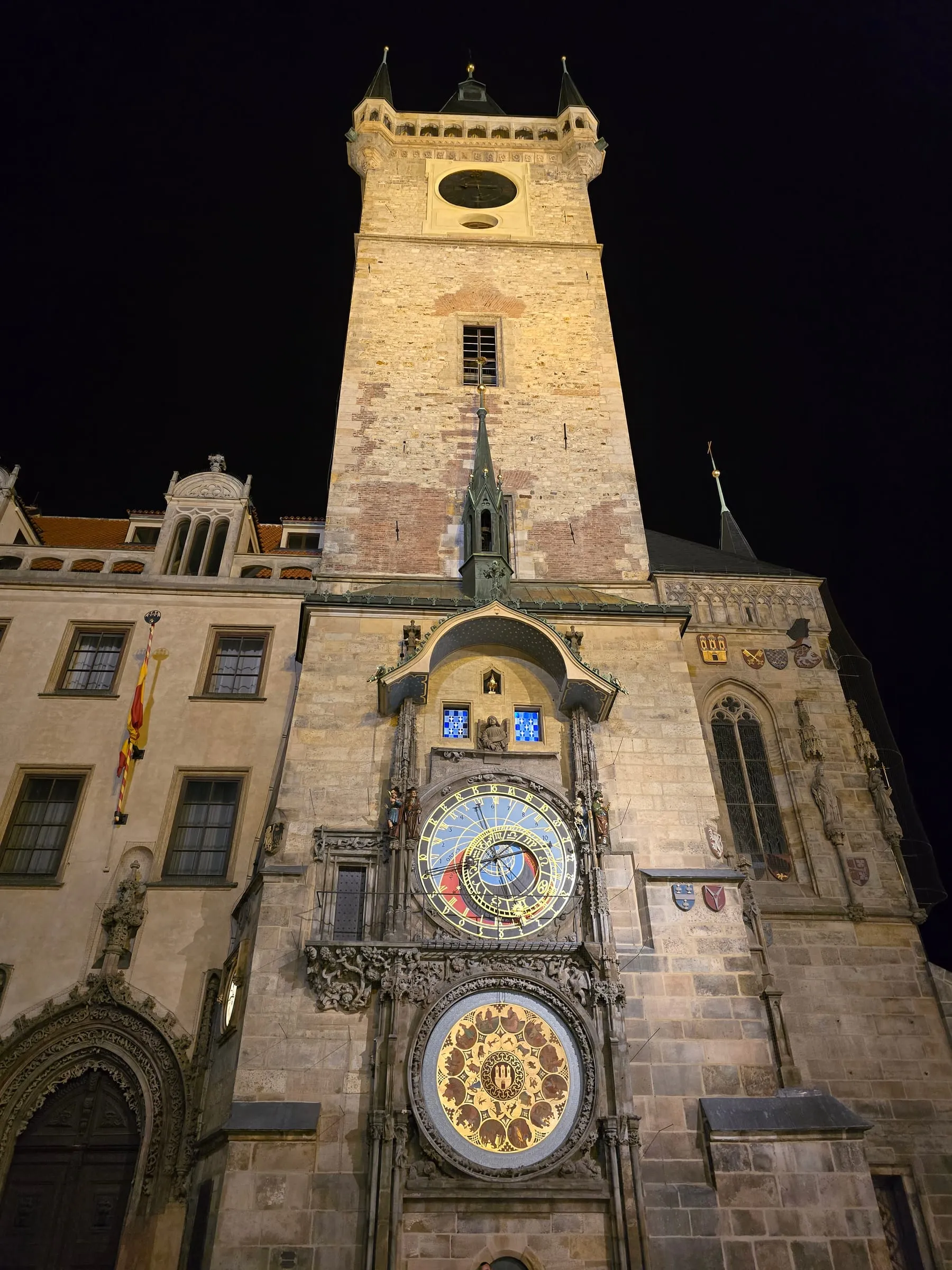
The Astronomical Clock at a quarter to midnight, May 2024. The only hour without a crowd.
Where there is a crowd, there are tourist traps. Before a walk I recommend the YouTube channel Honest Guide, where Janek Rubeš and Honza Mikulka expose scams aimed at tourists and suggest where to go instead. Since 2020 the same videos have also come out in Czech as Kluci z Prahy.
Josefov is the former Jewish Town right behind the Old Town Square. That is where I stayed last time, and a few steps away on Kozí street is Masna, a butcher’s with a bistro, where the walnut salami is excellent.
House of the Black Madonna
The Cubist house on the corner of Celetná and Ovocný trh was designed by Josef Gočár and built in 1911 and 1912. It takes its name from the Baroque statuette of the Black Madonna on the corner, where a replica has stood since 2000. On the first floor is the Grand Café Orient, a Cubist café opened in 1912 and reopened in 2005 after decades of closure, and above it the permanent exhibition of Czech Cubism run by the Museum of Decorative Arts. I, however, head for the ground floor and the Černá Madona café, for the cakes. They are beautiful, and that is the precise description. On my last trip in September 2026 I was there three times in four days. It is open daily from eight in the morning until midnight.
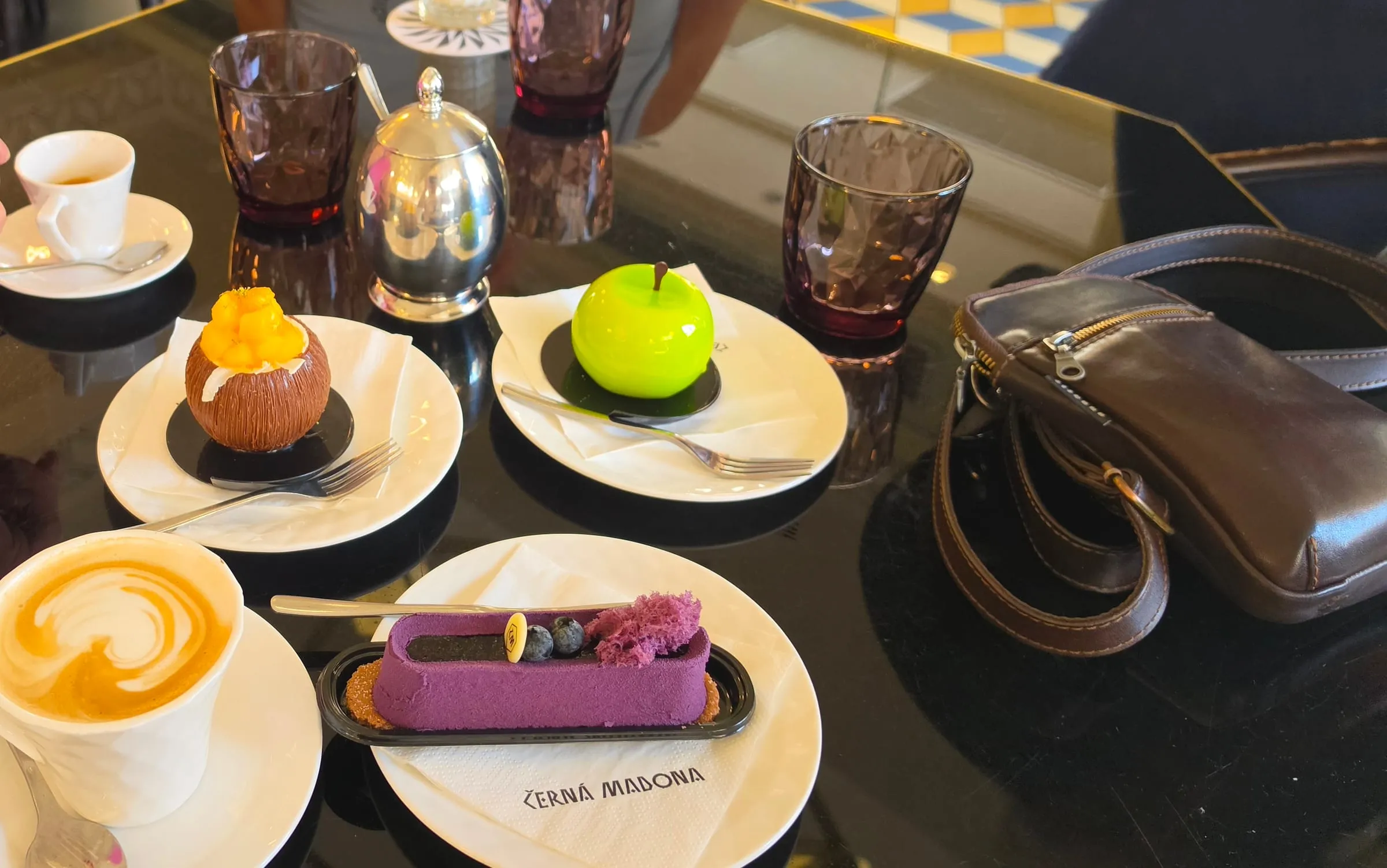
Cakes at Černá Madona, September 2026. Coconut, apple and blueberry, none of them the real thing.
Charles Bridge
Charles IV laid the foundation stone in 1357. Legend adds the exact time as well, 9 July 1357 at 5:31, because 1-3-5-7-9-7-5-3-1 is a palindrome. It is a nice hypothesis by one astronomer from the 1970s. The chroniclers give only the year. The construction is attributed to Peter Parler and it was finished in 1402. The bridge is 516 metres long, has sixteen arches and thirty mostly Baroque statues. Most of the originals are now in the Lapidarium of the National Museum. I cross it on almost every trip, preferably at night when the crowd has gone home.
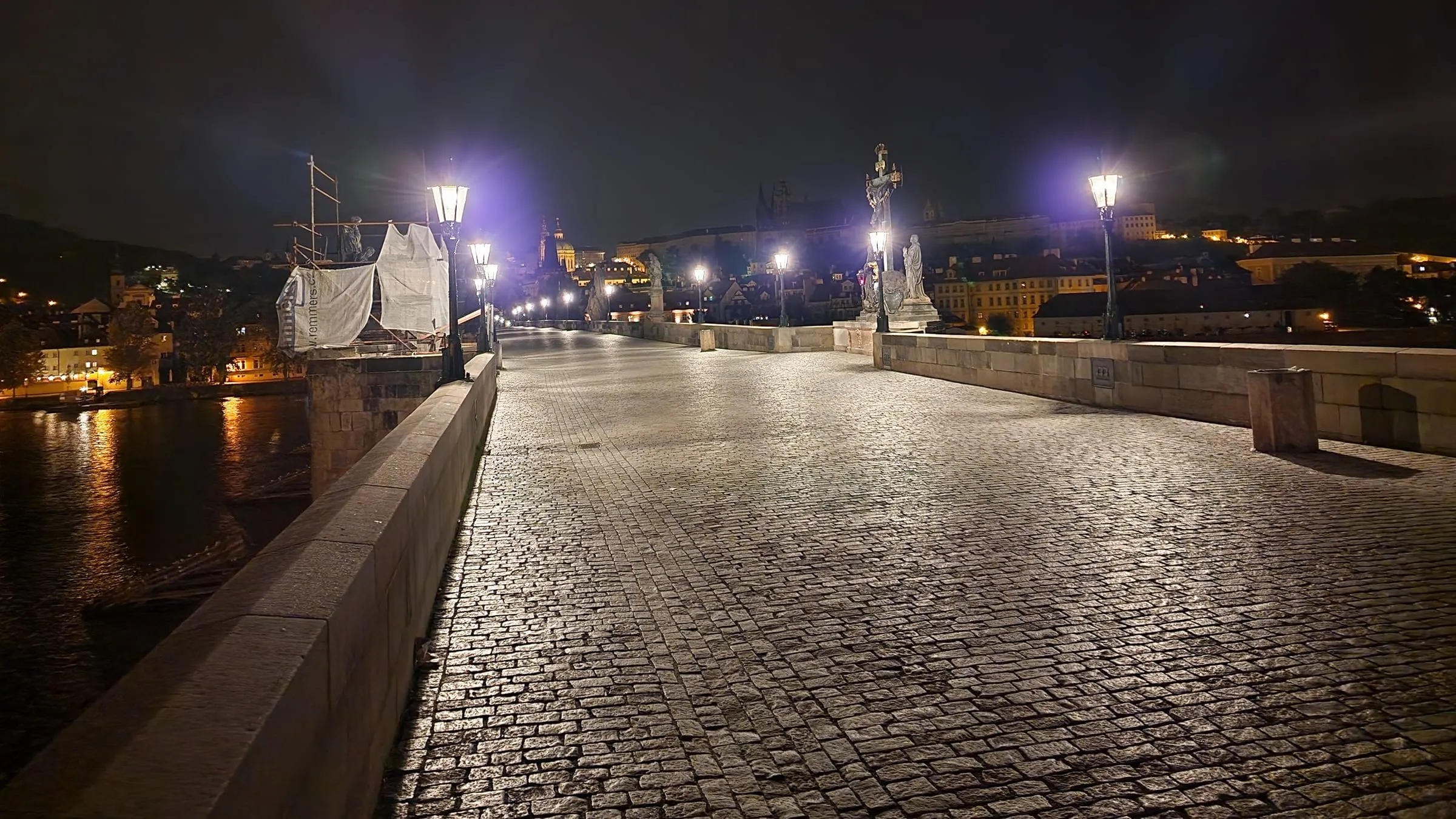
Charles Bridge after midnight, September 2022. This is what it looks like with nobody on it.
Hradčany and Strahov
Prague Castle
According to the Guinness Book of Records the Castle is the largest ancient castle in the world — roughly 570 metres long, 128 metres wide on average, more than seven hectares. Prince Bořivoj founded it at the end of the 9th century and it has been the seat of the president since 1918. The Matthias Gate between the first and second courtyards has carried an inscription with the name of Emperor Matthias since 1614.
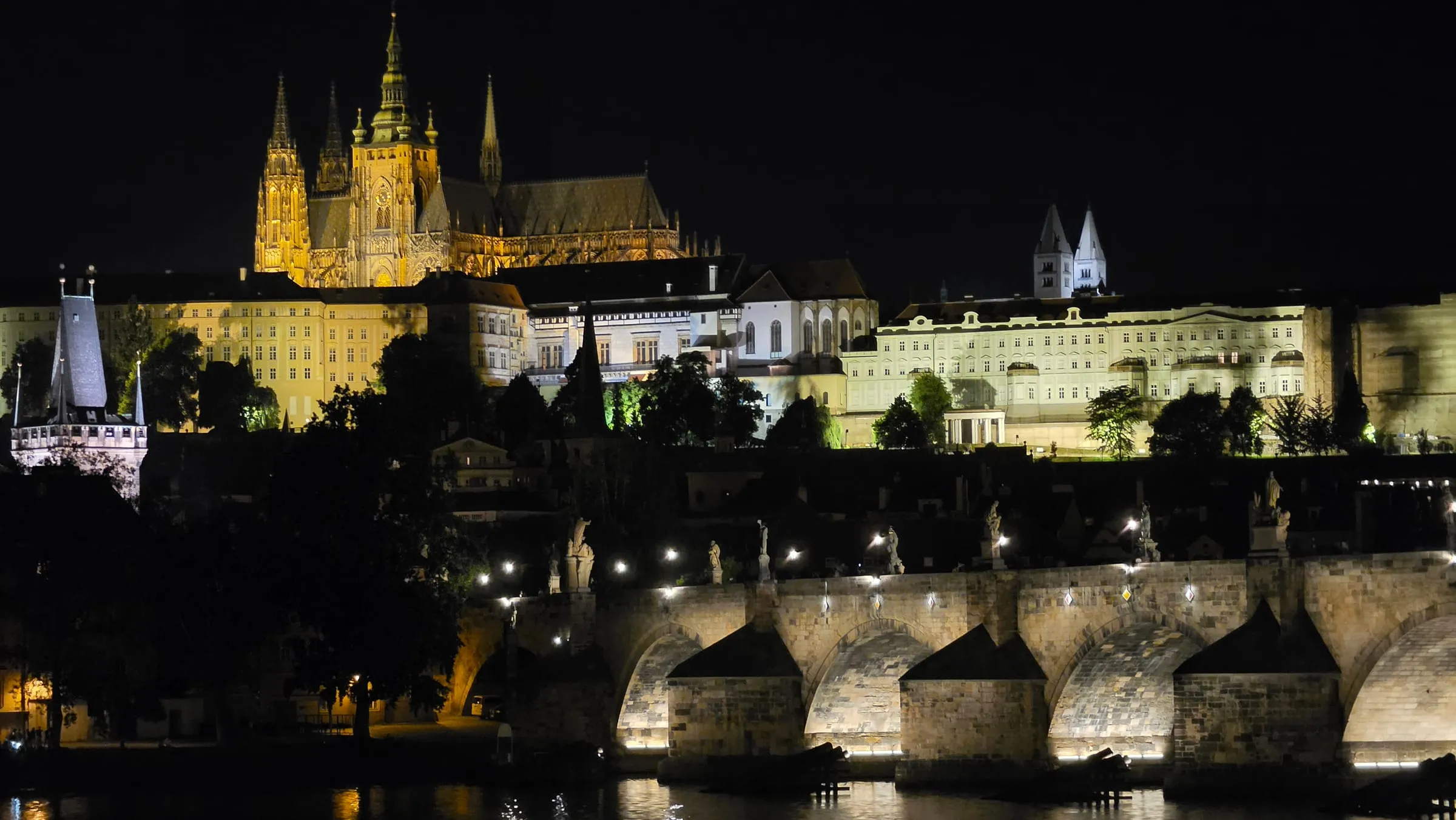
The Castle and Charles Bridge at night, May 2026.
Call it an occupational hazard. I teach at the Department of Communications, so the post office at the Castle is always on my list. Post office Praha 012 sits in the third courtyard, a few steps from the cathedral, and the “Praha 012 – Hrad” postmark is a souvenir that fits in a wallet.
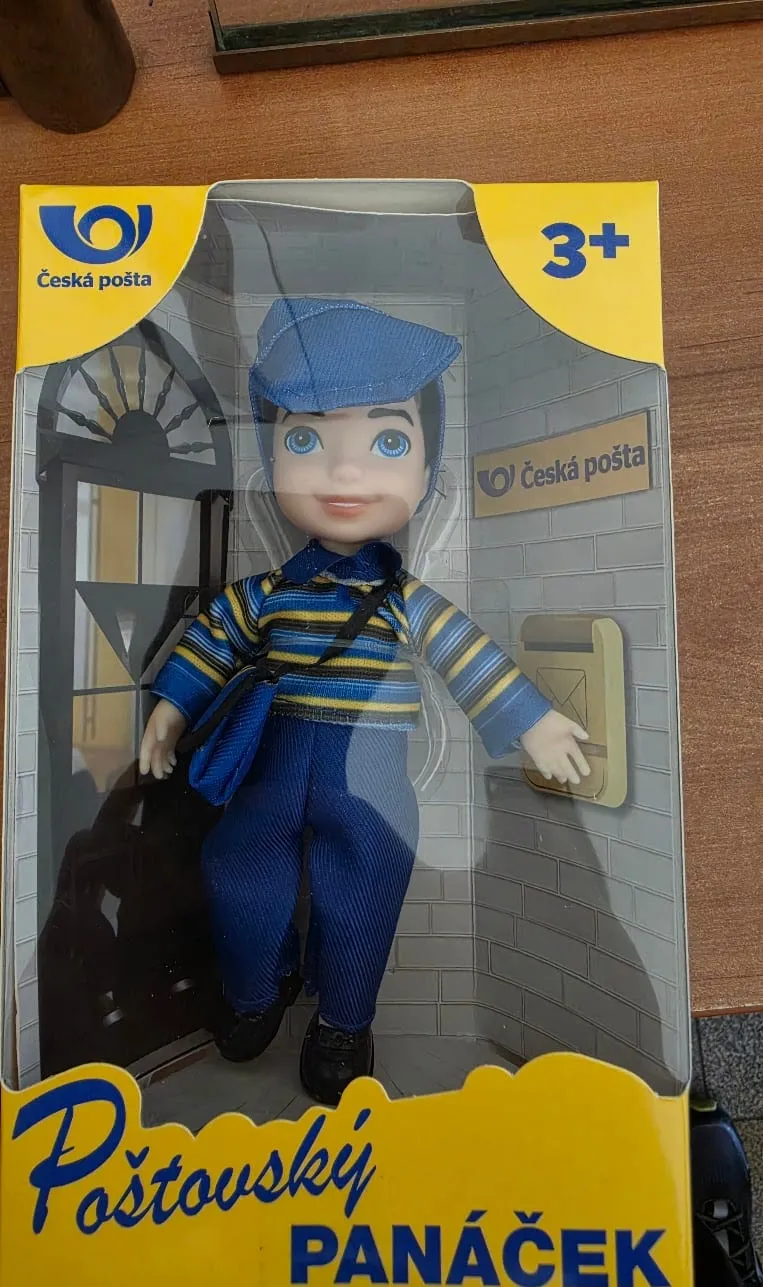
The catch from the Castle post office, September 2026. An occupational hazard, boxed.
And a glass of wine below the Castle. The St. Wenceslas Vineyard on the southern slope below the Castle is, according to legend, the oldest vineyard in Bohemia — Saint Wenceslas himself is said to have founded it. It is documented from the time of Charles IV. In 2008 it was restored together with the Richter Villa. The vineyard covers 0.23 hectares and yields around 1,200 bottles a year. A glass with a view of the Lesser Town beats a fridge magnet.
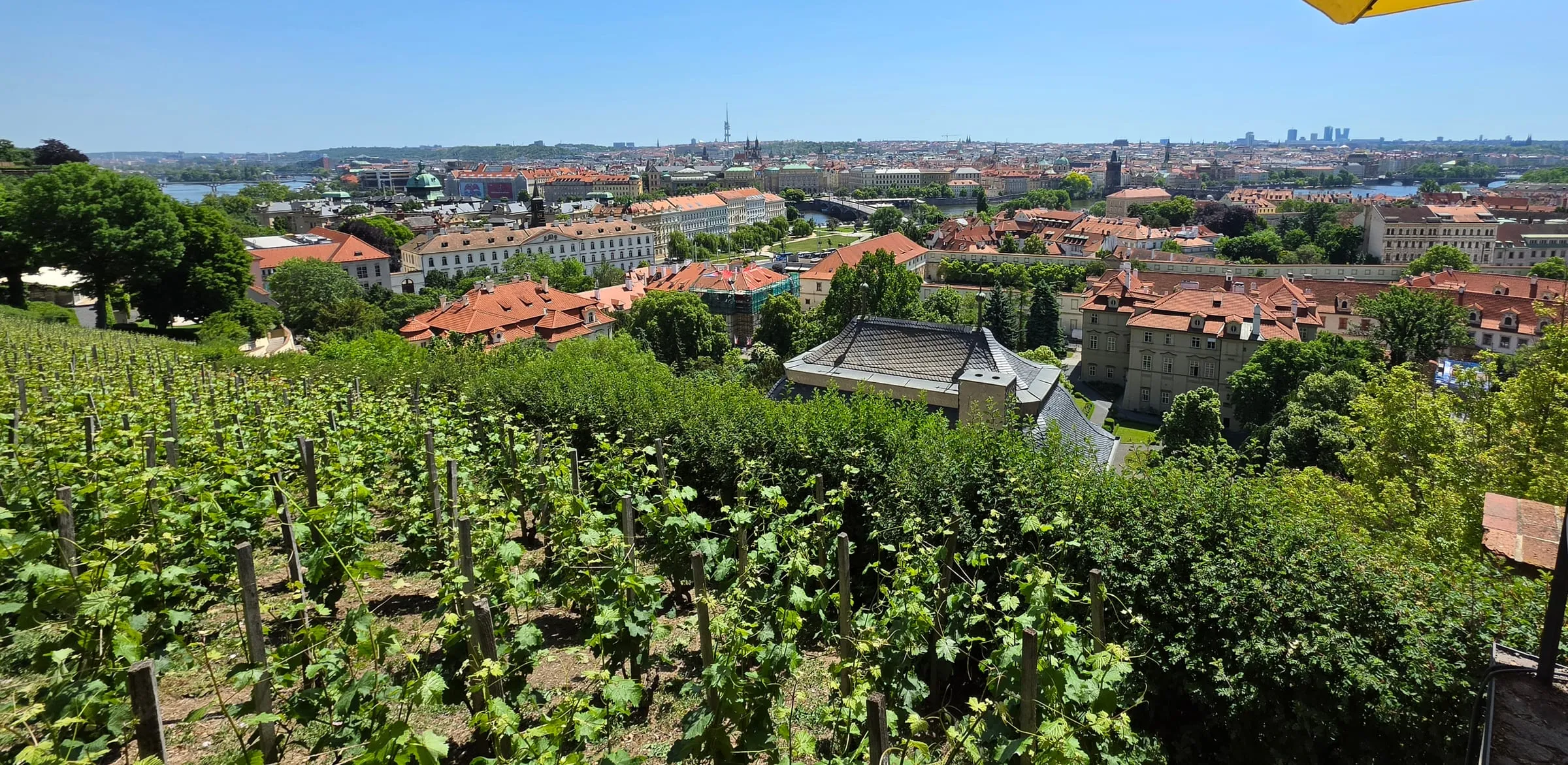
The St. Wenceslas Vineyard, May 2026. The wine below the Castle comes with a view.
Strahov Monastery
The Premonstratensian monastery was founded in 1143 by Prince Vladislaus II and Jindřich Zdík, Bishop of Olomouc. The library holds more than 200,000 volumes. The Theological Hall dates from the 17th century and the Philosophical Hall from the end of the 18th, with a ceiling by Franz Anton Maulbertsch. Visitors view the halls from the doorway rather than walking in, and even that is worth it. Next door are the Basilica of the Assumption of Our Lady and the monastery brewery, which has brewed Sv. Norbert beer since 2001.
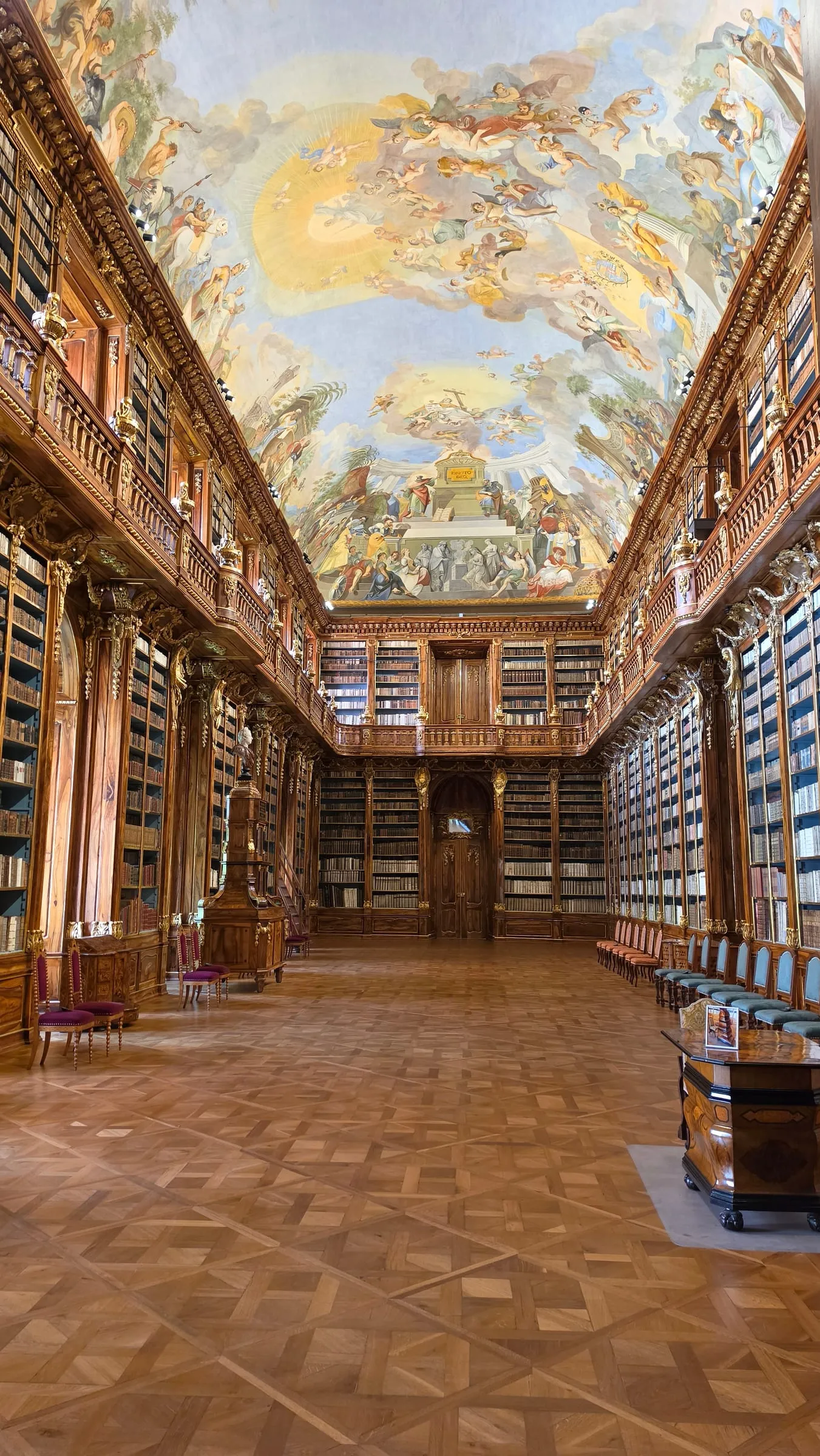
The Philosophical Hall, May 2026. From the door, but still.
My number two, however, is outside. Behind the monastery, on the Raoul Wallenberg path above the Abbot’s Garden, there is a lookout with a small vineyard and the whole panorama of the Castle and the Lesser Town in front of you. Do not forget a quick look into the monastery souvenir shop and the library. Then it is just downhill through Petřín.
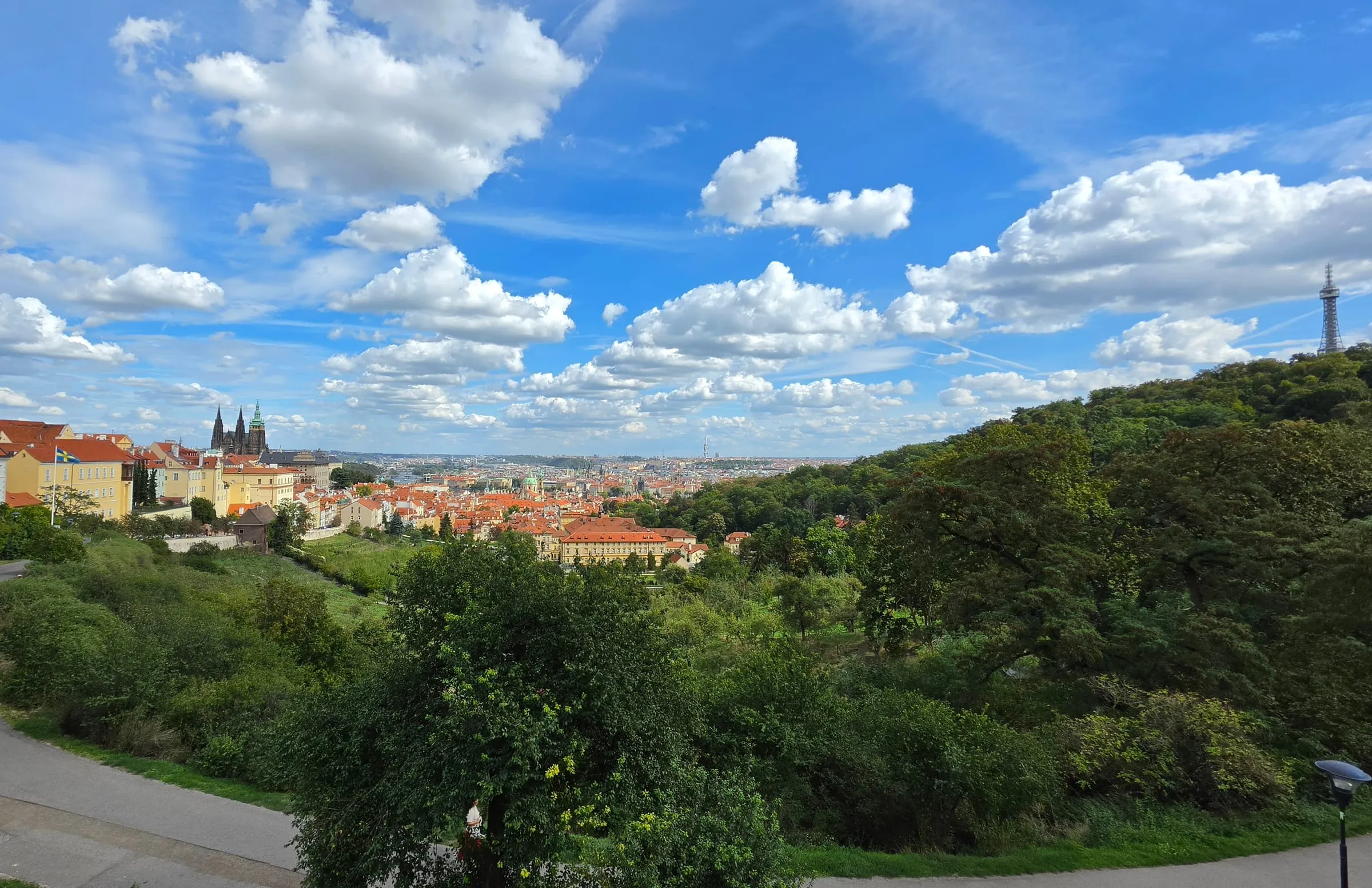
The view from Strahov, September 2026. My number two, full width.
The Vltava
Náplavka
Rašínovo nábřeží on the right bank below Vyšehrad — farmers’ markets on Saturdays, running here since 2010, and bars in the restored vaults in the river wall in the evenings. The architect Petr Janda rebuilt the vaults and they opened in 2019.
And those creatures. When something wet and brown climbs out of the water by the bank or on an island, it is a nutria, also called a coypu. Originally from South America, brought to Bohemia for fur and meat, today on the EU list of invasive species. Ecologists discourage feeding them, because they have multiplied and dig up the banks. Everybody feeds them.
Parks
Four parks in one top-10 item, plus one garden.
Letná
Letná Park above the Čech Bridge. On the plinth where the Stalin Monument stood from 1955 to 1962, Vratislav Karel Novák’s 25-metre metronome has been swinging since May 1991. Stairs lead up to it, a lot of stairs, but the view of Prague is superb. A little further on is the beer garden by the Letná Chateau and the Hanavský Pavilion, a cast-iron building from the 1891 Jubilee Exhibition moved to Letná a few years later.
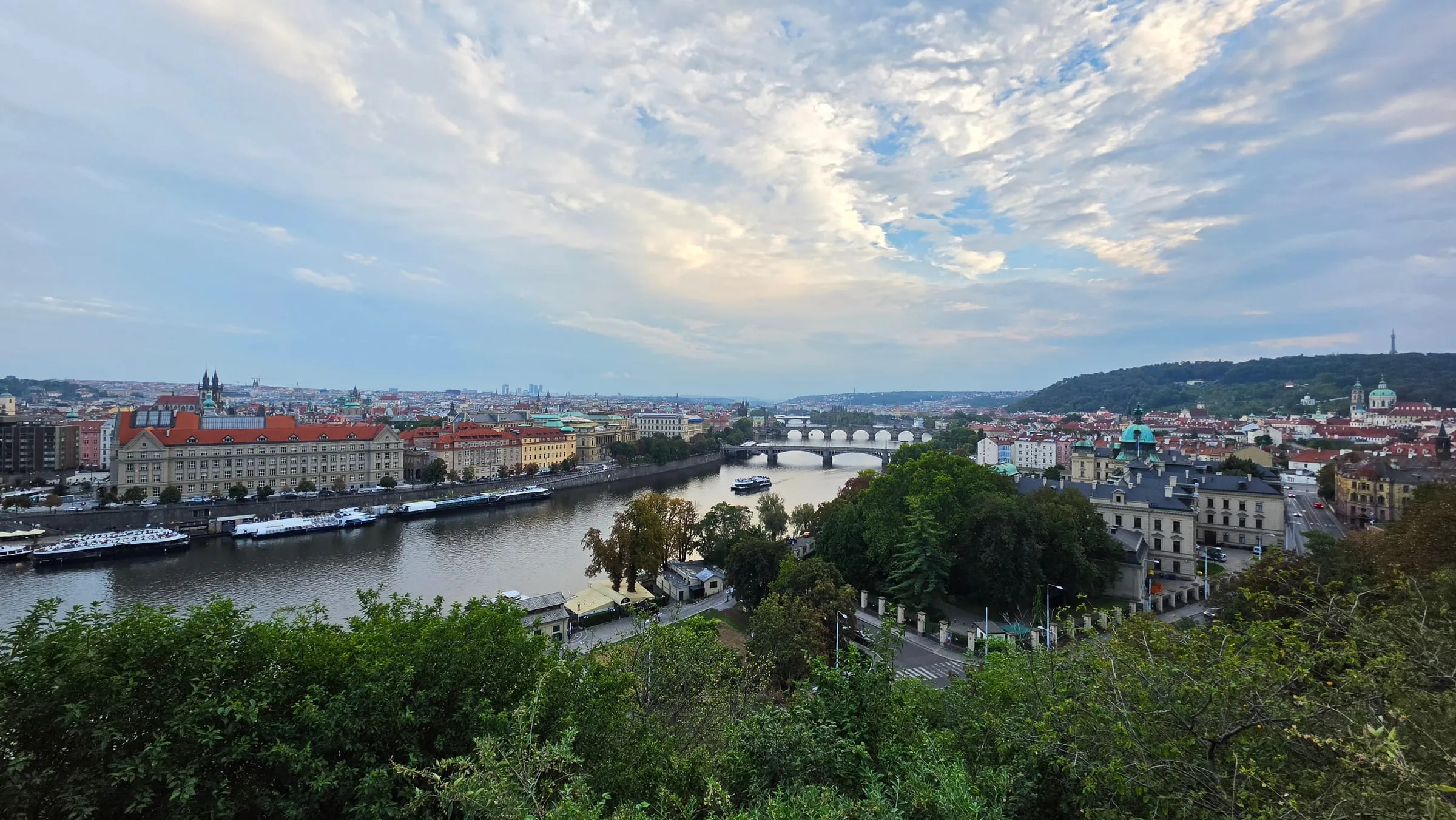
The Vltava from Letná, September 2026. The view that makes the stairs worth it.
Grébovka
Havlíčkovy sady in Vinohrady — the park of the businessman Moritz Gröbe from 1871 to 1888, with a villa, a grotto and a vineyard where vines were already grown in the 13th century. The vineyard now covers 1.7 hectares, yields around 4,000 litres a year and since 1997 has hosted the Grébovka Wine Harvest Festival every September. It starts on náměstí Míru and continues in the park. In September 2026 I was right there on the square. And in June Grébovka hosts the Apetit Picnic, the food festival of Apetit magazine, which draws as many as 26,000 people.
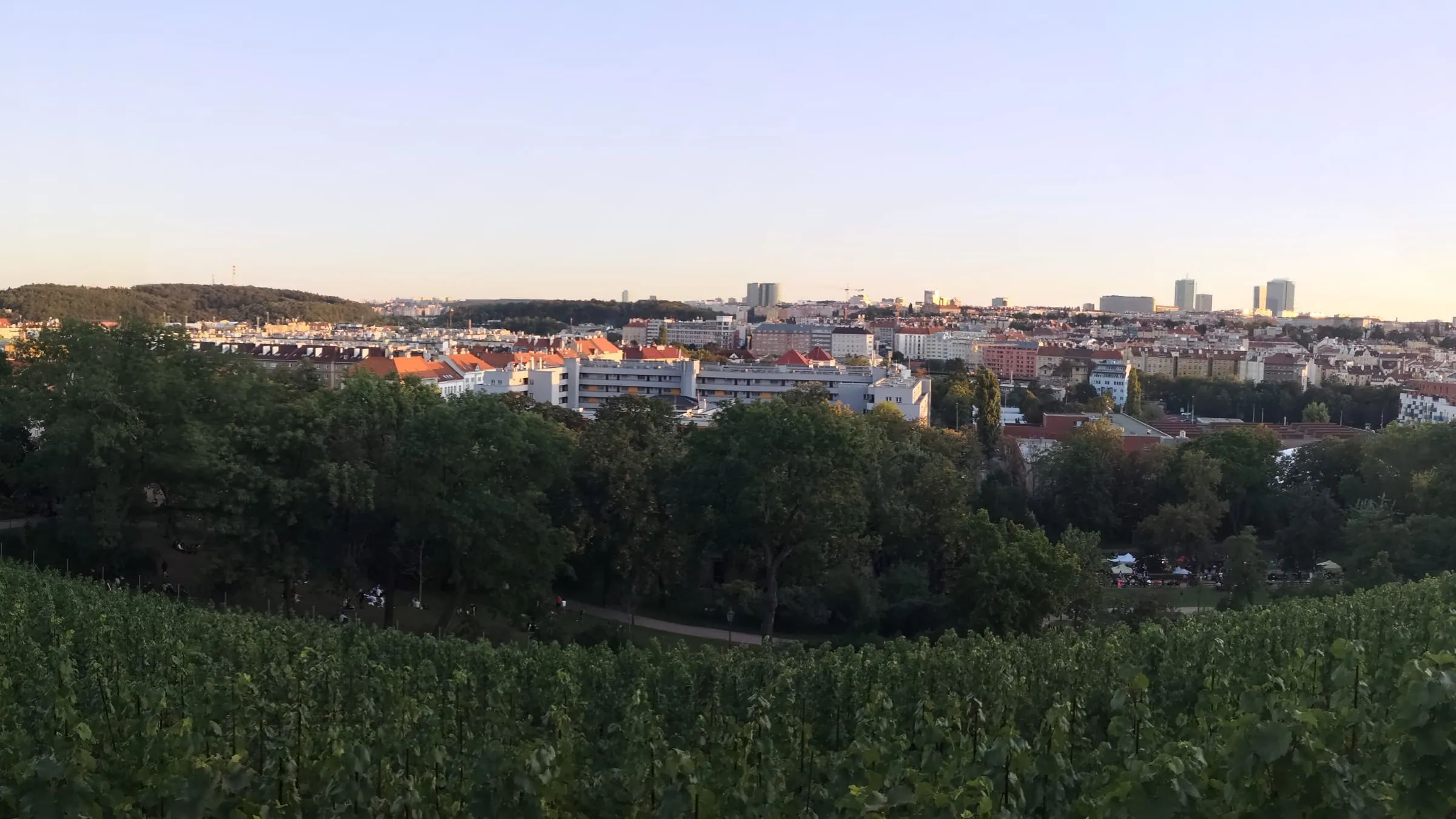
The vineyard at Grébovka, September 2019. A wine harvest with a view of Pankrác.
Strahov and Petřín
The Great Strahov Garden and Petřín form one green slope from the monastery down to Újezd. The Petřín Lookout Tower was built for the 1891 Jubilee Exhibition as a little sister of the Eiffel Tower. There are 299 steps to the top and the funicular started running the same year. And in the Lesser Town below the Castle are the Vojanovy sady, the oldest partly preserved garden in Prague and from the 17th century the garden of a Carmelite convent. Peacocks live there and wander around your feet.
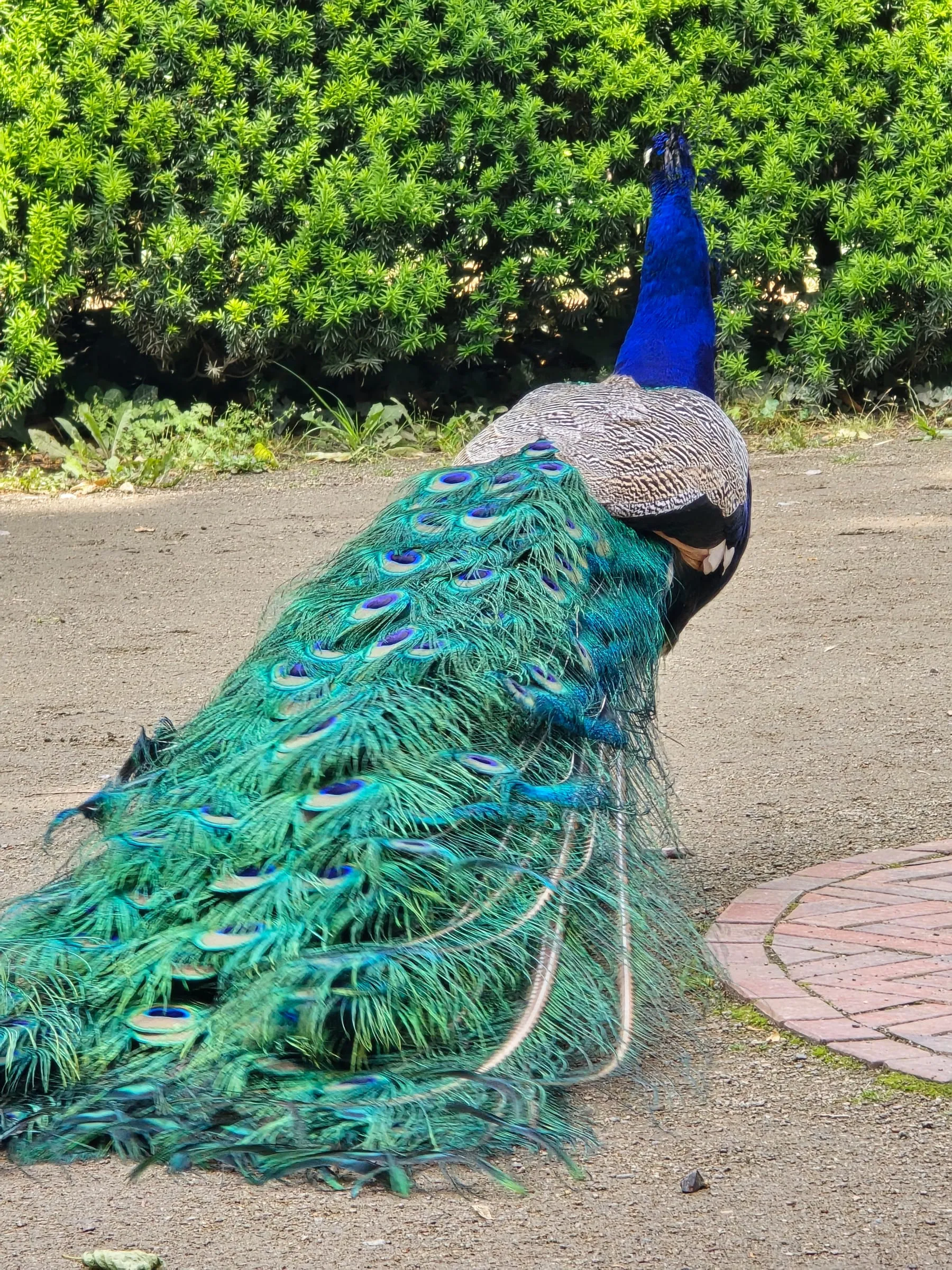
Vojanovy sady, May 2024. A local resident on his rounds.
Prague Zoo
The zoo in Troja opened on 28 September 1931. In 2015 TripAdvisor ranked it fourth in the world. The ring-tailed lemurs have had their own island since 2005 and roam free there among the visitors — no glass, no net. There are pandas too, but red ones. The giant pandas never got their pavilion in Prague. I was last there in September 2025. North American porcupines, pandas, penguins, sitatungas, squirrel monkeys and lemurs, ten minutes at each enclosure. The zoo is worth a visit at any age.
Holešovice
The district behind Letná. Paralelní Polis on Dělnická street was opened in October 2014 by the Ztohoven collective as a crypto-anarchist house with a coworking space, the HCPP congress and Bitcoin Coffee, by most accounts the first café in the world where you could pay only in cryptocurrency. I came here for the congress. In October 2024 the project ended after ten years. The coworking space that followed lasted until March 2026, and the building has housed a gallery since October 2026.
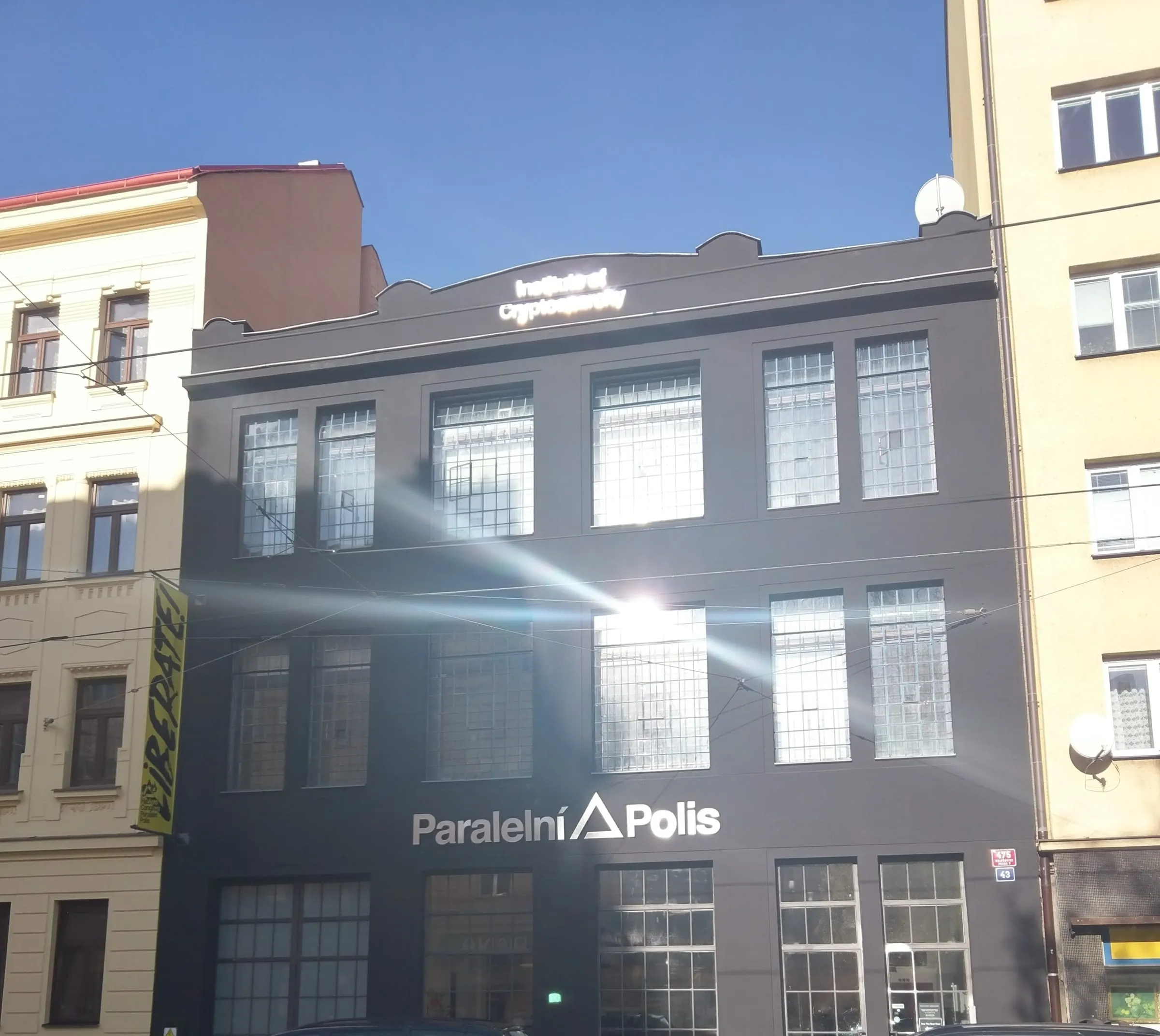
Paralelní Polis on Dělnická street, November 2017. The Institute of Cryptoanarchy, today a gallery.
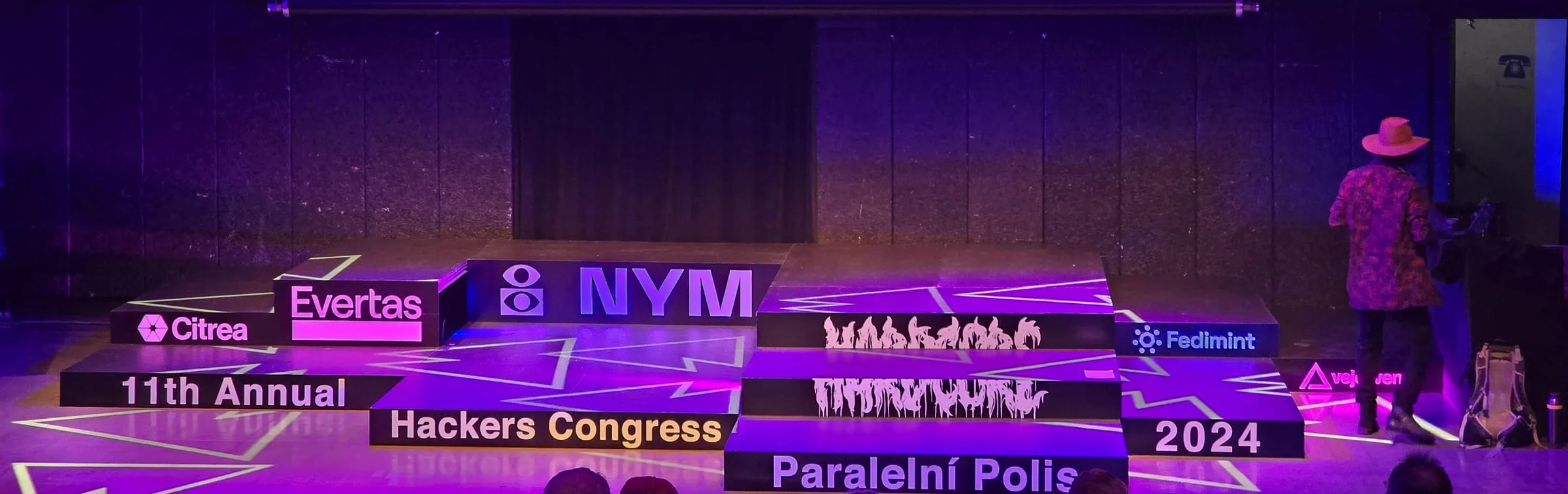
The eleventh HCPP, October 2024. The last one I attended.
Not far away is Vnitroblock, an interwar industrial hall between Tusarova and Dělnická streets that became a café with small shops, a gallery and a tiny cinema in 2016. And the Prague Market, the former city slaughterhouse.
Prague in Advent
In November 2022 I also saw Prague in the Christmas market season. The markets on náměstí Míru in front of the Church of St. Ludmila and on náměstí Republiky by the Palladium shopping centre usually run from the second half of November until around Christmas. In freezing weather it feels like a different city from Prague in May, but the cakes are the same.
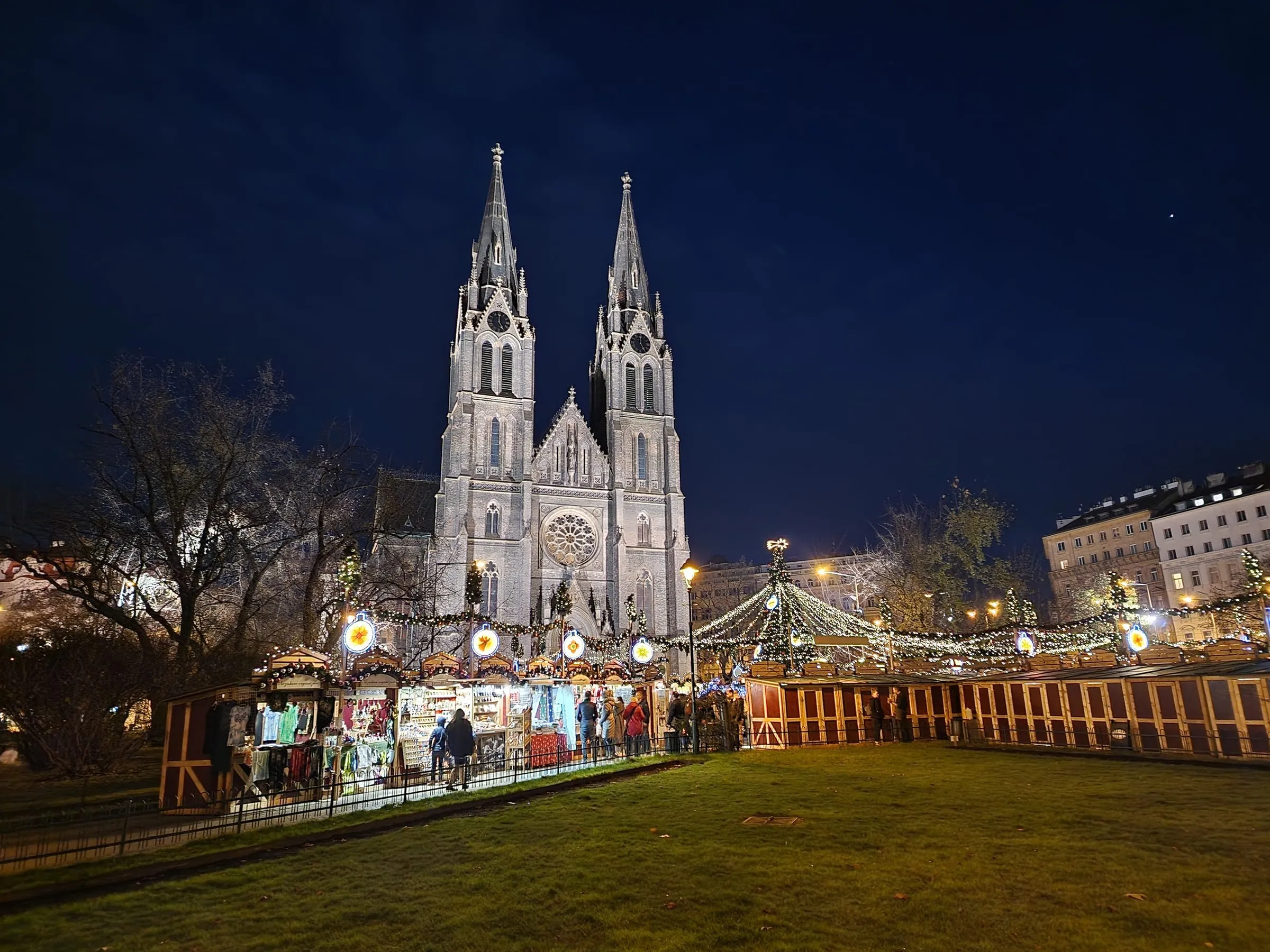
The Christmas market in front of the Church of St. Ludmila, November 2022.
Other places I have been to
Golden Lane with its tiny houses in the castle walls from the end of the 16th century, where Franz Kafka wrote at number 22, the Wallenstein Garden, the Old Castle Stairs, the Lesser Town Bridge Towers, the Old Town Bridge Tower, the Powder Tower, Mariánské náměstí, the Convent of St. Agnes of Bohemia with its lovely little garden and cakes, the Franz Kafka Monument, the Maisel Synagogue, Riegrovy sady, Kaizlovy sady, the Letná water tower, the Sea World aquarium at the Exhibition Grounds, the Kingdom of Railways in Smíchov, Bertramka (closed these days) and the Vinohrady market hall. And in October 2019 the NHL at the O2 Arena — the Philadelphia Flyers beat the Chicago Blackhawks 4:3 in front of 17,463 fans, the season opener for both teams.
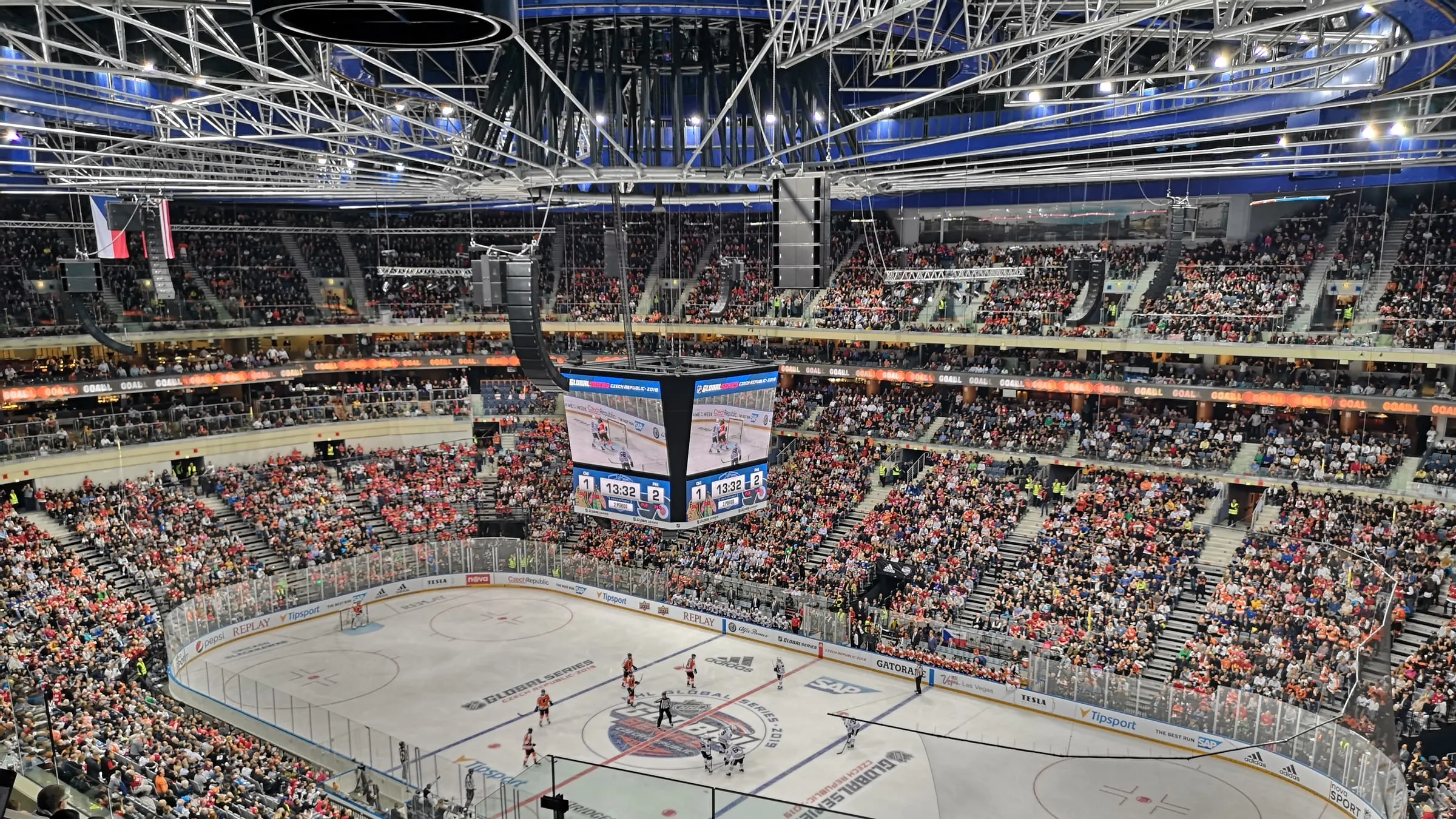
The NHL at the O2 Arena, October 2019. Flyers versus Blackhawks, 17,463 people and me.
Where to stay
I have no regular hotel, but I can recommend three addresses. Hotel Hoffmeister below the Castle in the Lesser Town is for those who want a bit more comfort — a family boutique hotel with a gallery of paintings and caricatures by Adolf Hoffmeister, founded by his son. I have stayed there three times. The Residence Bílkova apartments in Josefov are very quiet, which is a paradox, because Bílkova is a stone’s throw from Dlouhá, in my view the noisiest street in Prague. And the Grand Hotel Prague Towers, the Corinthia until April 2024, is not bad — outside the centre, true, but right by Vyšehrad metro station and a short walk from the Vyšehrad Cemetery with the Slavín tomb. An 84-metre hotel from 1988, back then the Hotel Forum.
Food
Kulajda. Goodness, how could I nearly forget it. A thick South Bohemian soup of potatoes, cream and dill with a poached egg on top. Mushrooms are said to be a modern addition, absent from the old recipes, but I forgive them. The name apparently comes from “zakudlení”, thickening with flour stirred into milk.
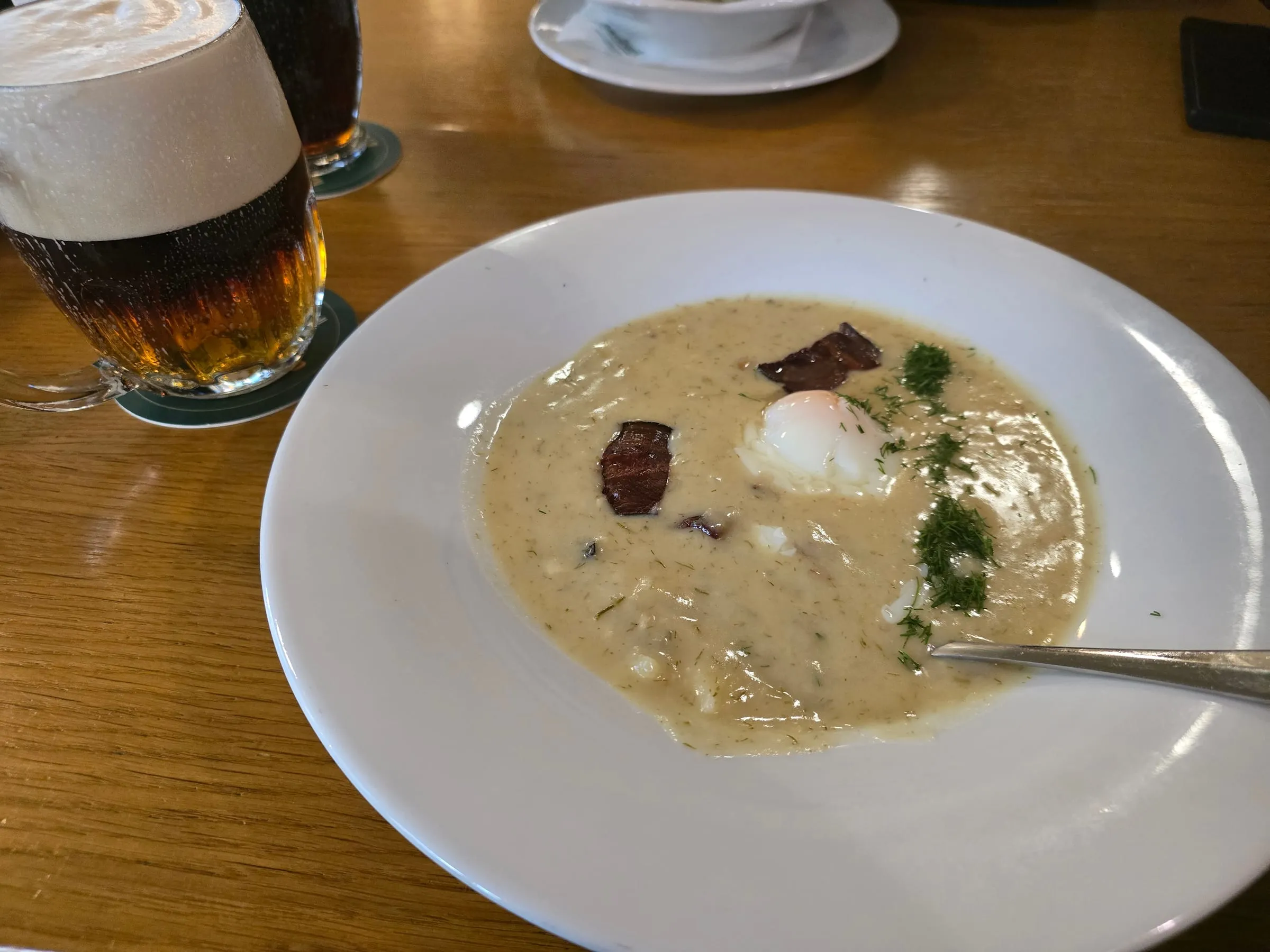
Kulajda and a beer, October 2024. That combination is allowed.
Svíčková na smetaně. Despite the name it is usually not sirloin but beef round in a creamy root vegetable sauce, with bread dumplings, a slice of lemon, whipped cream and cranberries. One of the oldest recipes is by Magdalena Dobromila Rettigová from 1826, still without the vegetables.
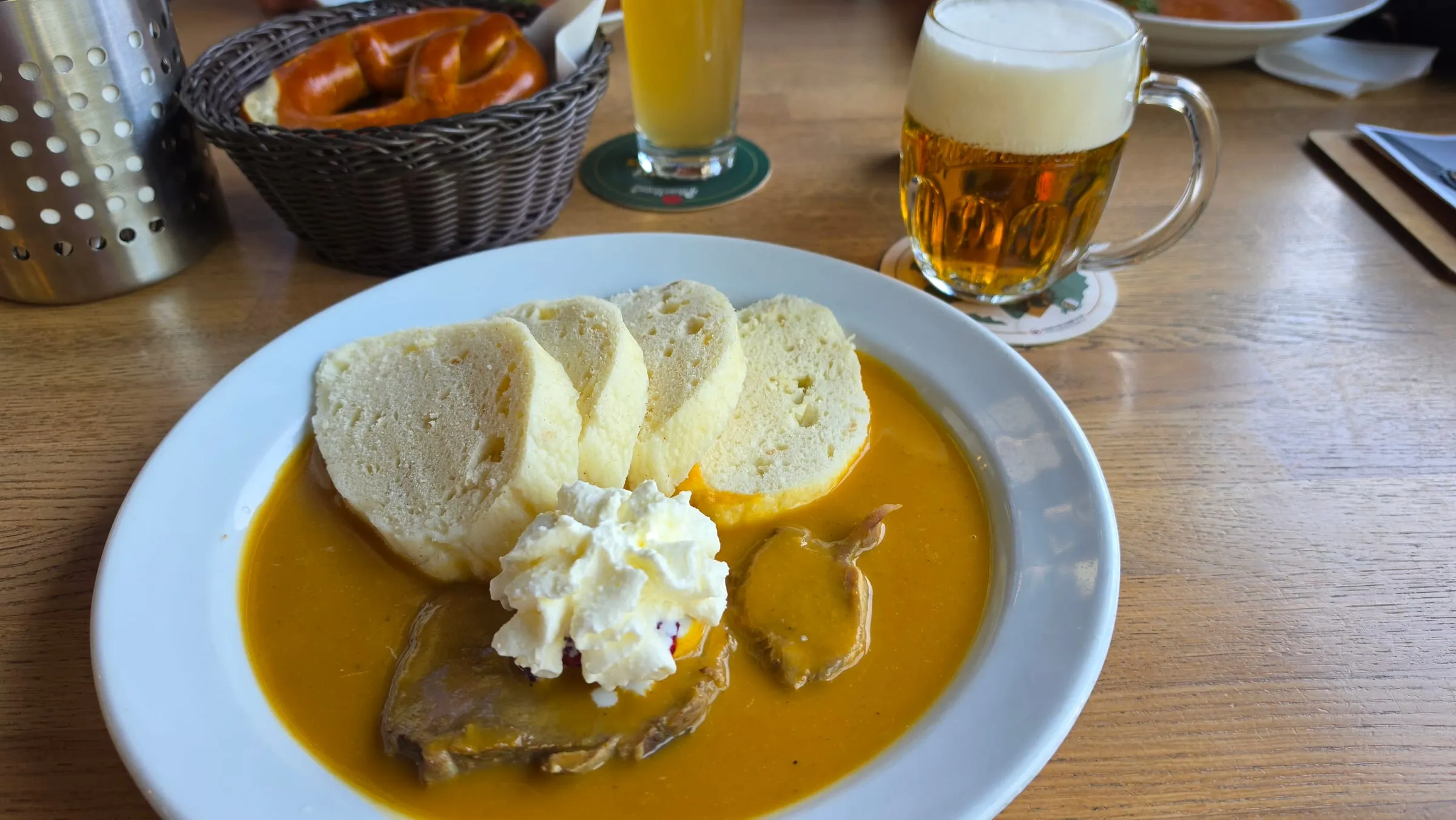
Svíčková at Potrefená husa, September 2026. The last lunch before the train.
Duck. Roast duck with dumplings and cabbage is a Czech classic and I order it whenever it is on the menu. Most recently at V Kolkovně, a restaurant opened in 2001 in the premises of the former stamp office, where revenue stamps used to be printed.
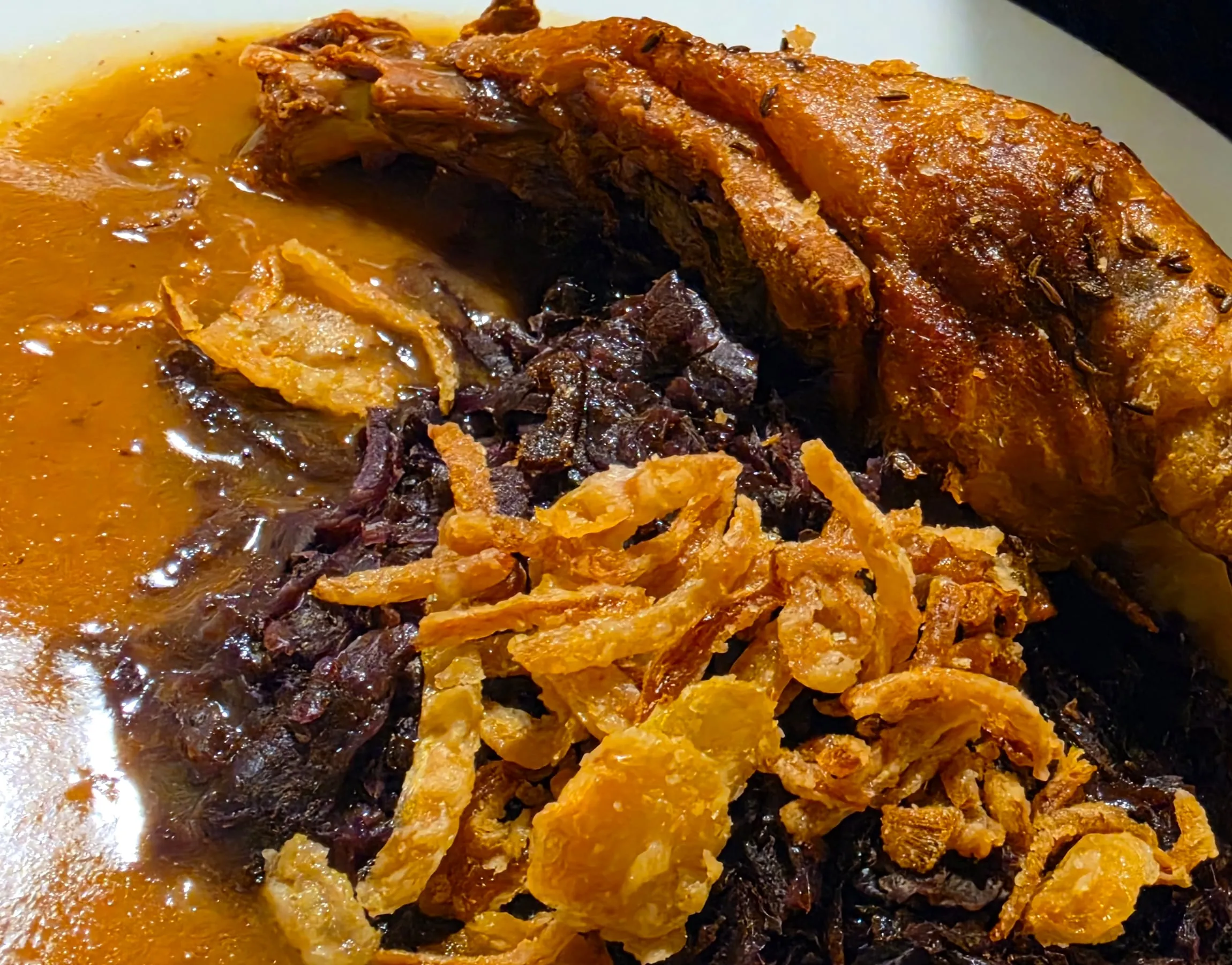
Duck at V Kolkovně, September 2026. First evening, first meal.
Jitrnice. A pork sausage from the traditional home pig slaughter — meat from the head, skin, offal and liver, seasoned with marjoram and garlic, in a casing sealed at both ends with small wooden skewers. It sounds terrible and tastes excellent.
The endless grill at Brasileiro. The Brazilian rodízio of the Ambiente group — the passadores bring fifteen kinds of meat on skewers to your table until you turn your table card to red. There are two branches, in the Slovanský dům on Na Příkopě and U Zelené žáby by the Old Town Hall, and the one in Slovanský dům suits me better. Ambiente as a whole is a concept worth a mention. Tomáš Karpíšek started in 1995 with a single restaurant on Mánesova street and today the group runs more than twenty places, from Lokál to Brasileiro.
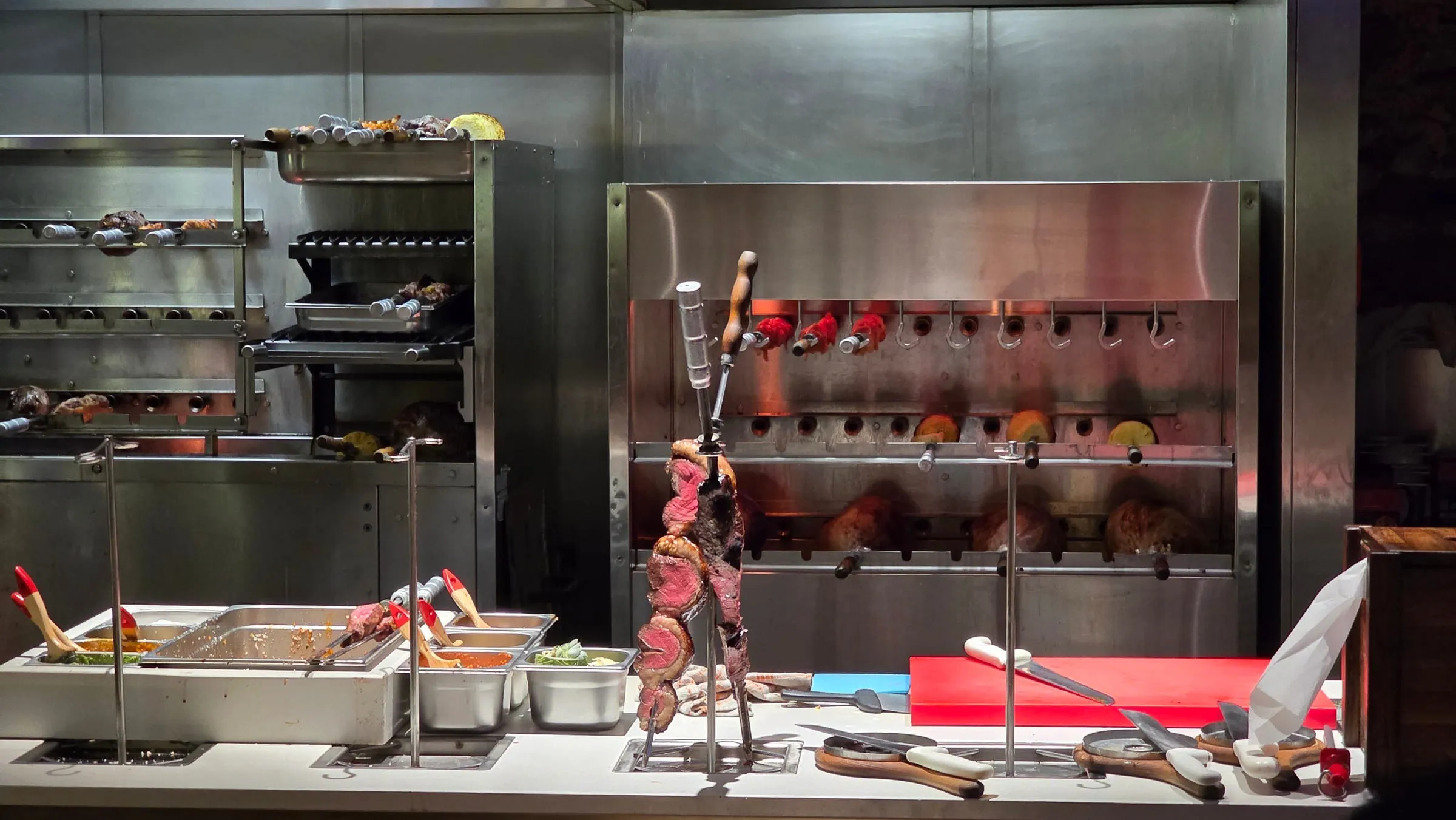
The grill at Brasileiro, September 2025. Green side up.
Lokál on Dlouhá has been one of the longest restaurants in Prague since 2009 — Pilsner Urquell served from tanks, and side dishes and sauces you can top up endlessly. Mincovna on the Old Town Square serves Czech cuisine in a house where coins were minted in the 18th and 19th centuries. Výtopna on Wenceslas Square delivers drinks to the tables by model train, in Prague since 2010. Špejle on Jindřišská serves bites on skewers in the style of Basque pintxos and you pay by the number of skewers on your plate. Bageterie Boulevard and their little soups — a Czech chain founded in 2003 that now has more than seventy branches.
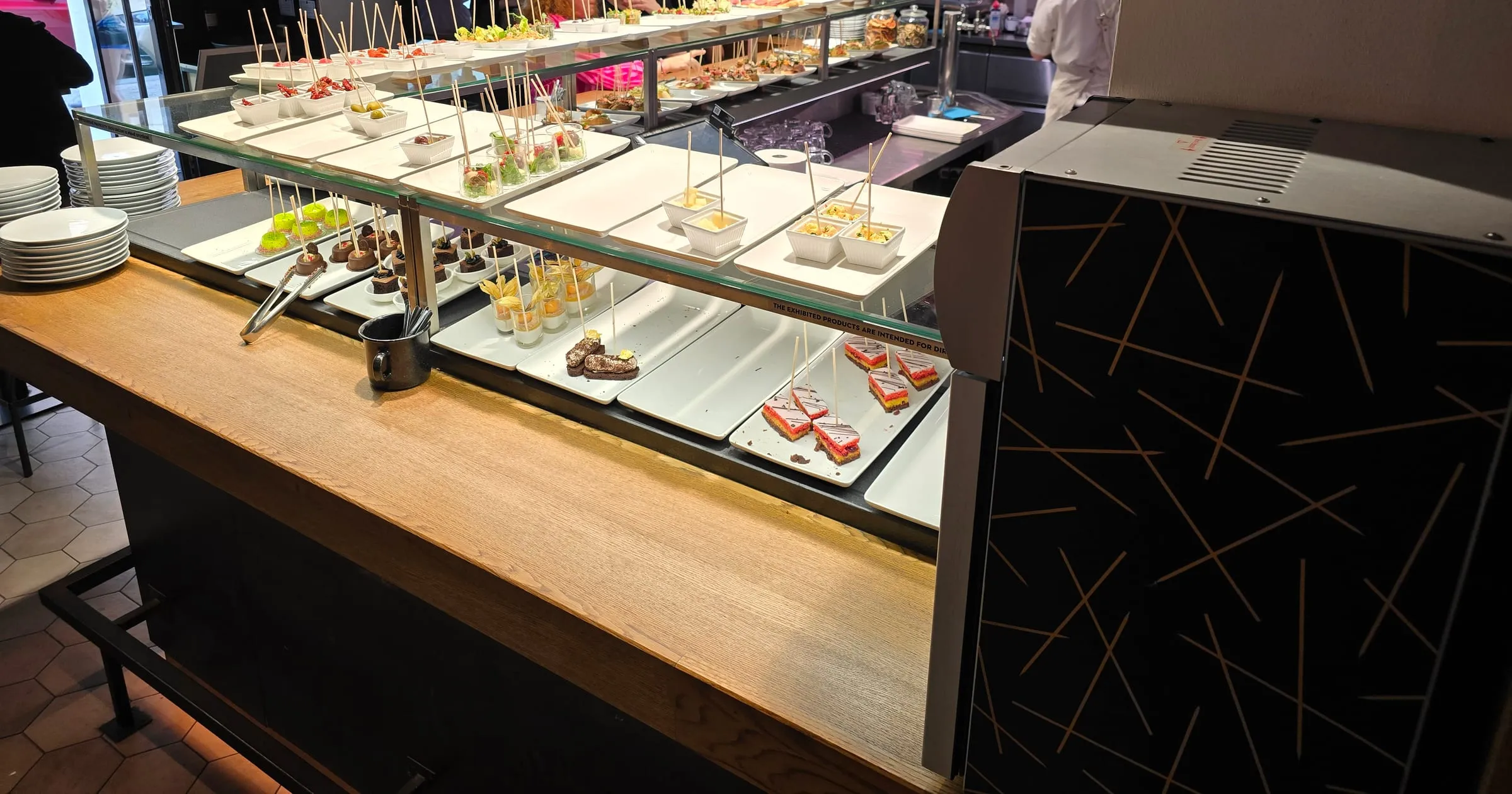
The counter at Špejle, May 2024. You pay per skewer, so keep count.
And a gem. Beneath the Světozor passage on Vodičkova is the Jídelna Světozor, a pensioners’ canteen for a few crowns. More than twenty dishes a day, open only at lunchtime on weekdays and, last time I checked, cash only. One floor up, in the passage, is Ovocný Světozor, a confectioner that has made fruit ice cream to a First Republic recipe since 1977. Světozor’s soft-serve is my favourite.
And beer. I do not drink it, but in Bohemia I have to have one. The Czechs have led the world in beer consumption per head for 32 years running, although according to the brewers’ association domestic consumption fell to a record low of 121 litres in 2025. My one beer by the Astronomical Clock will not save that.
What to bring home
I no longer bring anything home from Prague. I treat it as my second home, and you do not bring souvenirs home from home. Now and then, when something interesting turns up.
Moldavite is a fascinating stone, although strictly speaking it is not a stone but glass. Natural, green and born from a meteorite that struck what is now Bavaria. The impact dug out the Ries crater, 24 kilometres across, and flung streams of molten rock through the air all the way to what are now Bohemia and Moravia. Some pieces still show traces of that flight through the atmosphere. Geologists call it a tektite, and it formed almost 15 million years ago. Most of it is found in the upper Vltava basin between Prachatice and Trhové Sviny, in Moravia along the Jihlava river and a little in the Cheb Basin. It takes its name from the Vltava, Moldau in German, hence moldavite. You may collect it only with the landowner’s consent, and digging without a permit is illegal. I had a look at it in an Old Town shop with the grand name Muzeum vltavínů, in English the Moldavite Museum Shop. A museum by name, a shop of jewellery and stones inside. There is plenty to choose from.
The Spejbl and Hurvínek puppets by Josef Skupa — Spejbl dates from 1920, Hurvínek from 1926 and their theatre has played in Prague since 1945, today in Dejvice. And a nice T-shirt. The ones from WebExpo count.
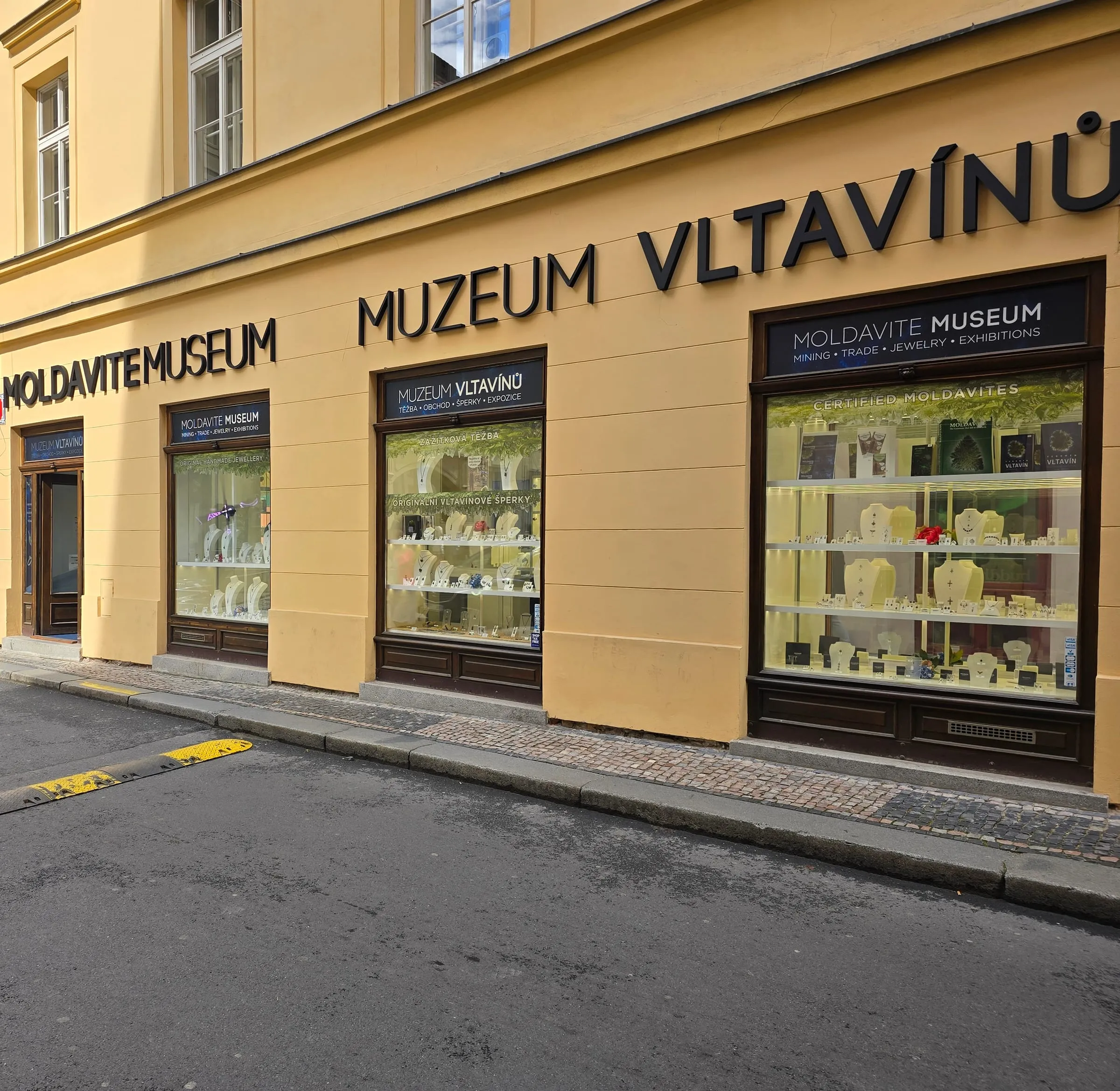
Muzeum vltavínů, May 2024. A museum by name, a shop behind the windows.
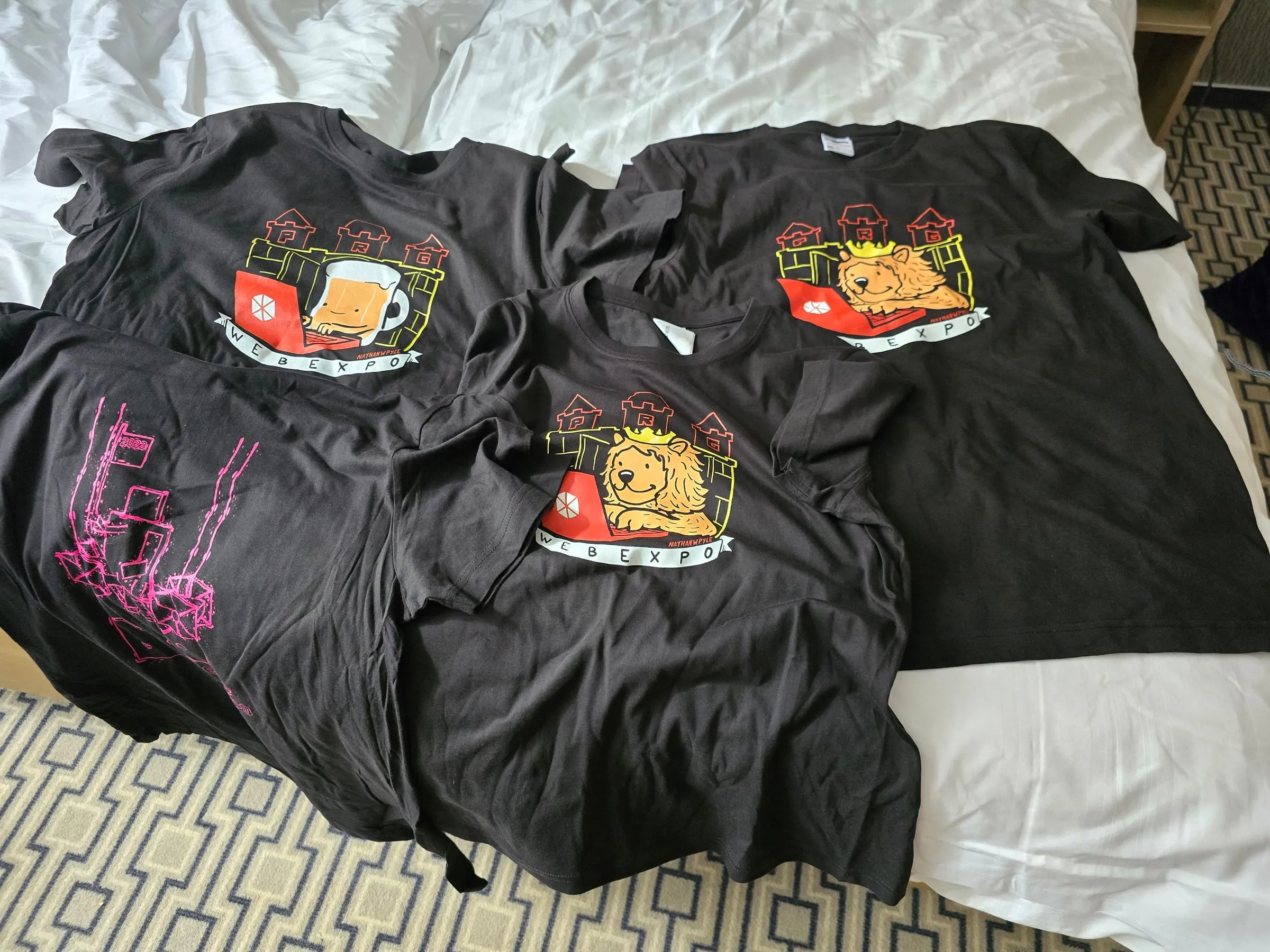
The WebExpo harvest, May 2024. Four T-shirts in three days, the 2022 one won with a dart.
Not seen yet
Even after almost thirty trips, I still owe Prague two visits.
Planetárium Praha in Stromovka park reopened in June 2025 after two years of reconstruction. Instead of a projector it has a dome 22 metres across, built from 12,000 LED panels with 45 million diodes. The universe is not projected onto it but shines by itself. The planetarium bills it as the first of its kind in Europe and the largest in the world.
And the second great library in town. The Klementinum by Charles Bridge is a former Jesuit college and, after Prague Castle, the second-largest building complex in Prague. Today it houses the National Library. The Baroque library hall from the first half of the 18th century has a ceiling fresco by Jan Hiebel and historical globes. The tour also includes the Astronomical Tower from 1722 with a statue of Atlas on top. Weather records began here in the 18th century and form the longest continuous series in Central Europe. After Strahov, another hall I will be admiring from the doorway.
Updated: October 2026 — first published, summary of the 2009–2026 trips.