Mallorca
At the turn of June and July I go to Mallorca for the EDULEARN conference — almost every year since 2018. What I have managed to see between the talks, where to eat well and what to bring home.
Updated:
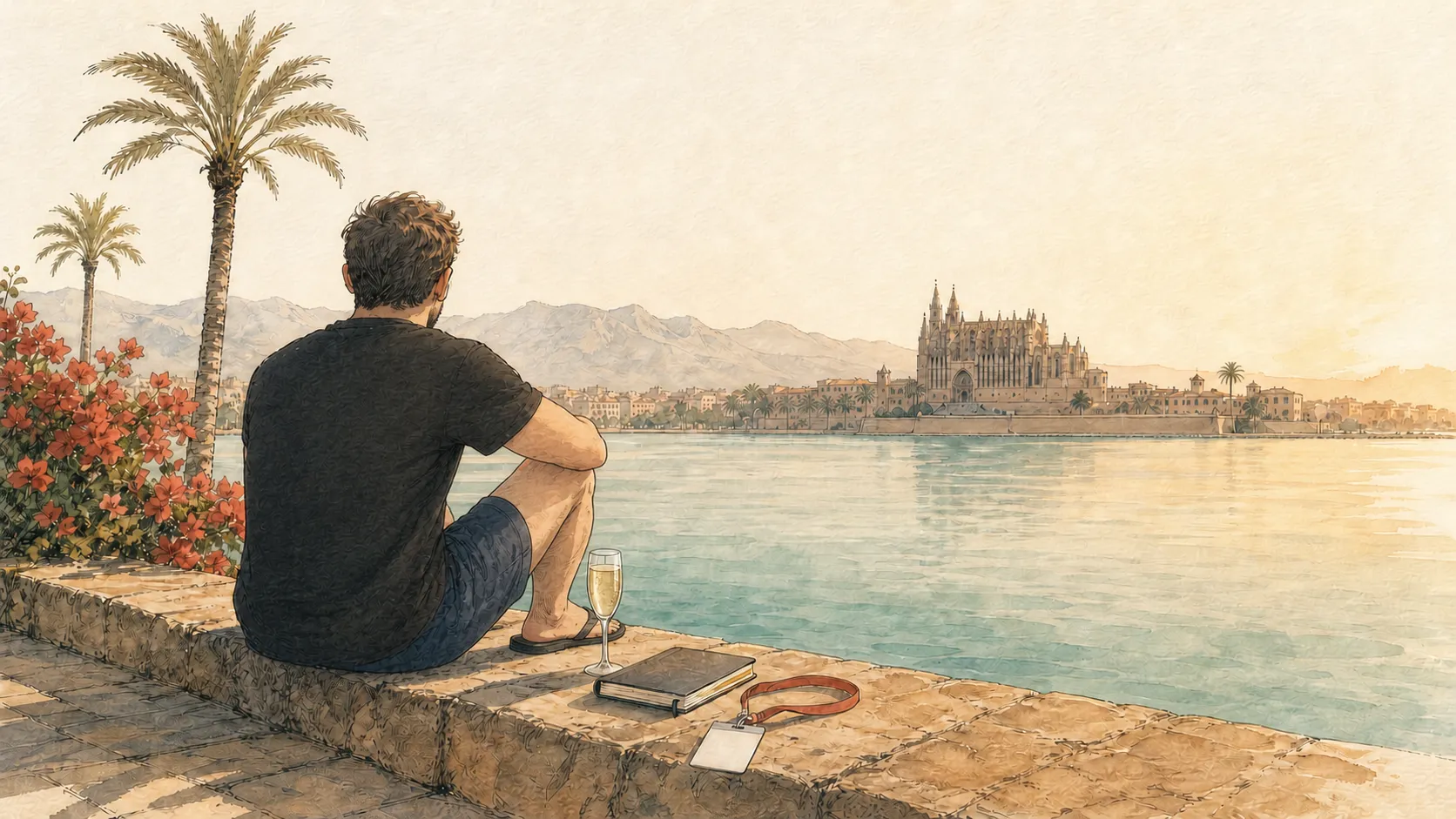
Mallorca is a strange case for me. Officially it is a business trip that repeats every year like a tax return — only with a better view. Over the years I have covered it more thoroughly than most places I went to on holiday, so this entry is longer than my other travel pieces. And it will keep growing, because I will keep going back. The conference will not present itself.
How many times, and why
EDULEARN, a conference on education and new learning technologies, moved to Palma in 2018. Before that it was held in Barcelona and I was already going then, so when the organisers chose the island I had no objections. Since 2018 I have gone almost every year — I skipped only 2020 and 2021 — and I have always had a paper. Mallorca is therefore officially a business trip. The fact that a few extra days usually attach themselves to it is pure logistics.
Where I have taken photos over the years, a map shows better than a list. Palma glows the most. The north — great beaches and the view from Formentor — the map somehow failed to capture; otherwise I have been everywhere repeatedly, Formentor included.
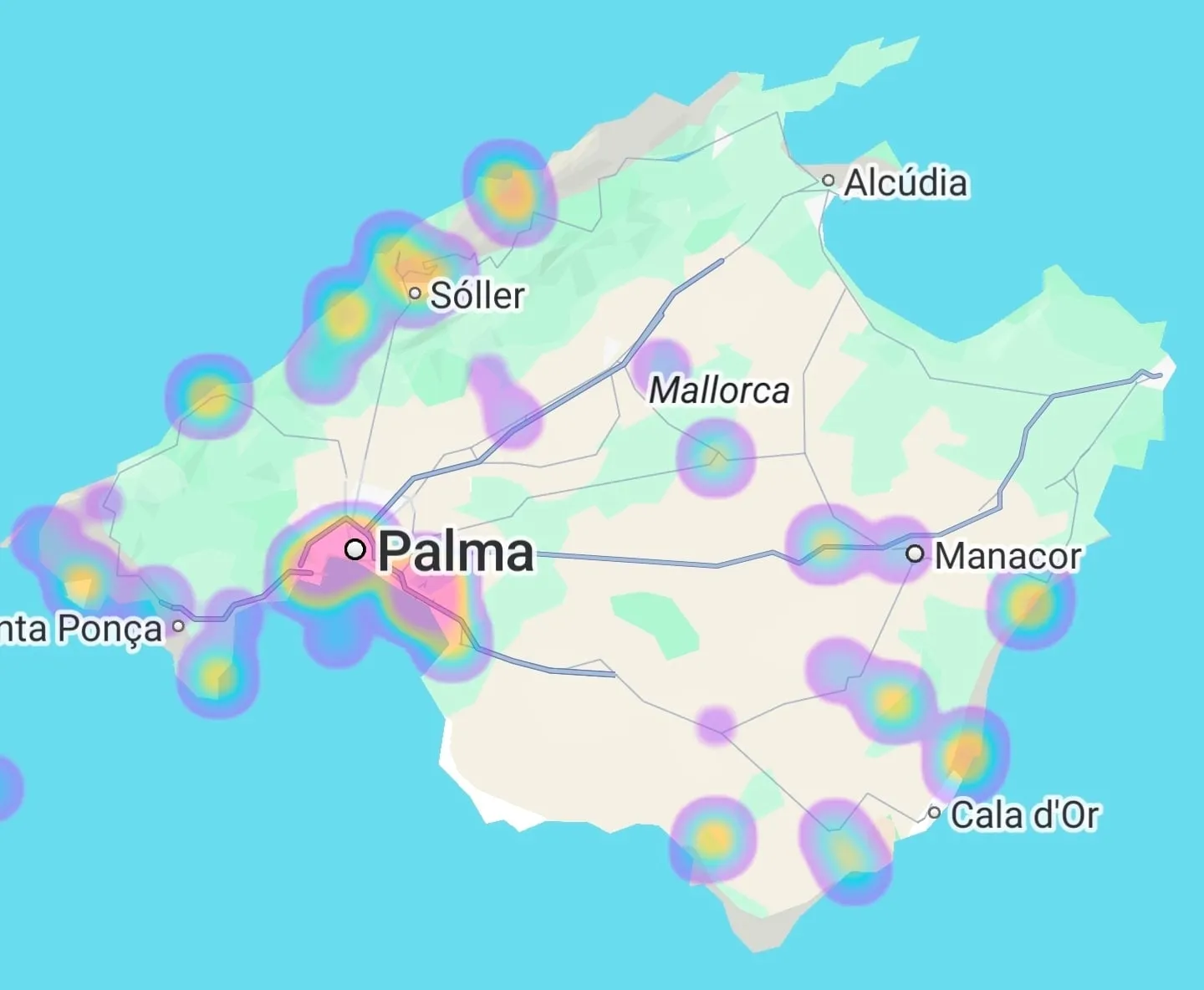
1,114 photos, June 2018 to July 2026. Map: Google Photos.
EDULEARN — the reason I go there at all
EDULEARN is organised by IATED, takes place every year at the Palau de Congressos and the 2026 edition was already the eighteenth. According to the organiser, more than 800 people from the world of education attended. Why I like going: it is a superbly organised conference, you pick up the news from AI in education and e-learning before it reaches the journals, and the destination is — let us put it diplomatically — excellent. How big the conference is shows best on the map with pins, where participants mark where they came from. After a few days Europe looks like an acupuncture model and you have to go somewhere near Siberia to find a free spot.
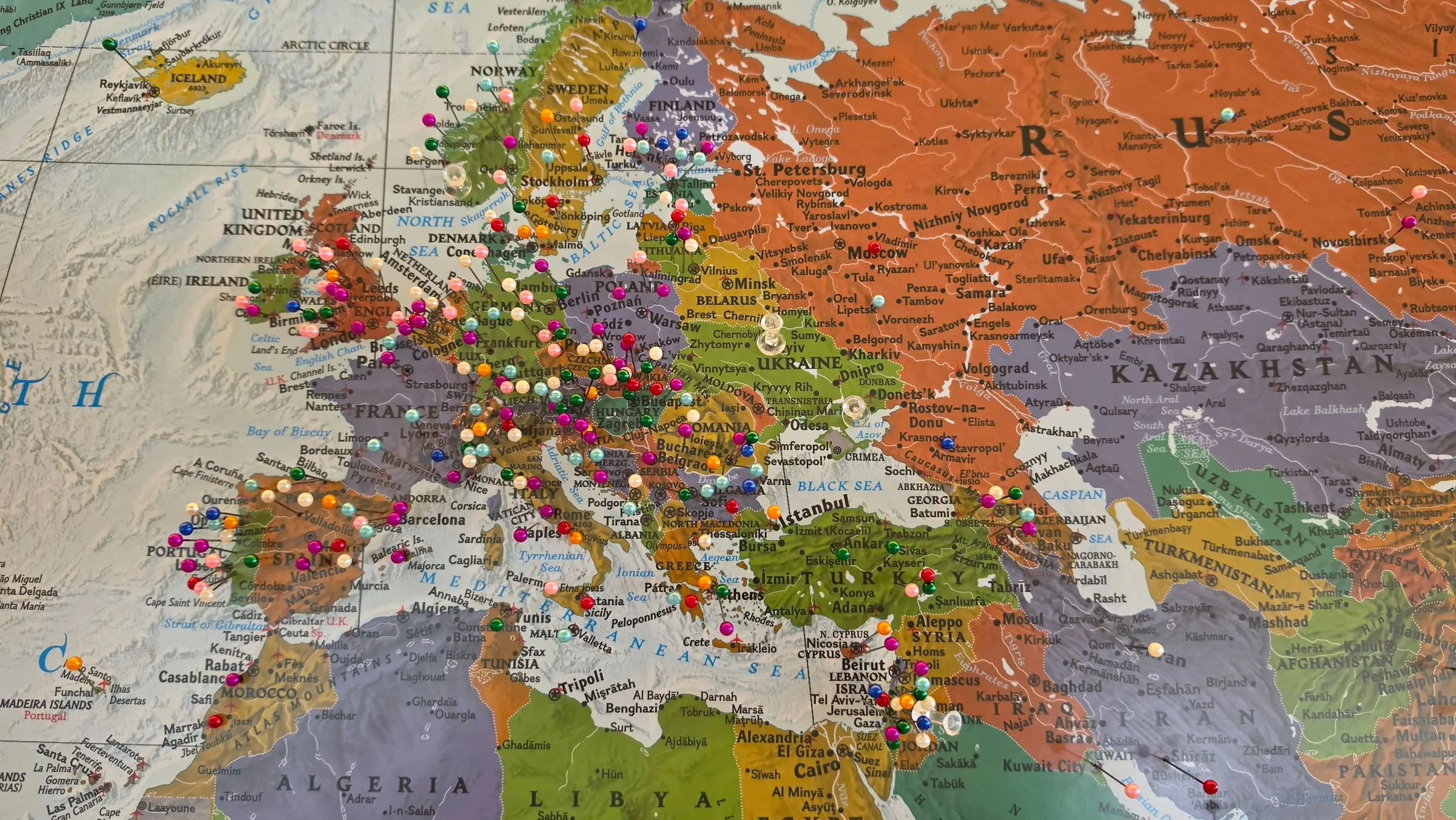
Where the participants came from. They place the pins themselves.
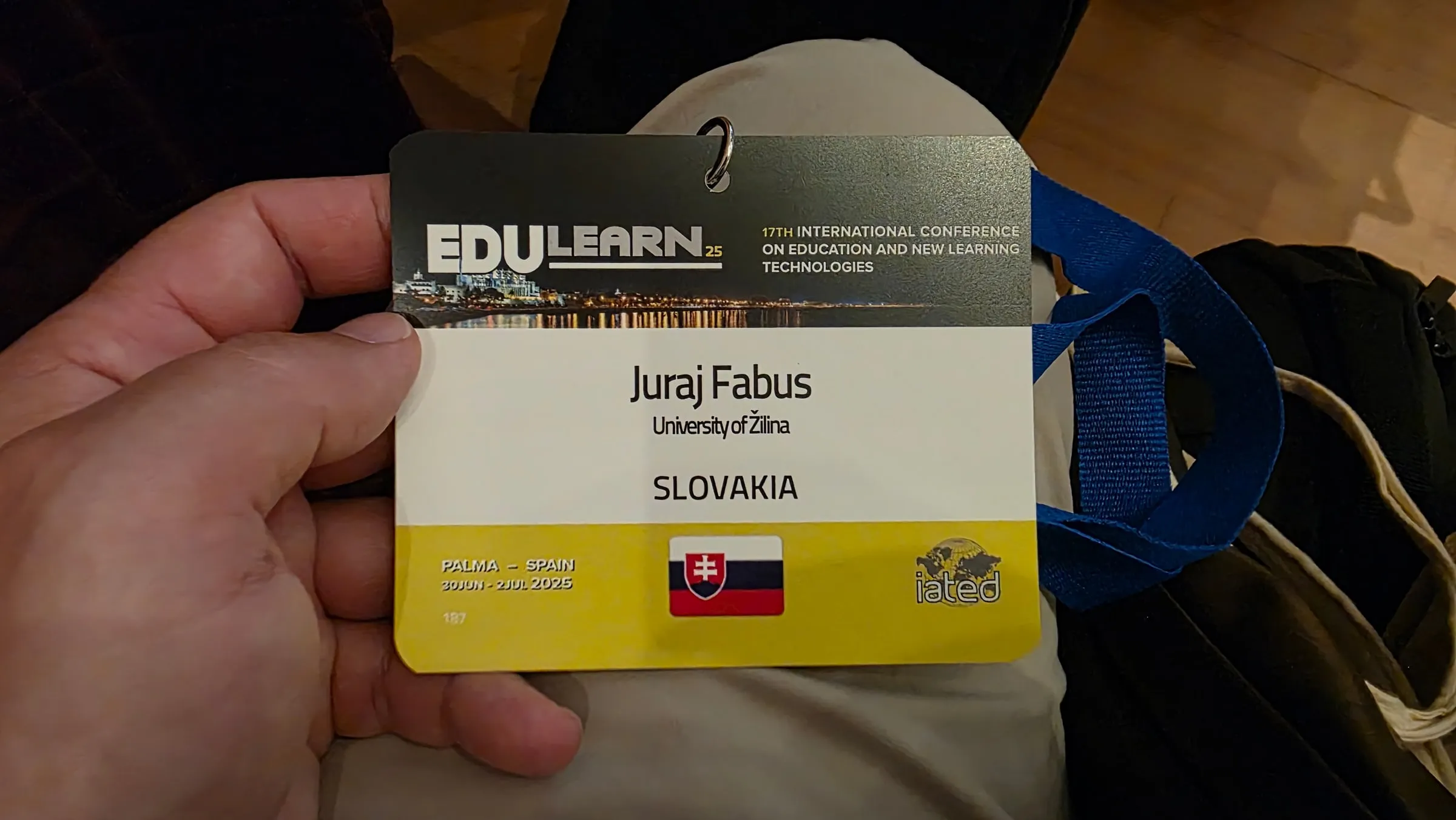
Badge from the 2025 edition. Slovak flag around the neck — just in case someone did not recognise it.
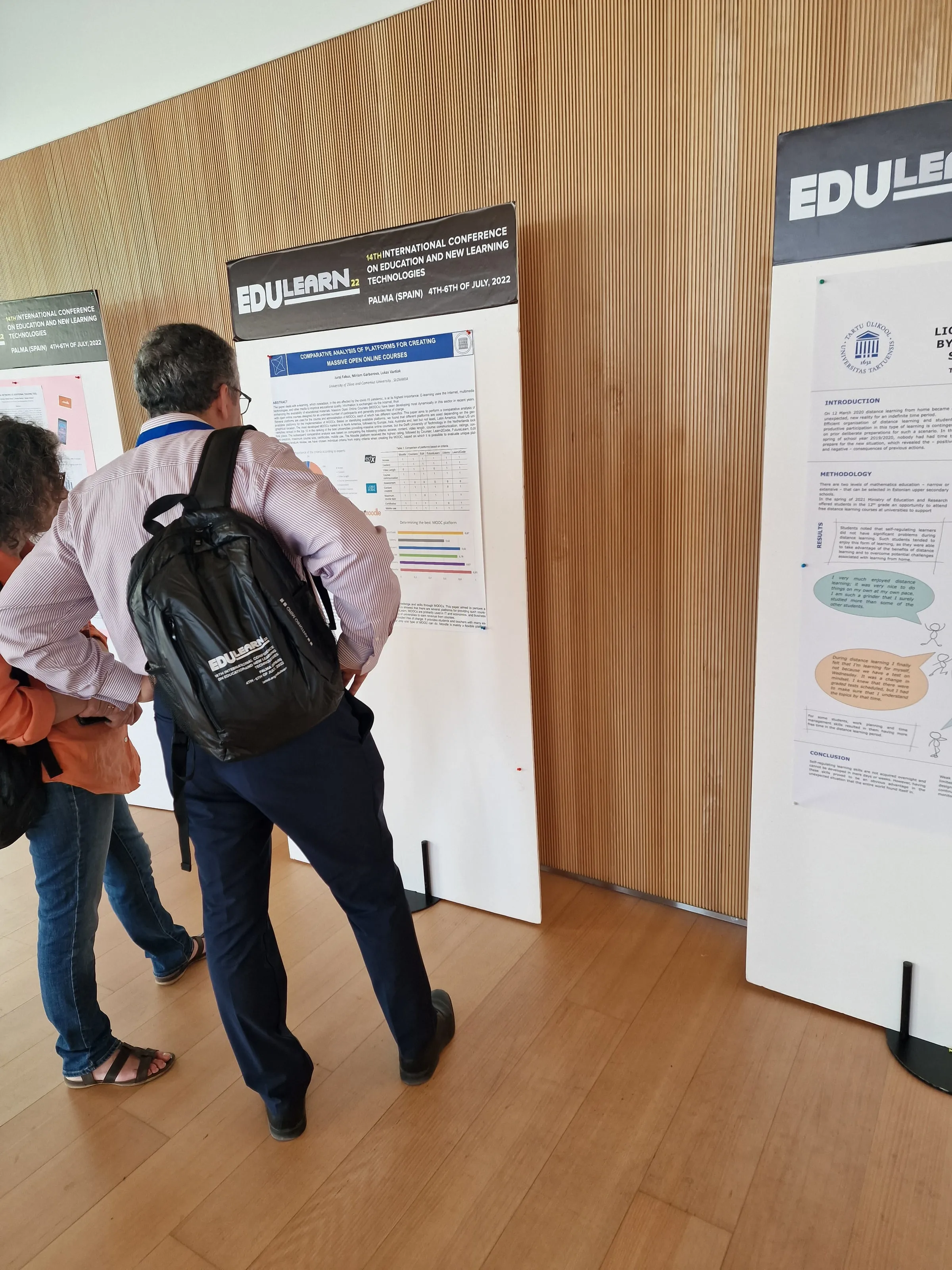
EDULEARN22: our poster on platforms for MOOC courses, and a random participant actually reading it.
The conference proceedings come out with a DOI, so whatever gets presented there can be looked up years later. In 2026 my co-authors and I had a paper on how the students of our department use Moodle — the plain-language version is here.
My top 10
Over the years a personal ranking has taken shape here. The order is subjective and complaints will not be considered. Where there is a link, there is more about the place further down:
- Tangerine ice cream in Sóller — you do not leave the island without it.
- Sunglasses from mó — two pairs for €69; a must-have, since I lose at least one pair a year.
- La Seu cathedral — that beautiful eye of the cathedral playing with colour.
- Valldemossa
- The Mercat de l’Olivar market
- The Mango outlet — restock your kit for the start of summer.
- Palma Aquarium
- Las Sirenas — they have never let me down, and the after-meal shot is always on the house.
Places 9 and 10 I am leaving open. Not for lack of candidates — but a ranking is a serious matter and I have to go back a few more times before closing it.
Palma
What to see in Palma: the cathedral, Passeig des Born and the old olive tree on Plaça de Cort. And the Mango outlet — that is not a joke, that is advice.
La Seu cathedral
Built from 1229 to 1601, so the builders had time for the details. The nave is 44 metres high and the rose window almost 14 metres across — the second-largest Gothic rose window in the world, after Strasbourg. From 1903 to 1914 the cathedral was reworked by Antoni Gaudí, until he fell out with the local authorities, and between 2001 and 2006 the chapel at the end of the right-hand nave received a ceramic covering by Miquel Barceló. It is a magical place and it plays beautifully with colour — not quite like the Sagrada Família, but still superb. Seven centuries, three artists, one building.
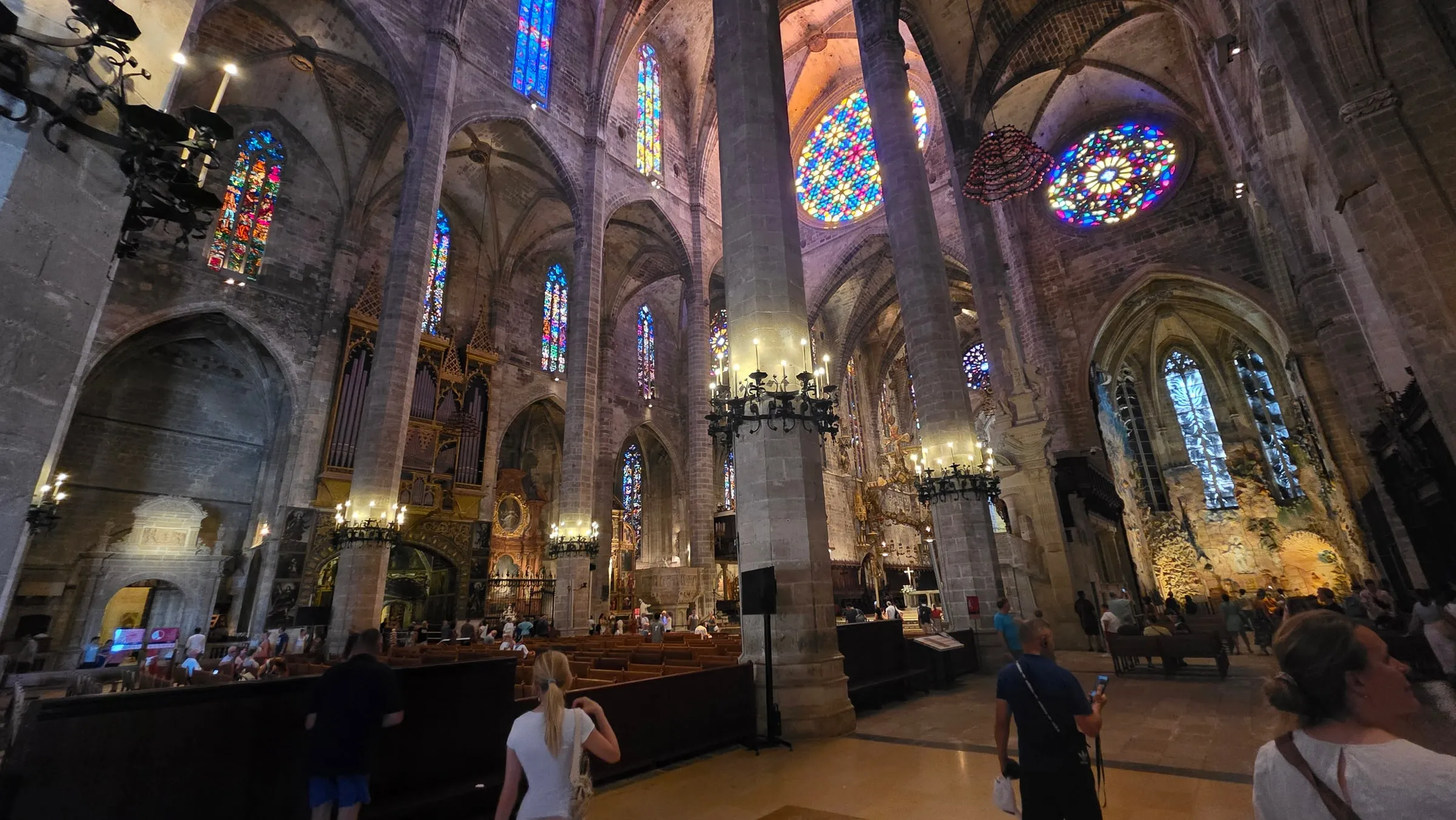
Bigger inside than it looks from outside. And from outside it looks huge.
The olive tree on Plaça de Cort
In front of the town hall stands an olive tree I guessed to be two hundred years old. The estimate is 500 to 600. It was transplanted to the square in 1989 from the Pedruixella Petit estate near Pollença, it is protected by law and it still bears fruit — which is more than can be said for most things people keep in pots at home.
Mercat de l’Olivar
Palma’s main market, opened in 1951 on the site of an older municipal market. It comes with ham and fish — in that order, and then ham again. If the cafés and tapas bars in town were not enough, you will certainly eat well and cheaply here too.
And while we are on tapas: cava belongs with them — my absolute favourite drink and one of the main reasons I like Spain. It is a sparkling wine made by the traditional method, like champagne; about 95% of it comes from Penedès in Catalonia, and the producers officially chose the name cava — Spanish for cellar — in 1970 to set themselves apart from the French. They set themselves apart mainly by price, in the right direction. Which is why in the picture at the top I am not sitting with a coffee: rather than coffee, I will have cava.
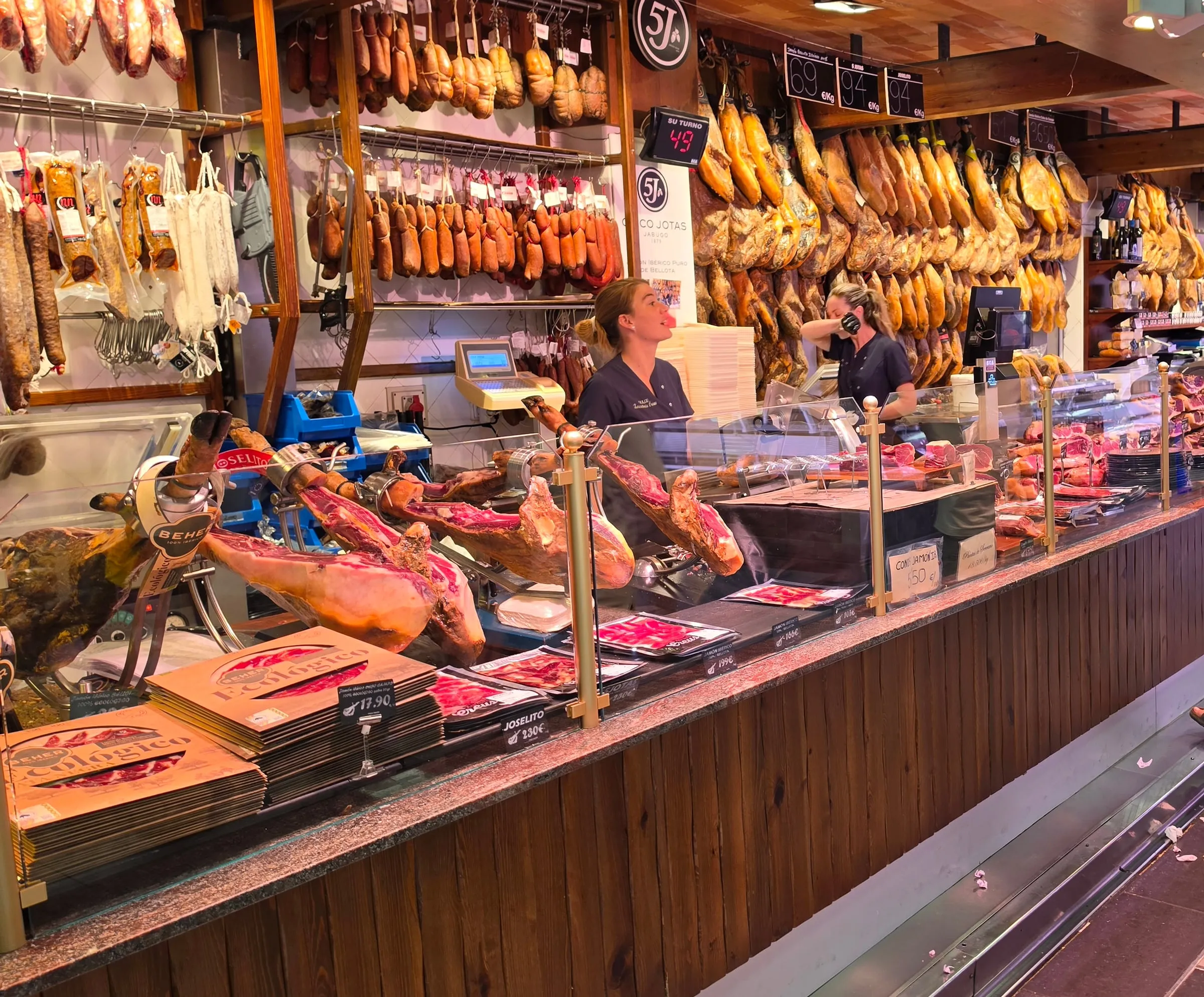
Ham. The prices on the boards are per kilo and not for the faint-hearted.
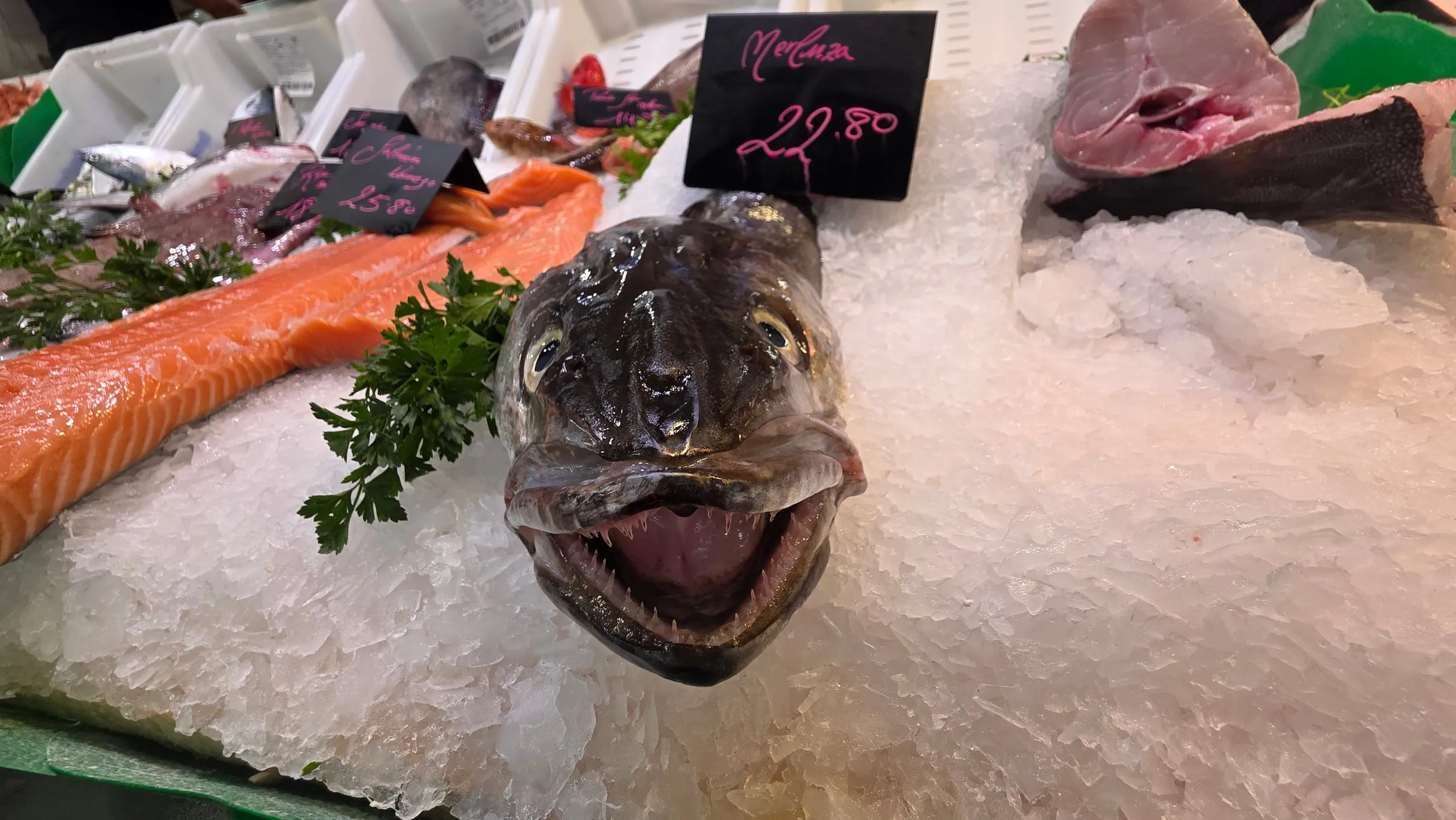
And fish. This one is watching you. The look is included in the price.
The port
Cruise ships leave from Palma and I was once on one of them — MSC Opera. More on that another time, but I recommend it: it is a great sightseeing trip. All your things stay in the cabin, every day you wake up in a new destination and you go ashore with nothing but a small bag. The captain handles the hotel move. MSC is a company with Italian roots — founded in Naples, based in Geneva — and the food on board, especially the seven-course dinners, is worth it in itself. Surprisingly many people never leave the ship in port, roughly a third according to surveys. To me that is a pity; a destination is hard to see from the deck.
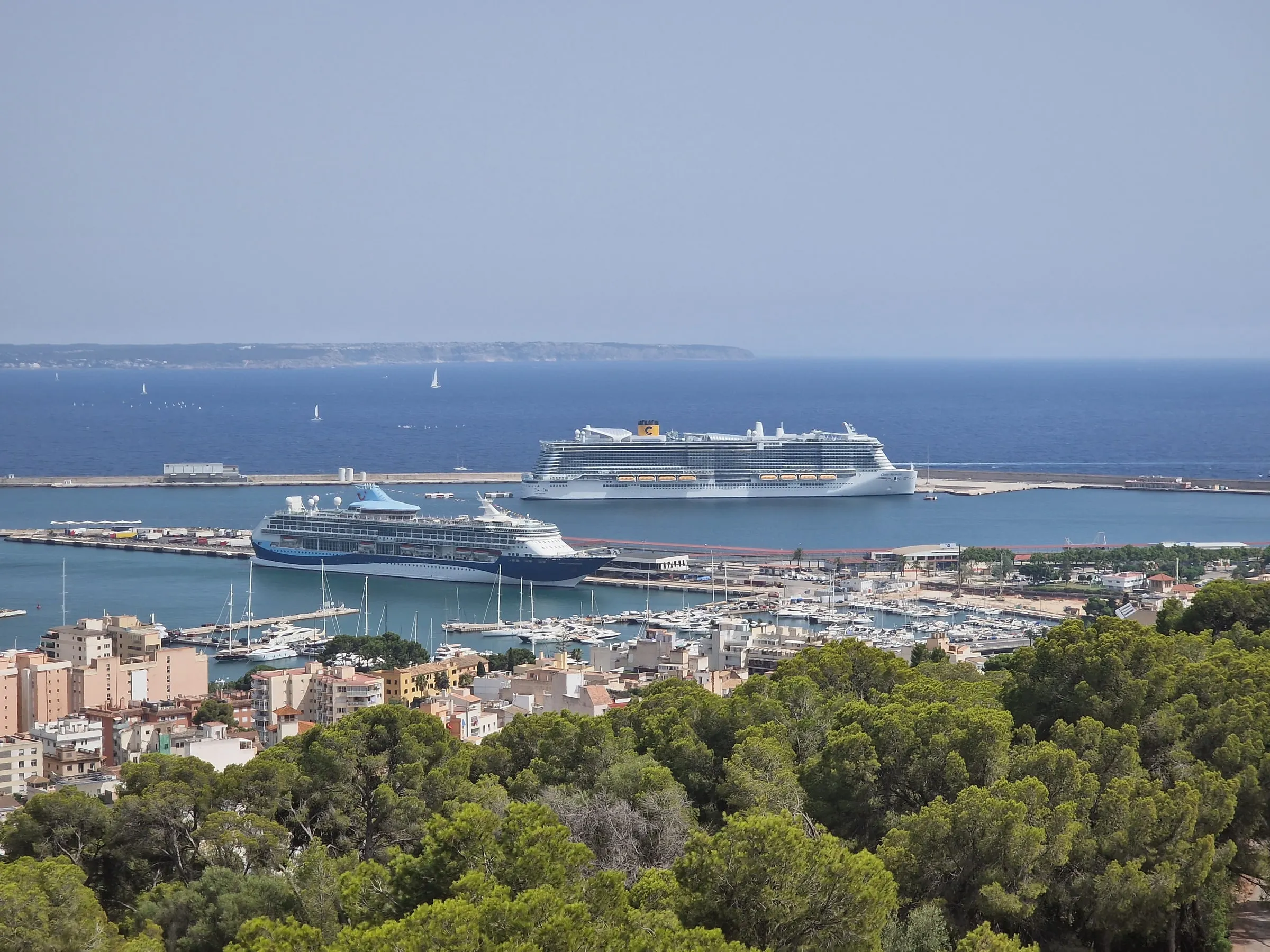
The port of Palma. Cruise ships dock here every day, sometimes two at once.
Palma Aquarium
Opened in 2007, it has 55 tanks and five million litres of water. The shark tank, Big Blue, is 8.5 metres deep — the deepest shark tank in Europe — and the aquarium also holds the largest collection of live coral in Europe. Recommended: small, but lovely. And the shark in Big Blue, unlike the hake at the market, still has fairly decent prospects.
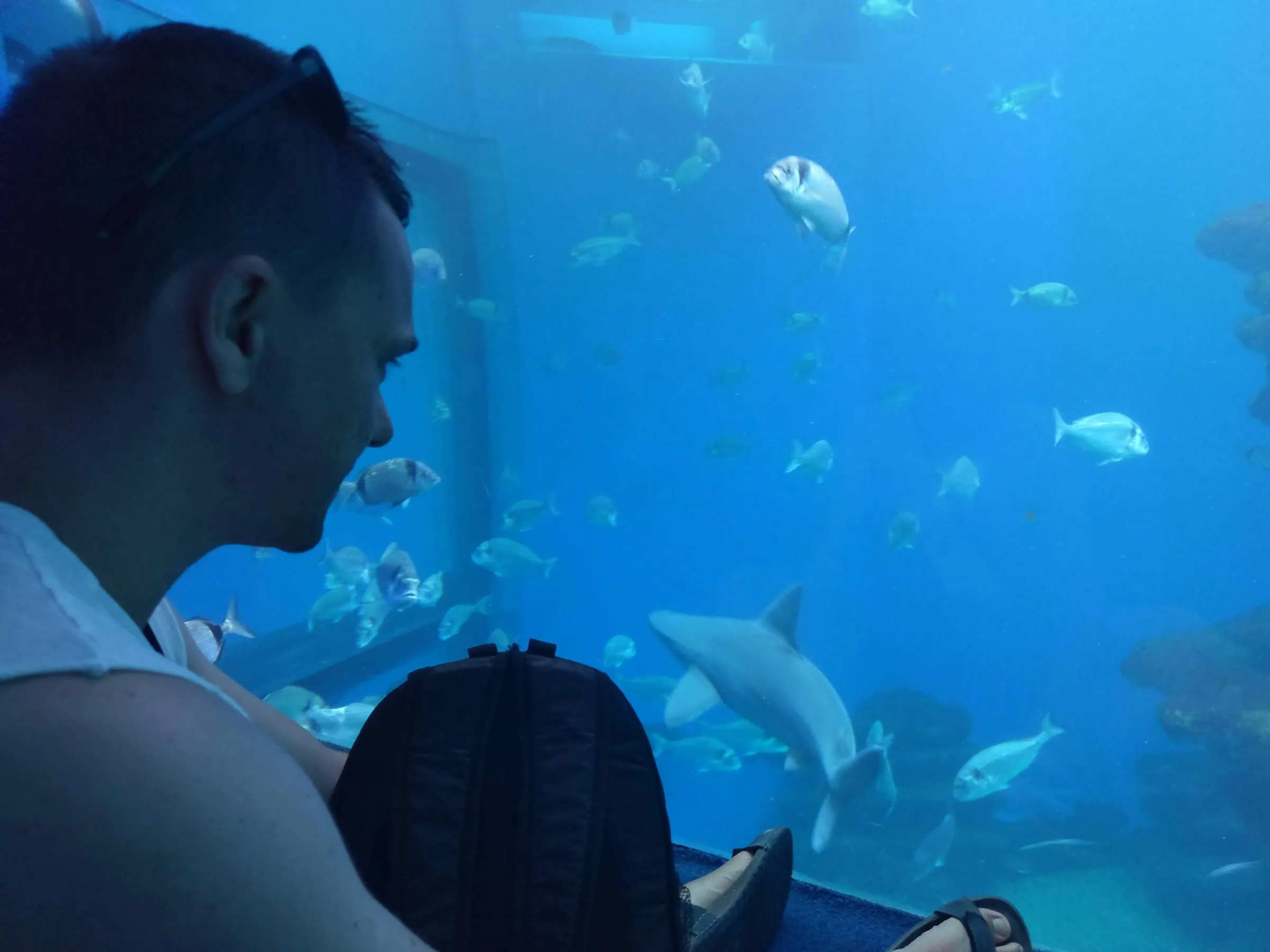
Big Blue. The shark is looking back.
Beyond Palma
The compulsory line-up: Sa Fàbrica de Gelats in Sóller, Valldemossa, a fish dinner in Port d’Andratx and the nudist beach Cala del Mago. The market in Sineu is worth the sin as well — choose the order according to the weather and your conscience.
Valldemossa
A pleasant village that still lives off a single winter. The charterhouse was originally the palace of King Sancho; in 1399 it went to the Carthusians and in 1835 they were expelled. Frédéric Chopin and George Sand then spent the winter of 1838–1839 here — Chopin finished his Preludes Op. 28 and Sand wrote the book A Winter in Majorca about the stay. Chopin’s cell is now a museum with his Pleyel piano, and in the garden Chopin has a bust that looks exactly as tired as one feels after a winter without heating.
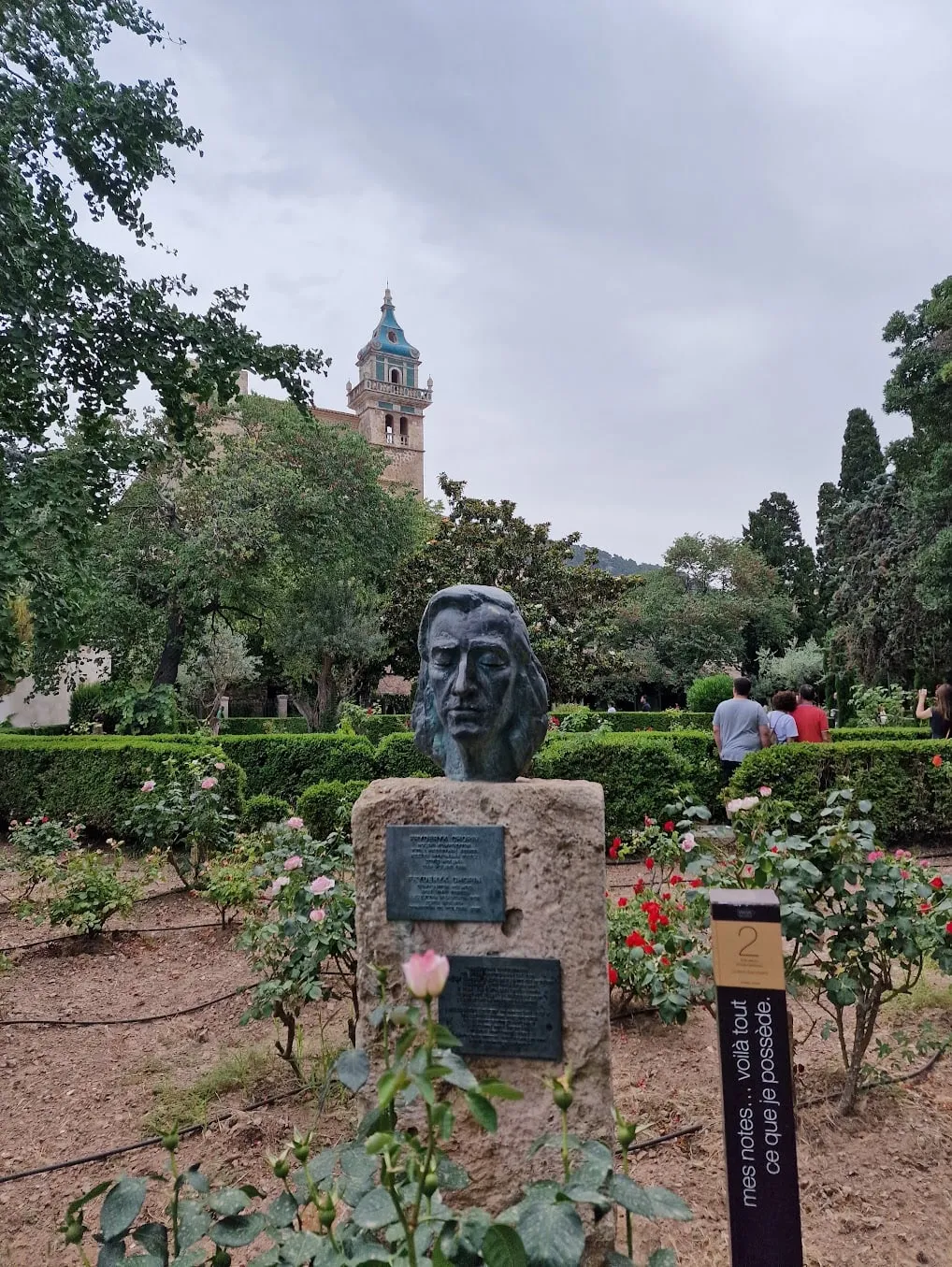
The charterhouse garden in Valldemossa. Chopin pretends it is still January.
Sóller
The town grew on oranges and lemons — even the railway from Palma, completed in 1911, was paid for by citrus profits. I go there for the perfect tangerine ice cream at Sa Fàbrica de Gelats, which, given the town’s history, is entirely consistent behaviour.
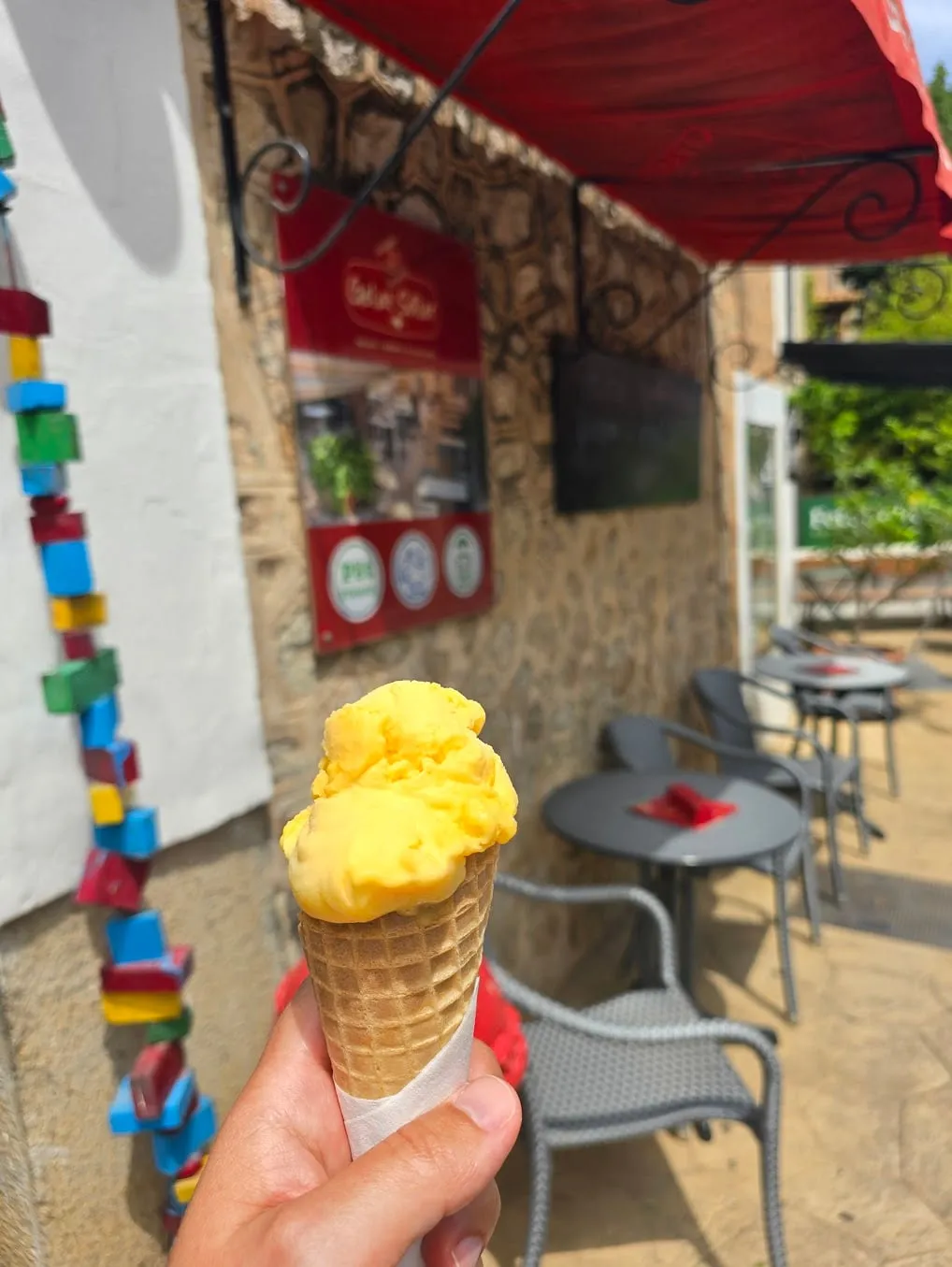
Tangerine. This is what people go to Sóller for.
Port d’Andratx
Fish dinner. Compulsory, no further comment — just go.
Cala del Mago
A small cove near Portals Vells: twenty metres of sand and the first official nudist beach in Calvià. It takes its name from the film The Magus with Anthony Quinn and Michael Caine, which was shot here in 1967. The actors, I assume, wore more than today’s visitors.
Sineu
The market is worth the sin — with a coffee to go with it. But prepare for proper hell: a billion people and 45 degrees without shade. That is part of it; that is life on Mallorca.
And the other places I have been — no guidebook, just so it is clear what has been added over the years:
- Port de Sóller, Deià and Cala Deià, Sa Calobra and the mouth of the Torrent de Pareis, Santuari de Lluc, Pollença and the Mirador des Colomer viewpoint on Formentor, Alcúdia
- Artà and Capdepera with the Coves d’Artà caves, Porto Cristo with the Coves del Drac, Manacor and the Majorica pearls, Felanitx and the Santuari de Sant Salvador, Ses Salines and Campos with the Flor de Sal d’Es Trenc salt
- the beaches of Mondragó, Caló des Moro, Es Trenc, Cala Anguila, Cala Marçal, Cala Major, Can Pastilla and Platja de les Meravelles
- in Palma also the Palau de l’Almudaina and the S’Hort del Rei gardens, Castell de Bellver, Poble Espanyol, La Llotja and the Font de les Tortugues
Where to stay
Lately we have settled on the Helios Mallorca Hotel & Apartments in Can Pastilla: great breakfast, clean and fresh-smelling rooms, good air conditioning, a short walk from the beach and one bus stop (ten minutes) from the conference — just so it is clear that I go there for the conference, not for a holiday. Before that we tried all sorts — one side of Palma and the other, the city and the countryside. In the countryside it was Finca La Calma in the wine region around Santa Maria del Camí, where the piglets ate lemons. As a place to stay it works differently now than it did then, a pity — but I still recommend the wine tasting at the nearby Celler Macià Batle. We have also stayed in the island’s other wine region, around Felanitx — and from there the view from Puig de Sant Salvador, the hill with the sanctuary above the town, is compulsory.
Food
I have three favourite restaurants: Bon Vent in Can Pastilla, Las Sirenas in s’Arenal and Sa Llotja in Portocolom. Plus Tres Leñas in Can Pastilla, where they cook paella over an open fire. And food on Mallorca means black paella and salmorejo — one looks terrifying, the other like ordinary tomato soup, and both are worth ordering.
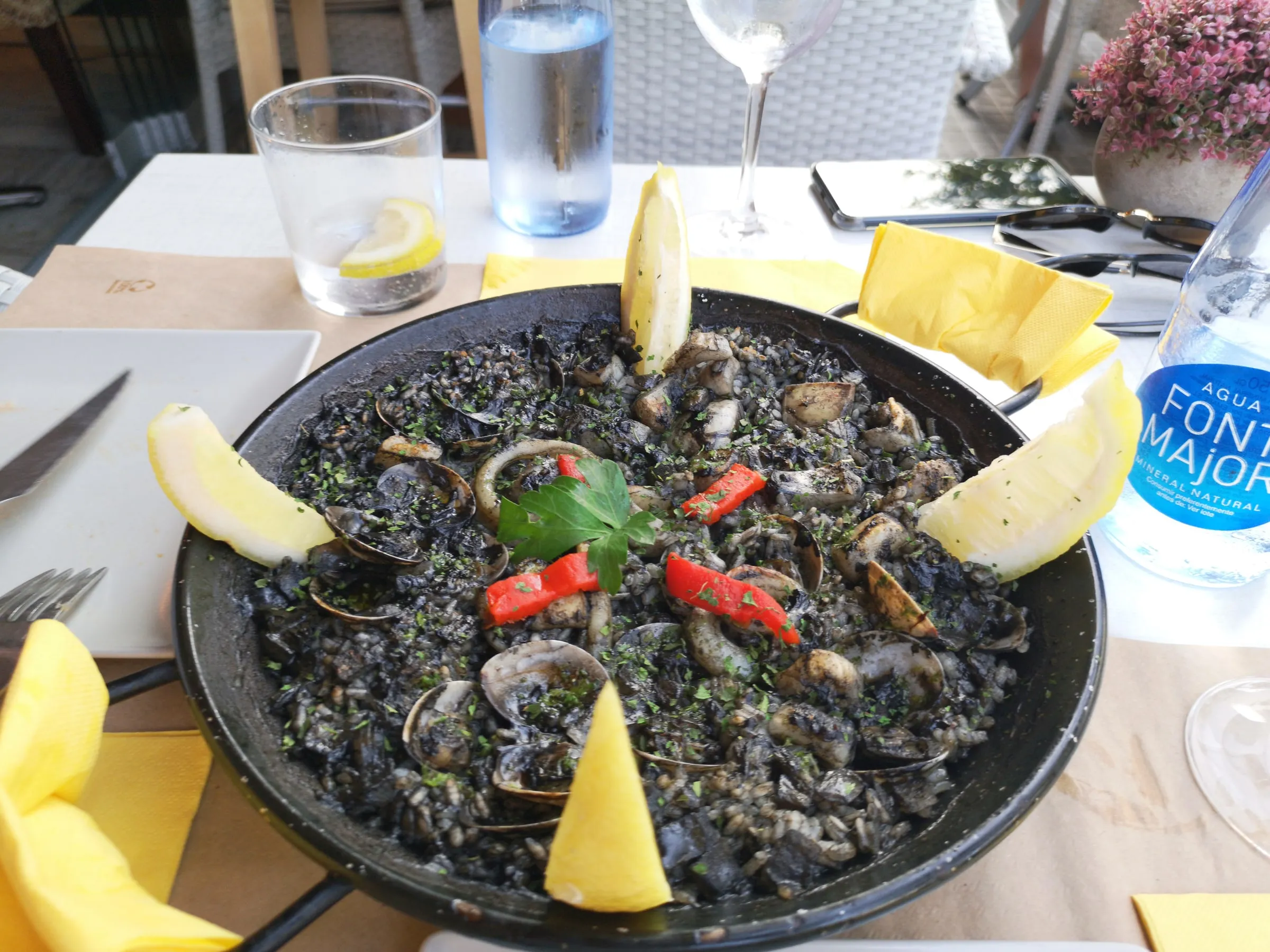
Arròs negre — black rice. The colour comes from cuttlefish or squid ink; by origin it is a Valencian and Catalan dish. Check your teeth afterwards.
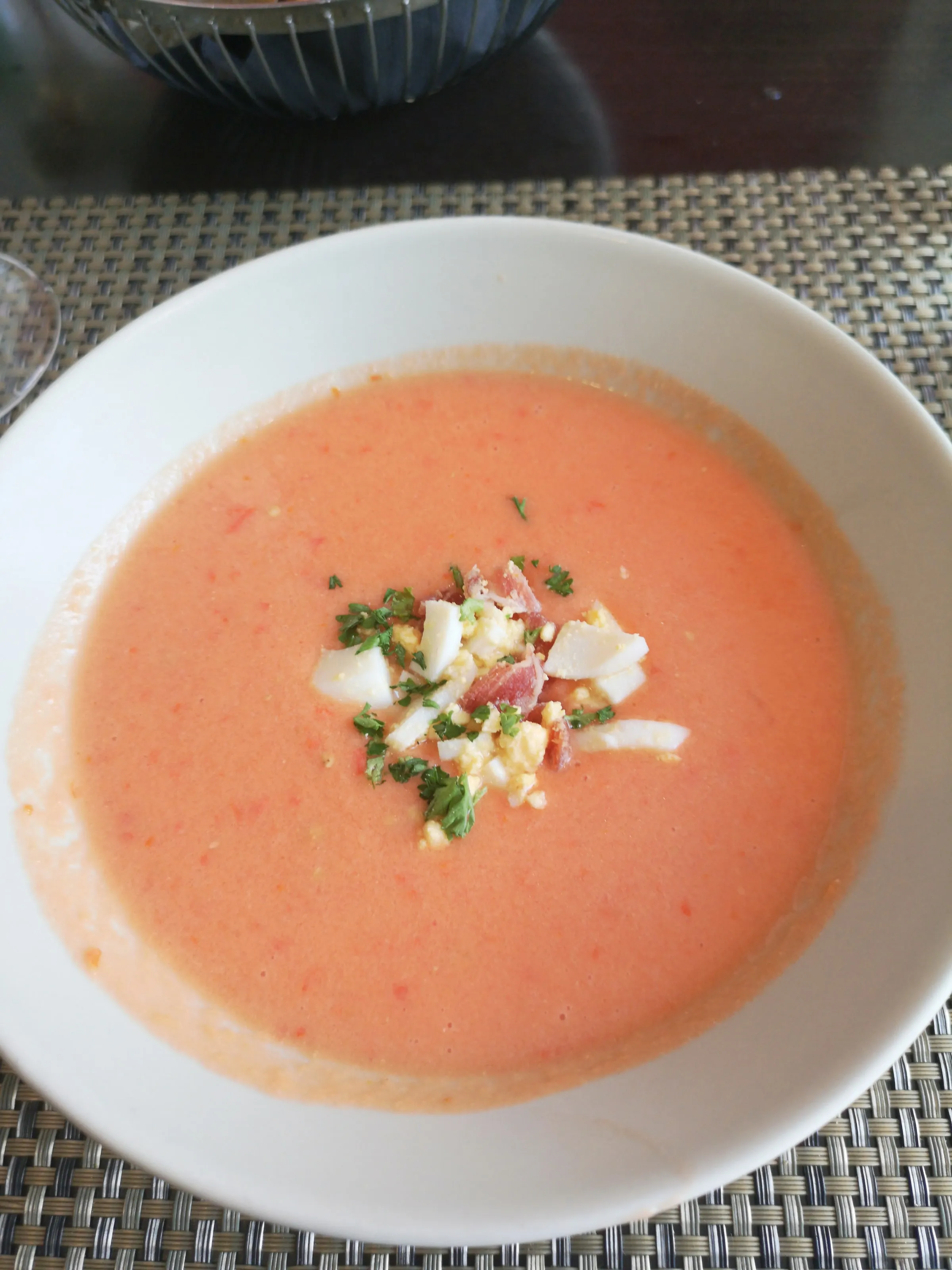
Salmorejo — a cold soup of tomatoes, bread, olive oil and garlic, originally from Córdoba. Thicker than gazpacho, with egg and jamón on top.
Two small things that belong with all this. Alioli — garlic and olive oil whipped into a cream — with bread or straight on the black paella. And the ensaïmada, a spiral pastry of yeast dough made with pork lard (saïm in Catalan, hence the name), documented on Mallorca since the 17th century; filled with cream or candied pumpkin strands (cabell d’àngel), or left plain with icing sugar. I am not one for sweets, but on Mallorca you simply have to try it.
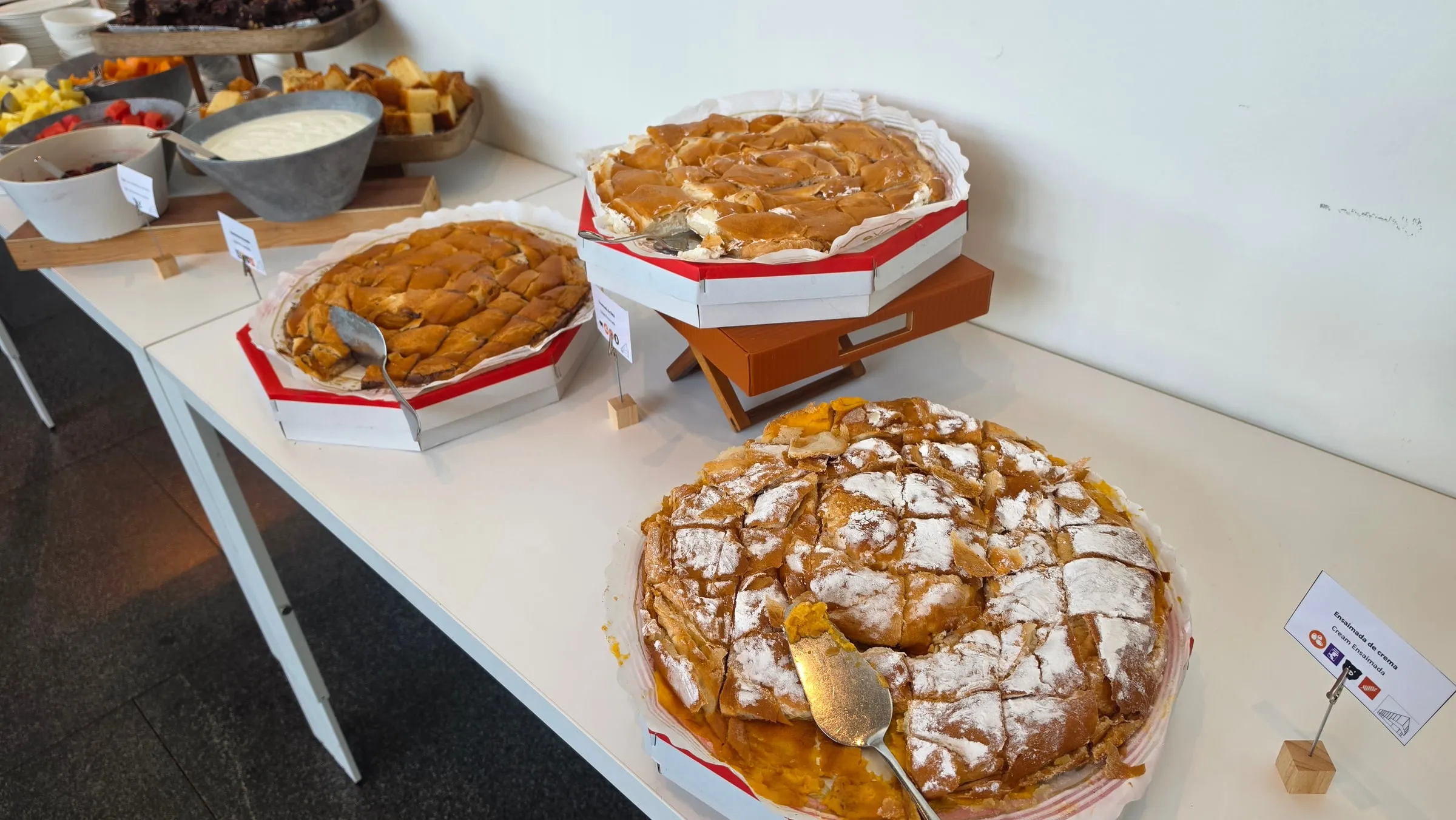
Cream ensaïmada as the little something after the conference lunch. Once a year is fine.
What to bring home
As a gift, without question: olives pickled sour like gherkins, olive-wood spoons, flaky salt from Ses Salines and, of course, pearls from Manacor and olive oil. With the oil I recommend an acidity below 0.2 so it is not pungent — if, that is, you do not like pungent. If you do, Mallorca has you covered.
Added: August 2026 — first publication, a summary of trips 2018–2026. September 2026 — My top 10.