Budapest
Budapest is the Queen of the Danube — as historic as Prague, yet so spacious that the tourists simply get lost in it. I go there to lecture, to keep up old contacts, to make new ones and to eat well.
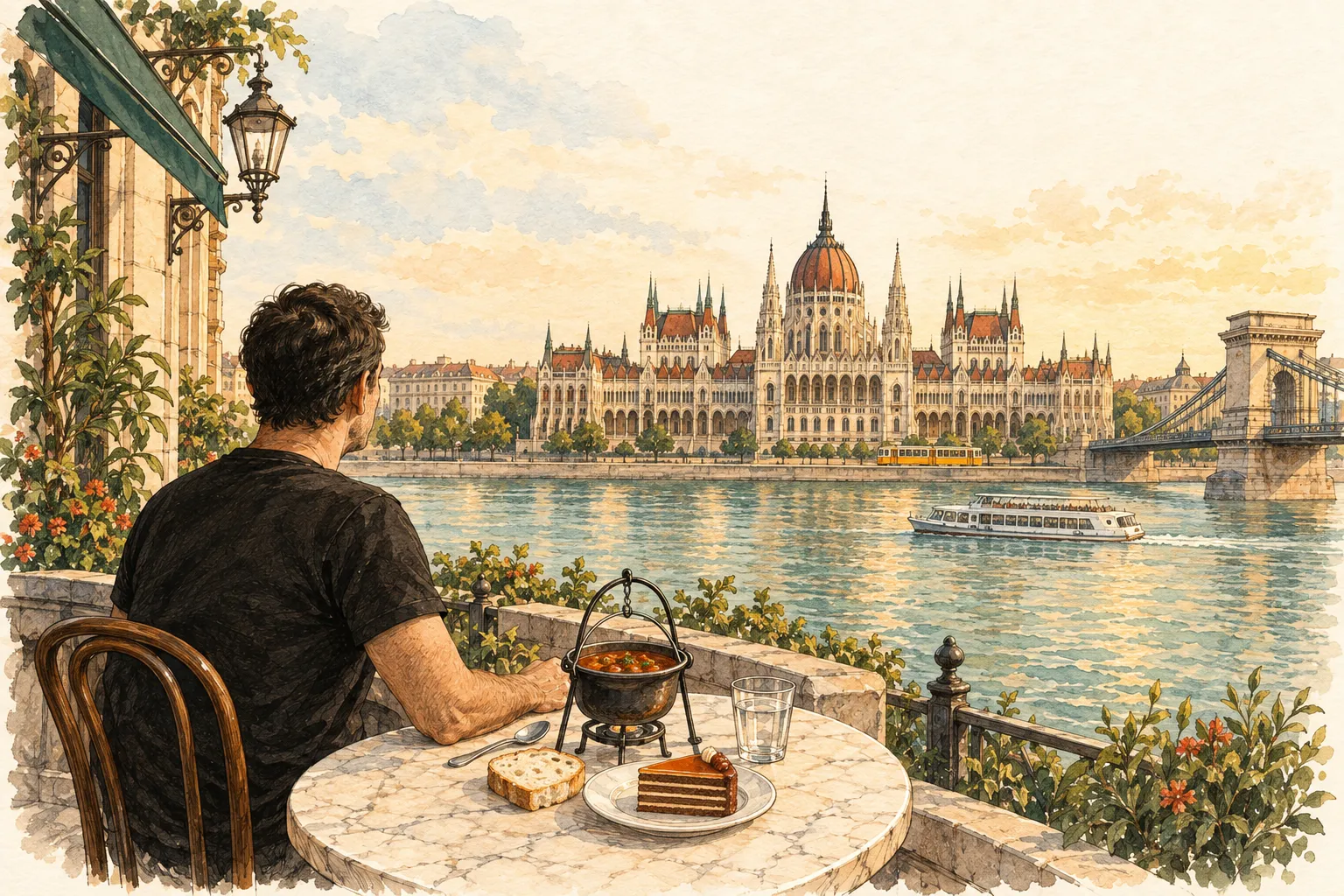
Budapest is the Queen of the Danube. I did not make that up. The city really carries the nickname. Its buildings are as historic as those in Prague, but everything is far wider and more spacious, so the tourists get lost in it and nobody pushes anybody. Add great food — the goulash is a must — and kind people, although I do not understand a word they say. Hungarian is a Finno-Ugric language and no amount of Slavic intuition will help you. And then there is the “coffee” culture. The quotation marks are deliberate, because I do not drink coffee. The little cakes on every corner are reason enough for me, although I admit I prefer savoury.
How many times, and why
Since 2022 I have been to Budapest eight times, usually once in spring and then again in September. Before that, twice and briefly. In August 2013 it was a day trip from Štúrovo to the Tropicarium, an aquarium with a shark tunnel in the Campona shopping centre in the south of the city, and in September 2014 a single night ahead of a flight to Burgas. Google Photos counts 1,067 photos of mine from Budapest between September 2014 and September 2026. Getting there by train is easy — last time via Bratislava to Nyugati station and onwards by metro. This entry sums up all of those trips and it will keep growing.
A map is the best way to show where I have taken photos over the years. The centre of Pest and both banks of the Danube glow the most. The separate blob in the top right is City Park with the Széchenyi Baths, and the one on the left belongs to Fisherman’s Bastion. The Tropicarium is missing from the map. I cropped it out, because it lies so far south that it stretched the map for no good reason.
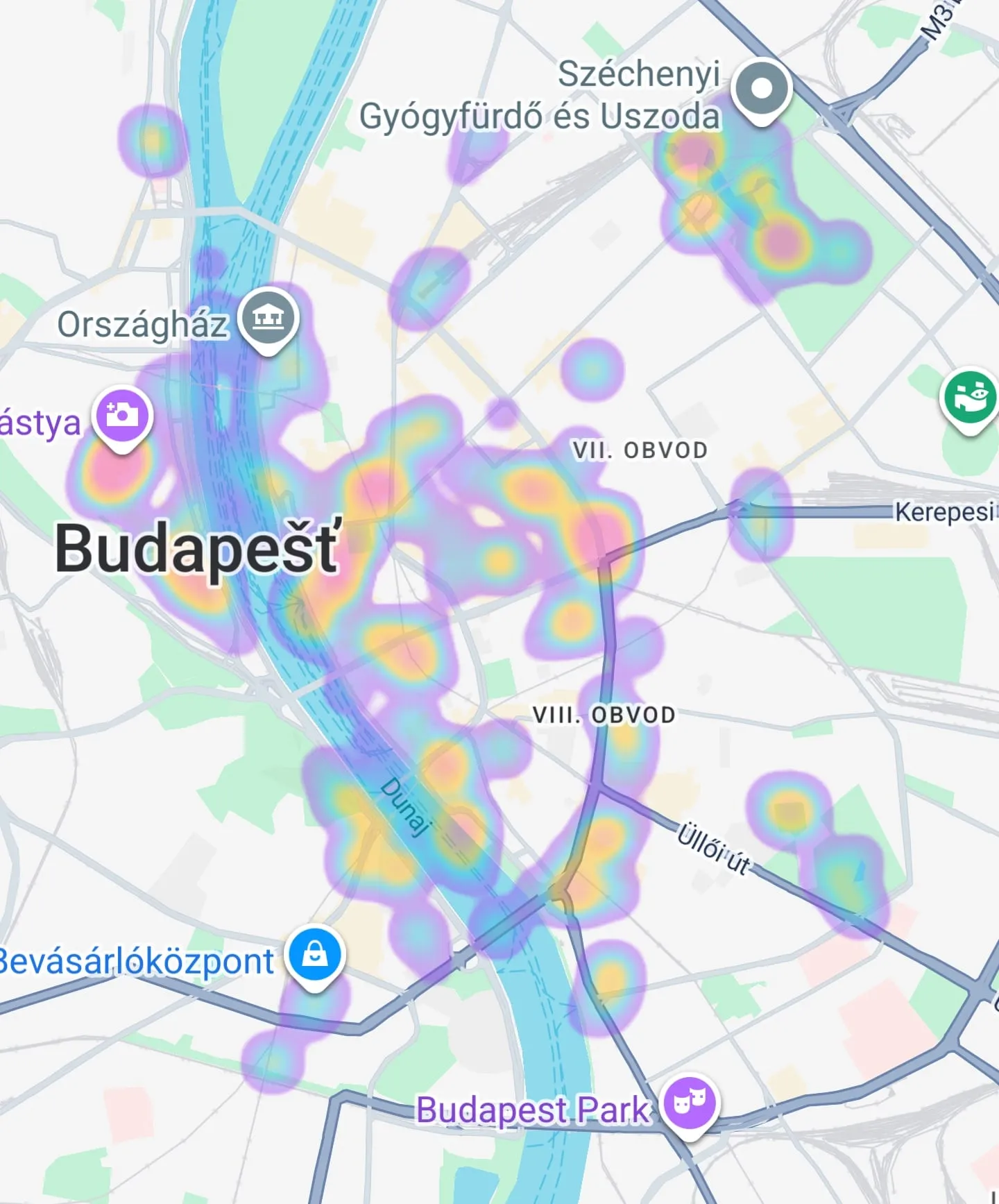
Where the photos from all the trips were taken. Map from Google Photos.
Work footprint
Since 2022 I have been going to Budapest for work, through either the CEEPUS or the Erasmus+ programme. I have visited the Budapest University of Technology and Economics, BME for short, eight times. I usually talk there about the blockchain economy, about the new economy and the Internet of Things, and about cryptocurrencies in payments. My latest stay was in September 2026.
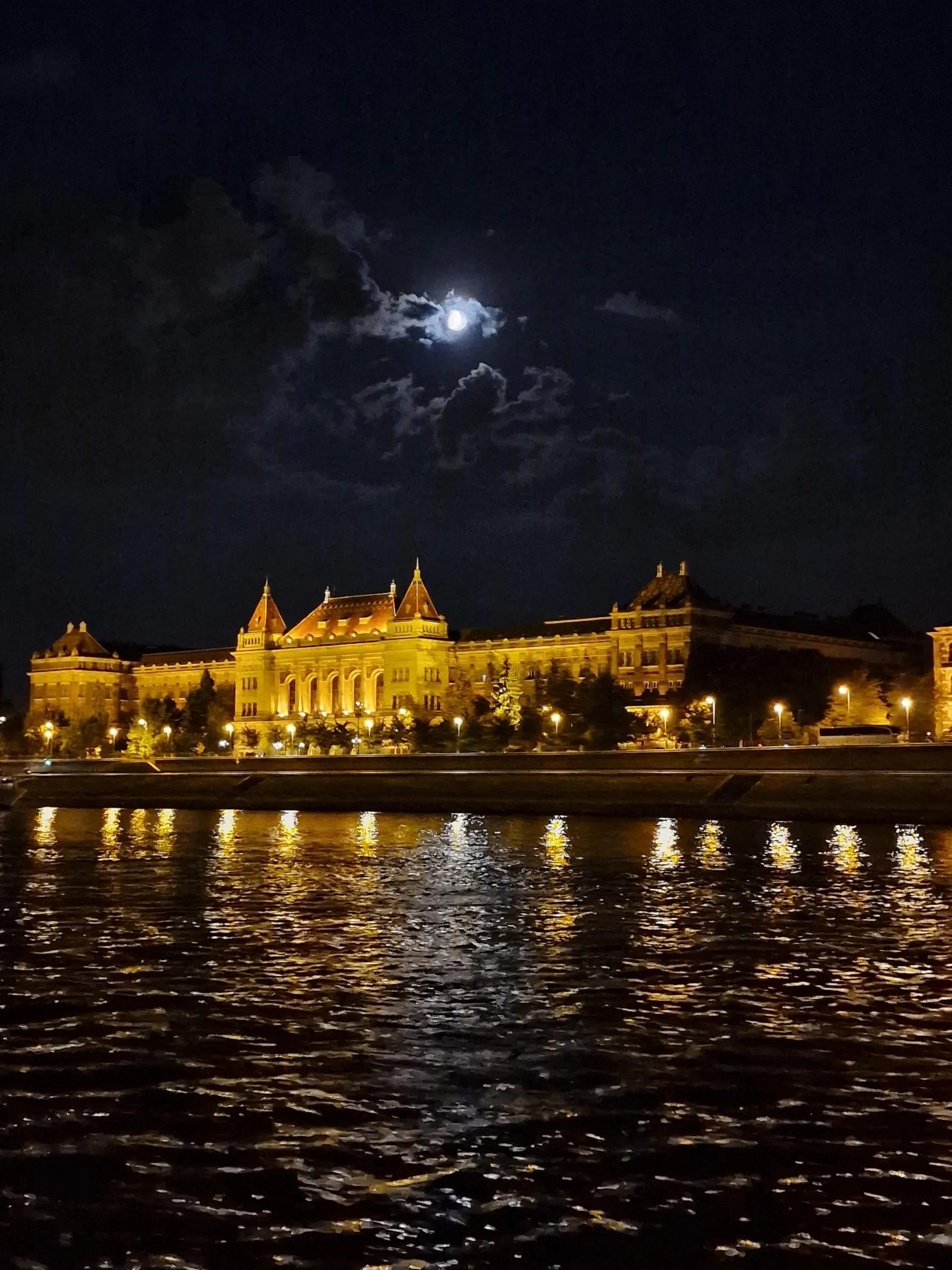
BME on the Buda bank of the Danube, September 2022. There are worse places to go to work.
My top 10
The order is mine and subjective. As always.
- Gundel
- Dandár Baths
- Vajdahunyad Castle
- Centrál Kávéház
- Great Market Hall
- St. Stephen’s Basilica — not the tour, the concert.
- Fisherman’s Bastion
- House of Music
- VakVarjú — this spot used to belong to the Ruszwurm confectionery on Castle Hill. It has been closed since August 2025, so VakVarjú inherited it.
- A cruise on the Danube
City Park
Városliget, the park at the end of Andrássy Avenue, is where three items of my top 10 sit within a few minutes’ walk of each other. It starts with Heroes’ Square and the Millennium Monument, which commemorates a thousand years since the arrival of the Hungarians in the Carpathian Basin. The column is 36 metres tall and Archangel Gabriel stands on top of it. In 2026 he was not there, though. The statue was taken down in autumn 2024, after more than 120 years, and is being restored, so for the time being the column had no angel.
Gundel
Gundel is a restaurant in the park, right next to the zoo. The building dates from 1894, when the place was called Wampetics, and Károly Gundel took it over in 1910. It was nationalised in 1949 and reopened in 1992. Two things from its kitchen are now on menus all over Hungary. The Gundel pancake with walnuts, raisins, rum and chocolate sauce. And somlói galuska, which I get to below under Food. Gundel is my number one and I stop there on most of my trips.
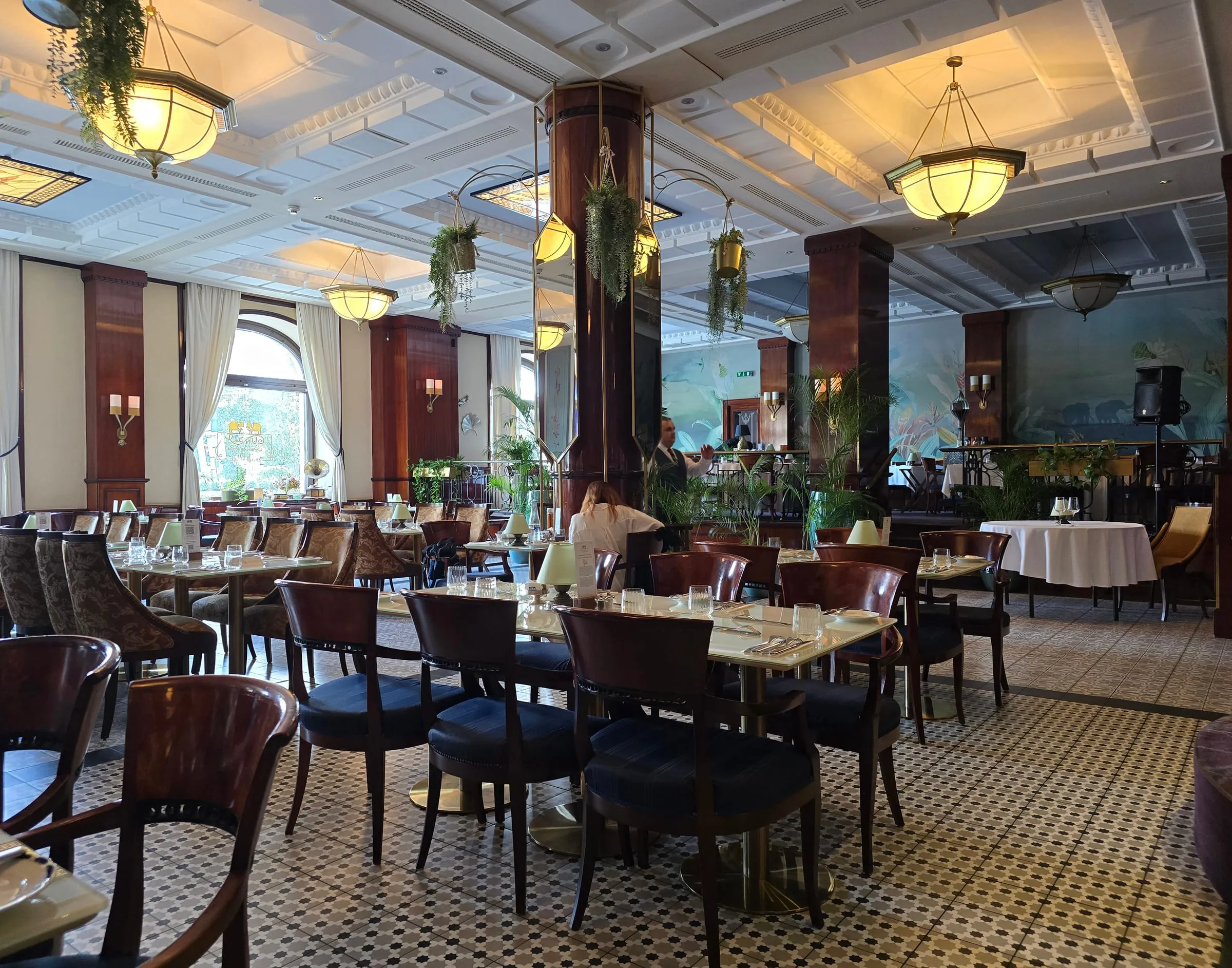
Gundel, September 2024. This is what number one looks like.
Vajdahunyad Castle
A castle that looks medieval and yet comes from the end of the 19th century. It was built for the Millennium Exhibition of 1896 to a design by Ignác Alpár, originally from wood and cardboard. The temporary structure was torn down and by 1908 rebuilt in stone and brick. It is a collage of buildings from all over historic Hungary — above all Hunyad Castle in Transylvania, today’s Hunedoara in Romania, which gave it its name. Romanesque, Gothic, Renaissance and Baroque in a single courtyard, so you can cover the history of architecture in fifteen minutes. Inside is the Hungarian Agricultural Museum, and in the courtyard sits the statue of the chronicler Anonymus by Miklós Ligeti from 1903.
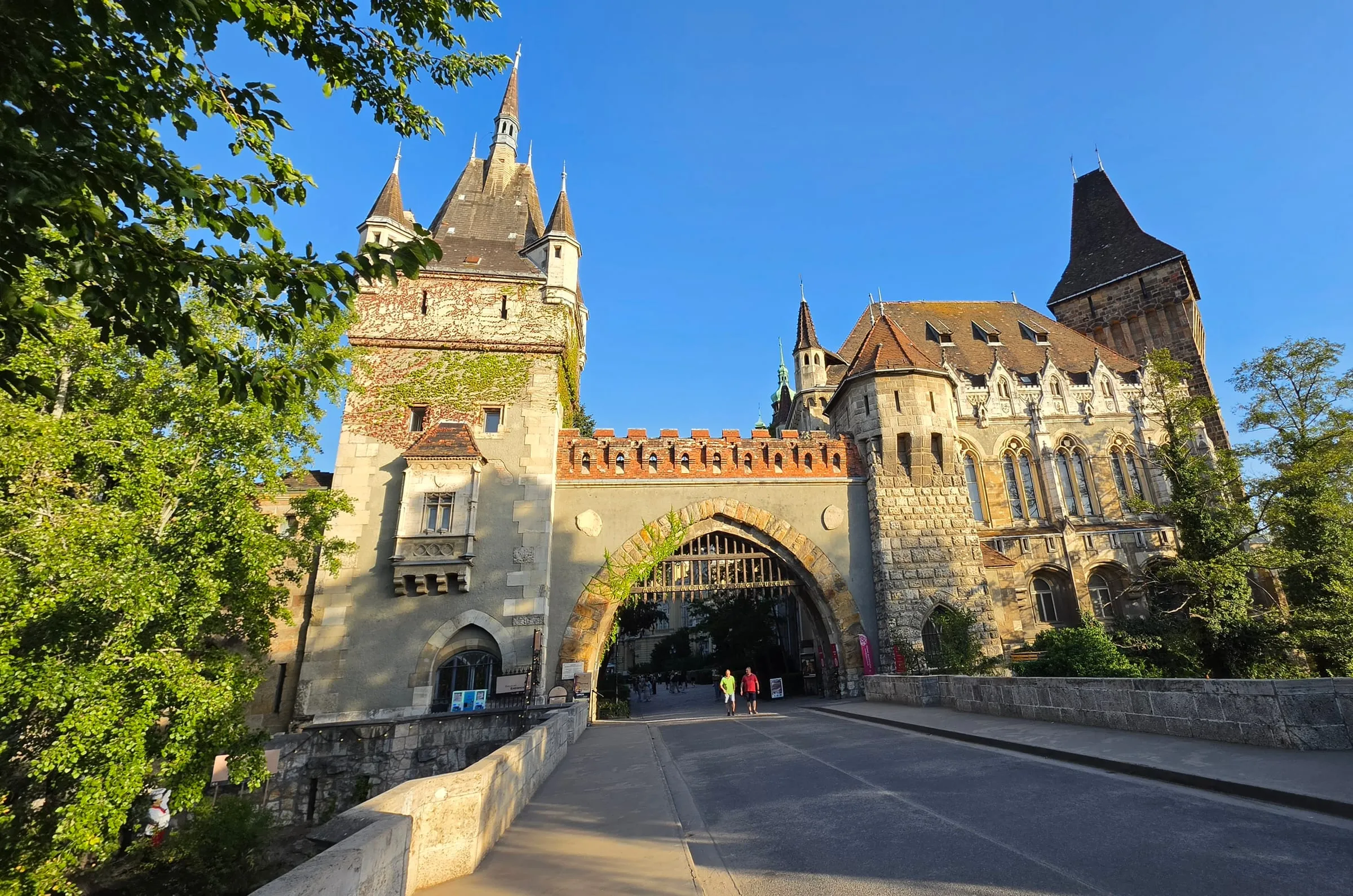
Vajdahunyad, September 2026. The Middle Ages, vintage 1896.
House of Music
Magyar Zene Háza opened in January 2022. It was designed by the architect Sou Fujimoto and stands by the lake not far from Vajdahunyad. The roof has nearly a hundred openings for light and the glass façade reaches almost twelve metres in places. The permanent exhibition, spread over roughly a thousand square metres, walks you through the history of music, and in the sound dome, the Hangdóm, more than thirty loudspeakers play around you. I was there in April 2025 for the permanent music exhibition and for a temporary one on world music. Right next to the building is a musical playground with outdoor instruments — chimes, column bells, drums and pipes. There is no age limit, which is good news for adults.
Theatre in a box, April 2025. Holographic figures perform on a miniature stage. Seven seconds, no sound.
Pest
The left bank of the Danube is flat land, boulevards and most of what gets eaten in Budapest. Most of my top 10 as well.
St. Stephen’s Basilica
The basilica was under construction from 1851 and was not consecrated until 1905. Three architects took turns — József Hild, Miklós Ybl and József Kauser — and in January 1868 its dome collapsed. Today it stands 96 metres tall, exactly as tall as the Parliament, and that is no coincidence. The chapel holds the Holy Right, the mummified hand of King Stephen. The basilica did not make my top 10 for the tour, though, but for a concert. Organ concerts are held regularly, mostly at eight in the evening, and the programme is on the basilica’s website. And then the view from the tower. More than three hundred steps lead to the lookout in the dome, 65 metres up, and since 2003 there has also been a lift.
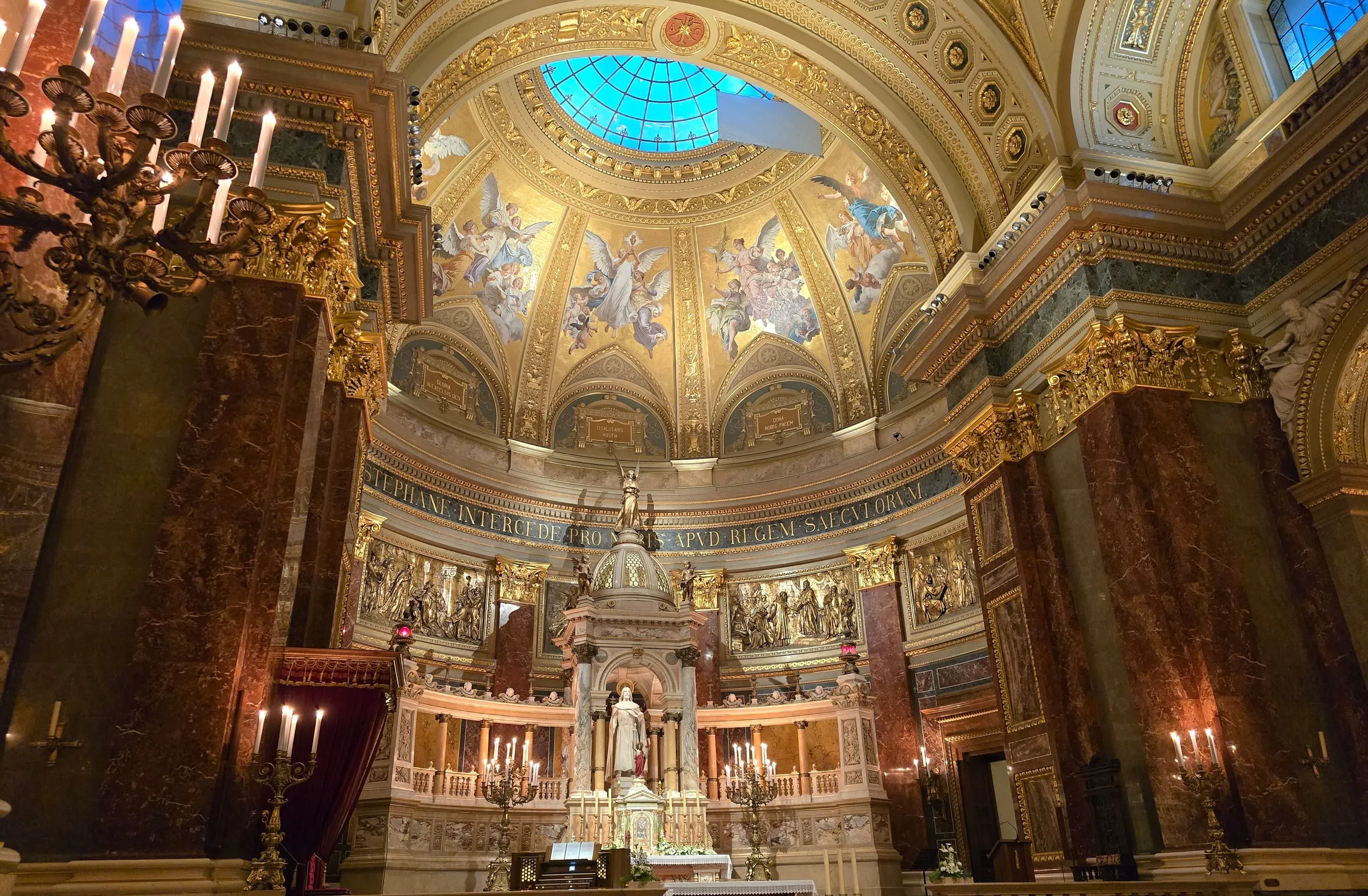
An evening concert in the basilica, May 2024. Gold, marble, candles and an organ.
Centrál Kávéház
A café from 1887. It housed the editorial office of the weekly A Hét, and from 1908 it was the meeting place of the circle around the literary journal Nyugat — Ady, Babits, Kosztolányi, Karinthy, Móricz, Krúdy. It was closed in 1949 and the premises then served as a works canteen, a university club and finally a gaming hall. The café came back in 2000. I keep coming back too, most recently in September 2026. It is my favourite café in Pest, and not only because of the cakes. The menu now also has lángos with goulash on one tray. The photo is further down under Food.
Great Market Hall
The market hall opened on 15 February 1897. It was designed by Samu Pecz, its roof is covered in colourful Zsolnay ceramics from Pécs, and the hall is 150 metres long with three levels. It was closed in 1991 and reopened after renovation in 1994. My advice is brief — pumpkin seed oil is a must. More under What to bring home. Right next door is the restaurant Pipa, where I stop almost every time.
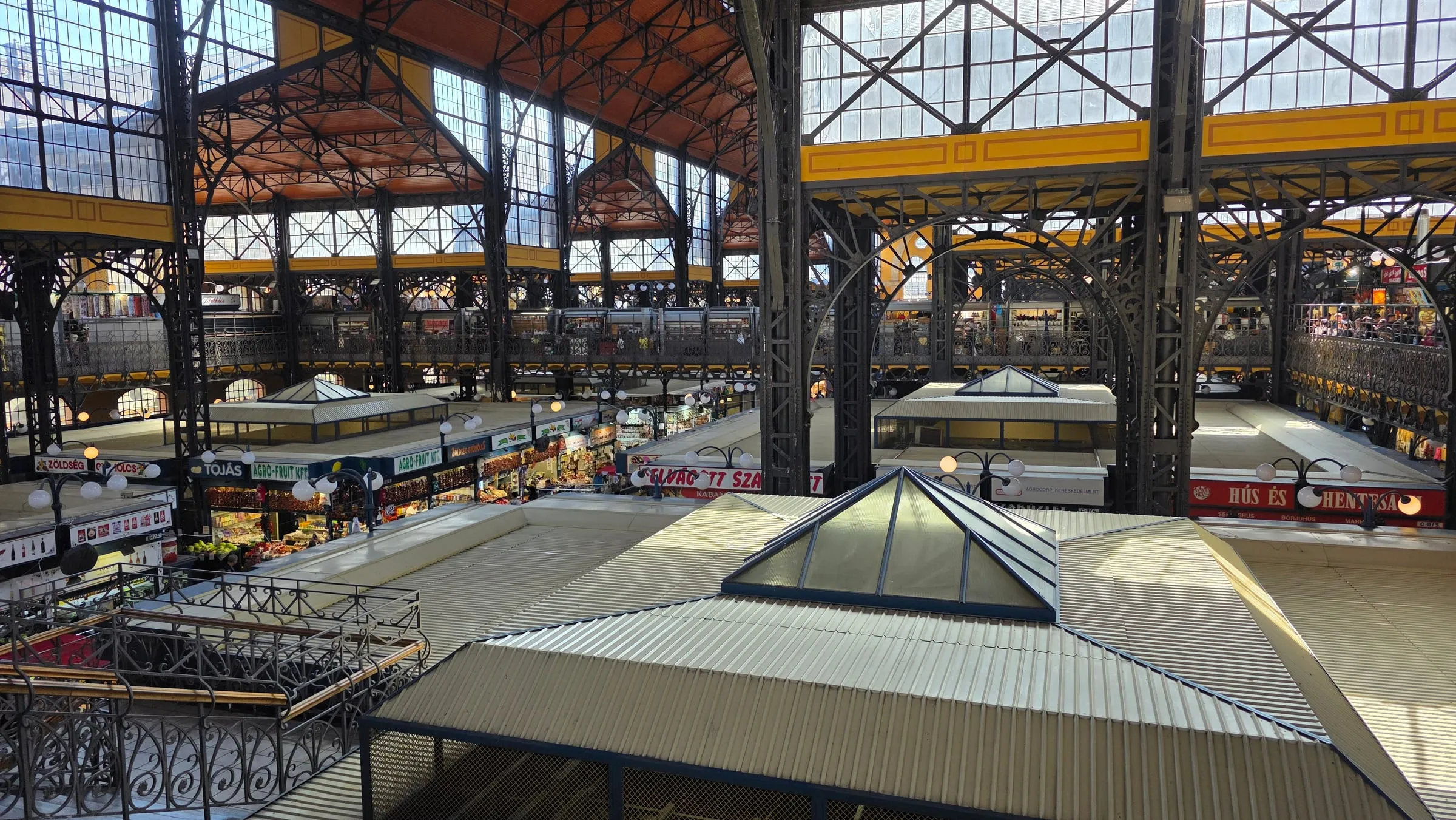
The Great Market Hall from the gallery, April 2025. A hundred and fifty metres of steel, glass and paprika.
The Parliament
The Országház was built between 1885 and 1904 to plans by Imre Steindl. It is 96 metres tall and 268 metres long, has 691 rooms, and since 2000 the Holy Crown of Hungary has been on display in its Dome Hall. It is one of the largest parliament buildings in the world. That is also why I only admire it from the outside. I have no plans to go in, because with 691 rooms I would not make it back until the next Erasmus. From the outside, though, I stop by on every single trip.
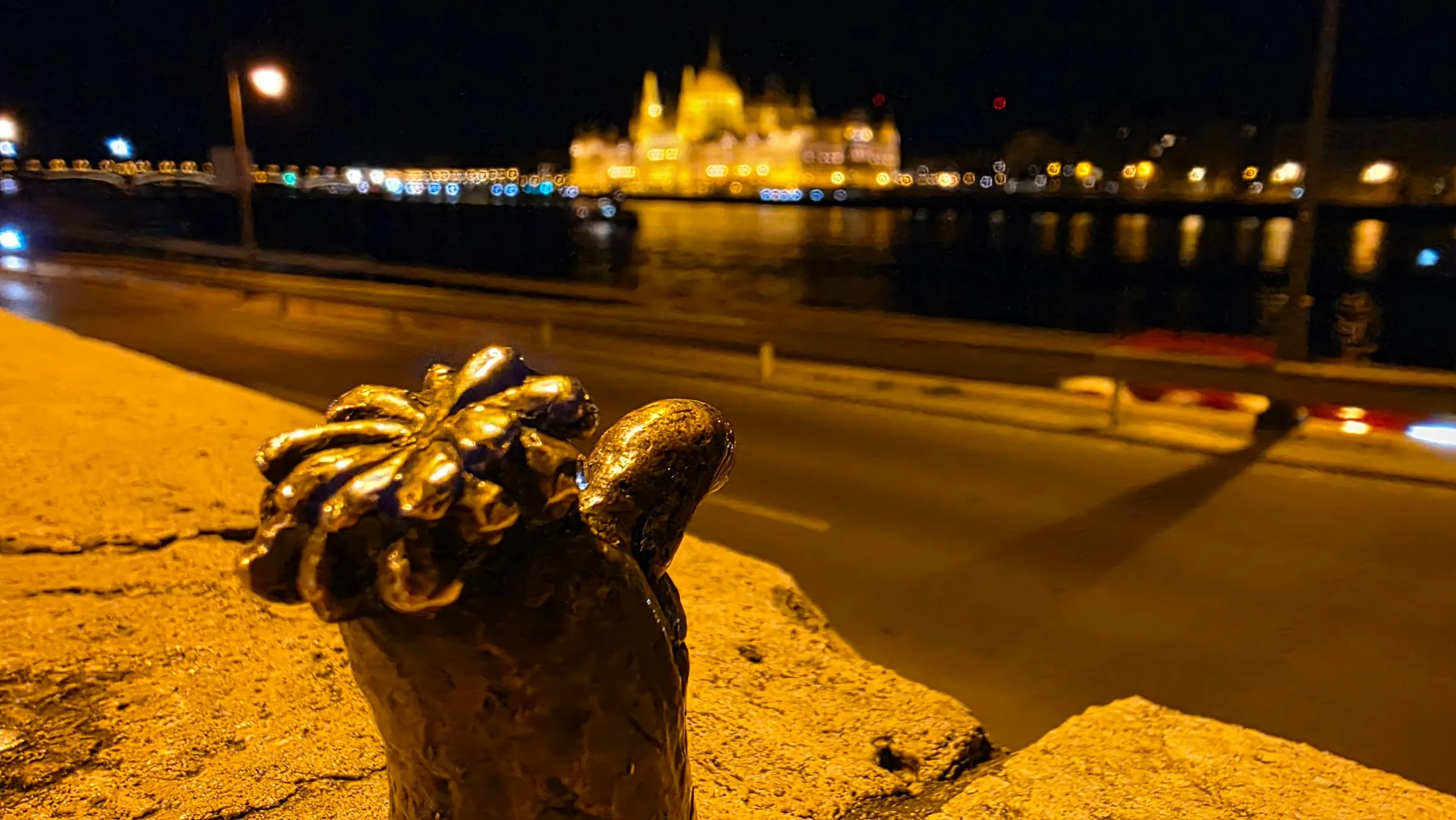
The Parliament from the Buda bank, April 2025. At night it lights up the whole embankment, and in the foreground a tiny metal figure is watching it.
Such little figures are scattered all over Budapest. They are the work of the sculptor Mihály Kolodko, stand about fifteen centimetres tall, and today there are more than forty of them around the city. This one on the Bem rakpart embankment is Főkukac, the worm from a Hungarian cartoon series, and it was his first in Budapest. Hunting for them is a sport of its own.
A cruise on the Danube
The banks of the Danube, together with the Buda Castle Quarter, have been on the UNESCO World Heritage List since 1987, and from the water you can see why. In September 2026 I took a one-hour sightseeing cruise with Legenda City Cruises. The boats leave from dock 7 on the Jane Haining rakpart embankment, a few steps from Vigadó tér on the Pest side. The Parliament, the castle, the bastion and the bridges in a single frame, and not one step to climb.
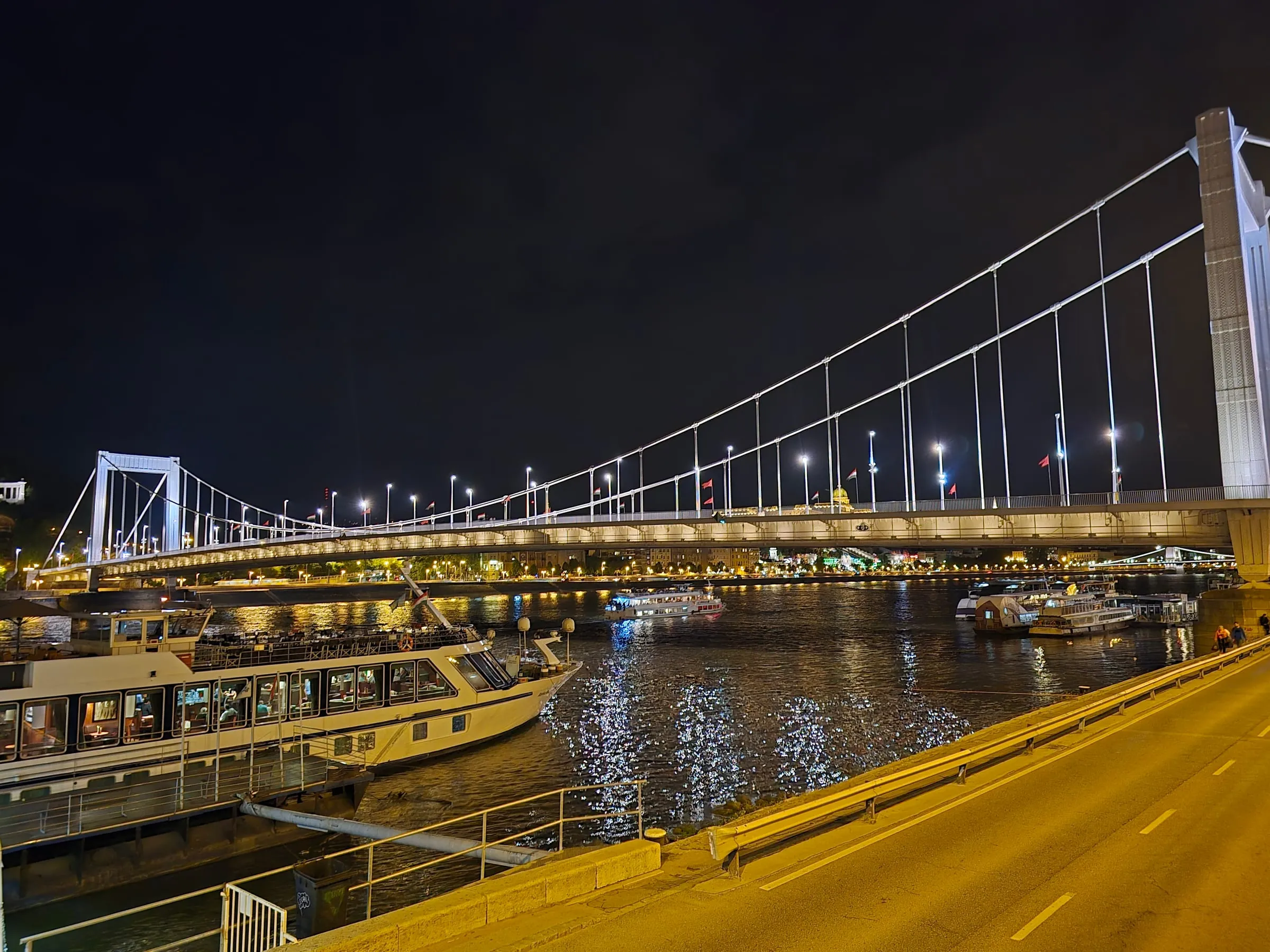
Elisabeth Bridge and sightseeing boats on the Danube, May 2024.
Buda
The right bank is a hill, a castle and views. This is where you go to look at Pest.
Fisherman’s Bastion
The bastion was built between 1895 and 1902 in Neo-Romanesque style to a design by Frigyes Schulek. Its seven towers stand for the seven Hungarian tribal chieftains. It is named either after the guild of fishermen who defended this stretch of the walls in the Middle Ages, or after the fishermen’s settlement below the walls — historians have not settled that yet. On the view of the Parliament they all agree.
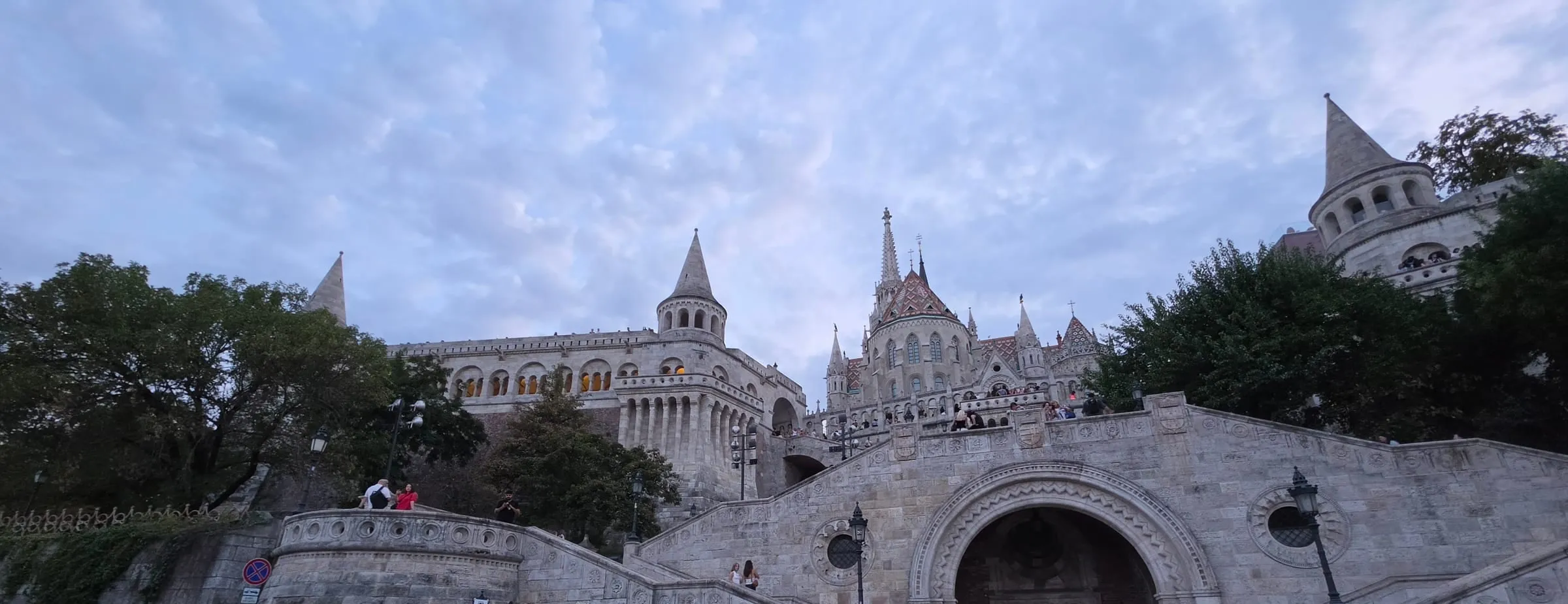
Fisherman’s Bastion, September 2026. A fairy-tale castle that never defended anything.
Matthias Church
Right behind the bastion stands Mátyás-templom. It owes its present look to the same Frigyes Schulek, who rebuilt it between 1874 and 1896 and gave it back its medieval appearance. The roof is covered in colourful Zsolnay ceramics, the same make as on the Great Market Hall. The tower is 78 metres tall and 197 steps lead up to the lookout. It is worth the climb, because the pattern of the roof can only be seen in full from above — and the bastion lies below you like a model.
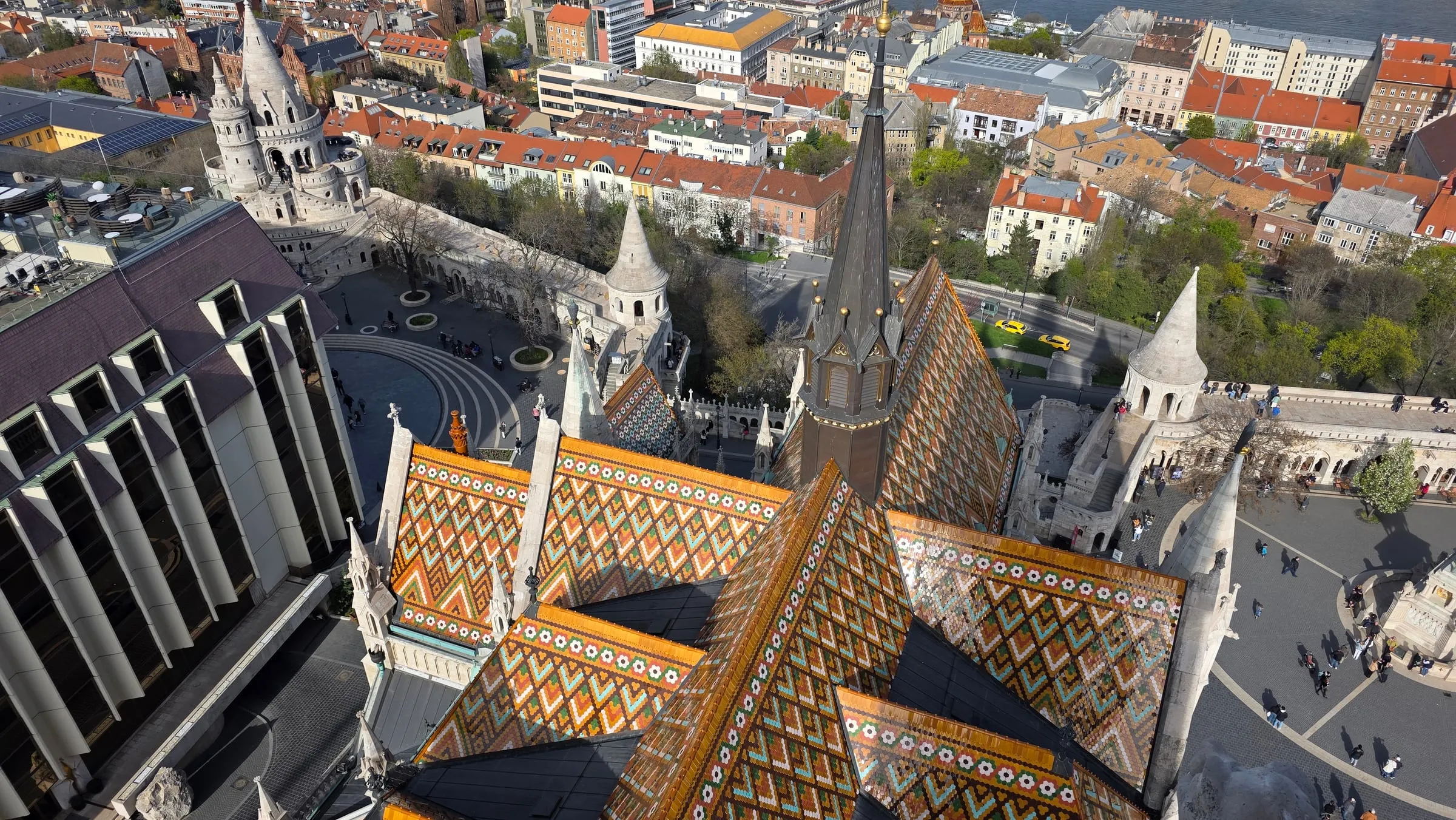
The church roof and Fisherman’s Bastion from the church tower, April 2025.
Buda Castle
The palace now houses the Hungarian National Gallery, the Budapest History Museum and the National Széchényi Library. The first royal residence here was completed in 1265, the Baroque palace dates from the 18th century, and after its destruction during the siege in the winter of 1944 and 1945 it was rebuilt in a simplified form. In September 2026 I also walked past Sándor Palace, where the President of Hungary has had his office since 2003.
And one more thing. Whenever I am here in September, the castle courtyards and terraces host the Budapest Wine Festival. In 2026 it was the 35th edition already, with nearly two hundred exhibitors. For someone who comes here precisely in September, that is a remarkably happy coincidence.
Thermal baths
Budapest also goes by the nickname Capital of Spas. I have tried four — Széchenyi, Gellért, Lukács and Dandár. The Széchenyi Baths in City Park opened in June 1913, have 18 pools and rank among the largest bath complexes in Europe. They are on every postcard. My number two is elsewhere.
Dandár Baths
Dandár in the ninth district opened in 1930 as the city’s first municipal hygiene bath, meant for people from the surrounding tenement houses who had no bathroom at home. The medicinal water was at first brought in by tanker. Today the bath has its own well and the water has the same composition as in the more famous Gellért Baths. Two outdoor pools at 36 to 38 degrees Celsius were added in 2014. In June 2024 the baths were closed because of structural problems, from December 2024 they operated partially, and since August 2025 they have been fully open again. I only ever go to the outdoor pools anyway, where a whole day of relaxing costs a few forints. And a pro tip — the lady at the snack bar downstairs is generous and the wine flows freely.
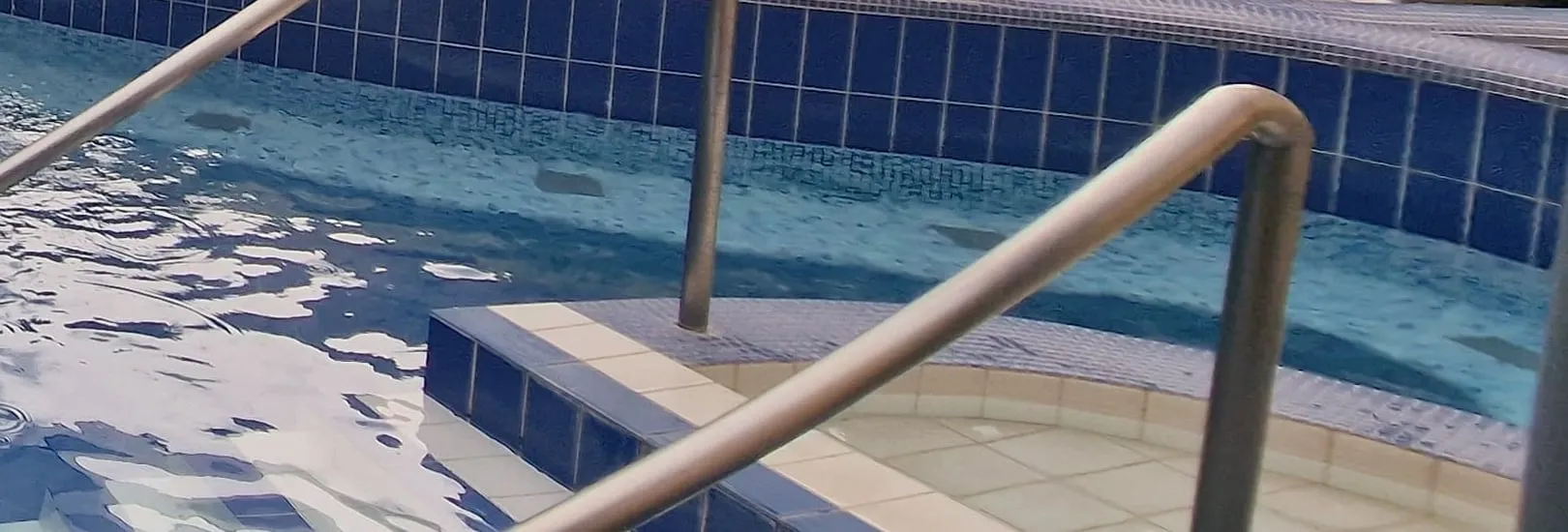
An outdoor pool at the Dandár Baths, September 2022. No postcard, just warm water and peace.
Other places I have been to
Margaret Island, the Shoes on the Danube Bank, the Budapest Eye, the Citadel, Lehel Market Hall, Várkert Bazár, the Zwack Unicum Museum, the Stamp Museum, the 1956 Revolution Memorial, Bálna and the Tropicarium.
Where to stay
I have no regular hotel in Budapest and I keep changing addresses, from apartments to a hotel. Most recently, in September 2026, it was the Corvin Hotel Budapest, Sissi wing, by the Corvin-negyed station on metro line M3. Deák Ferenc tér is three stops away. My honest verdict on all of them is the same — they were fine, but I would not go out of my way to return to any of them. So I have no recommendation, and for once nobody is selling you anything.
Food
The goulash is a must. Just mind the vocabulary. In Hungary gulyás is a soup, originally a cauldron dish of the cattle herdsmen of the Great Hungarian Plain — gulya means herd and gulyás means herdsman. The thick stew the rest of us call goulash is closer to what Hungarians know as pörkölt. Paprika only found its way into goulash around the turn of the 18th and 19th centuries. Before that it was seasoned with black pepper. The soup version suits me just fine. Cauldron goulash is one of my top dishes and I order it wherever they know what it is. So I really do not mind that Pest serves exactly that kind :)
Catfish paprikash, harcsapaprikás in Hungarian. Catfish in a paprika sauce with sour cream, served with túrós csusza — torn pasta with curd cheese, sour cream and fried bacon. It sounds like a mistake and tastes like a plan.
Somlói galuska — I call it somlohaluška. A dessert that was born at Gundel. In the late 1950s the head waiter Károly Gollerits came up with the idea and the confectioner József Béla Szőcs made it real. It won an award at the 1958 World’s Fair in Brussels. Three kinds of sponge cake, vanilla cream, rum-soaked raisins, walnuts, chocolate sauce and whipped cream. It is named after Somlyó hill near the town of Fót.
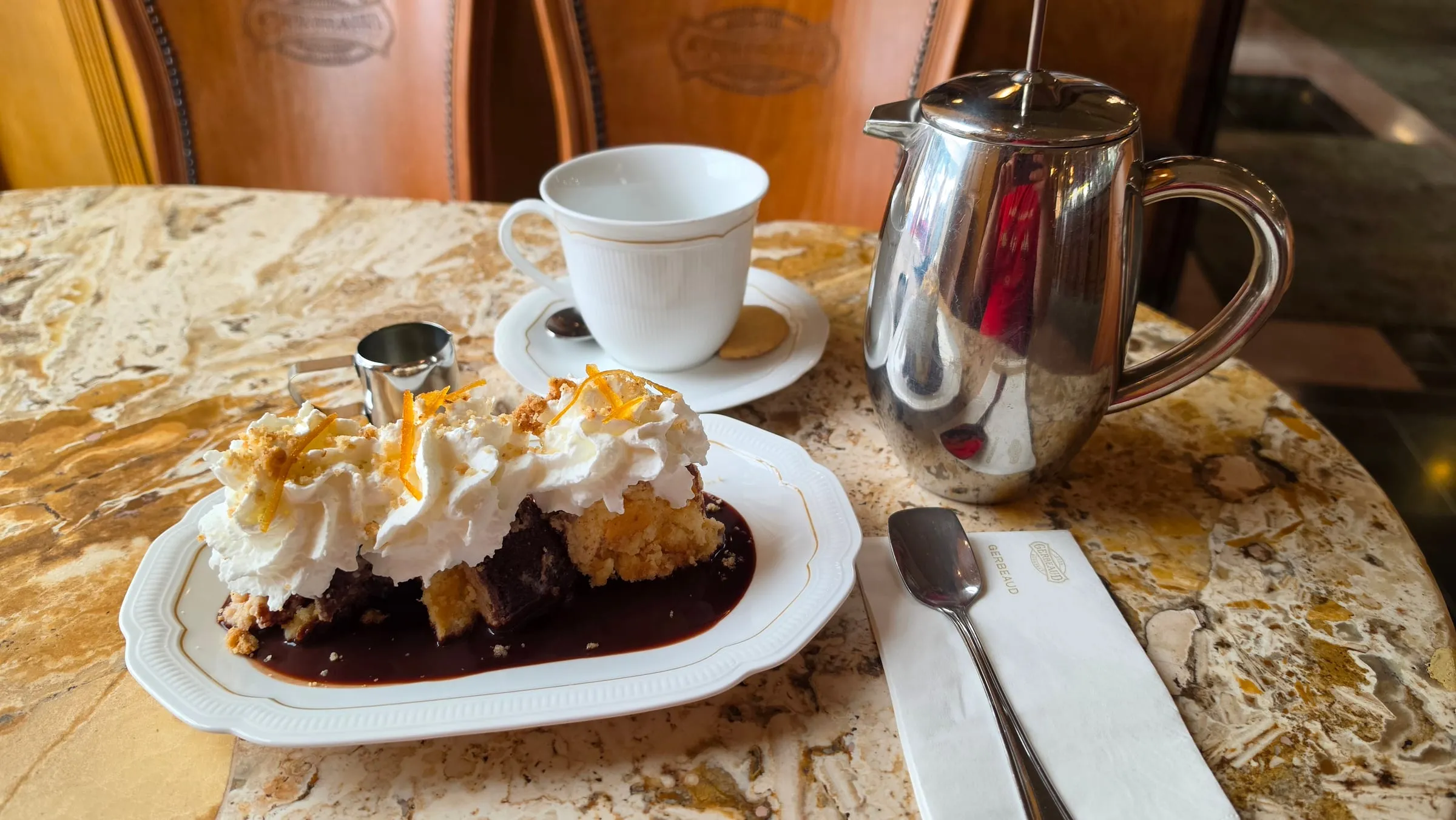
Somlói galuska at Café Gerbeaud, September 2026. The sponge cake is somewhere under all that cream.
Lángos. The name comes from láng, which means flame. It used to be baked from leftover bread dough at the mouth of a hot oven. Today it is deep-fried. The classic toppings are garlic, sour cream and cheese. I have been to Retro Lángos at least three times.
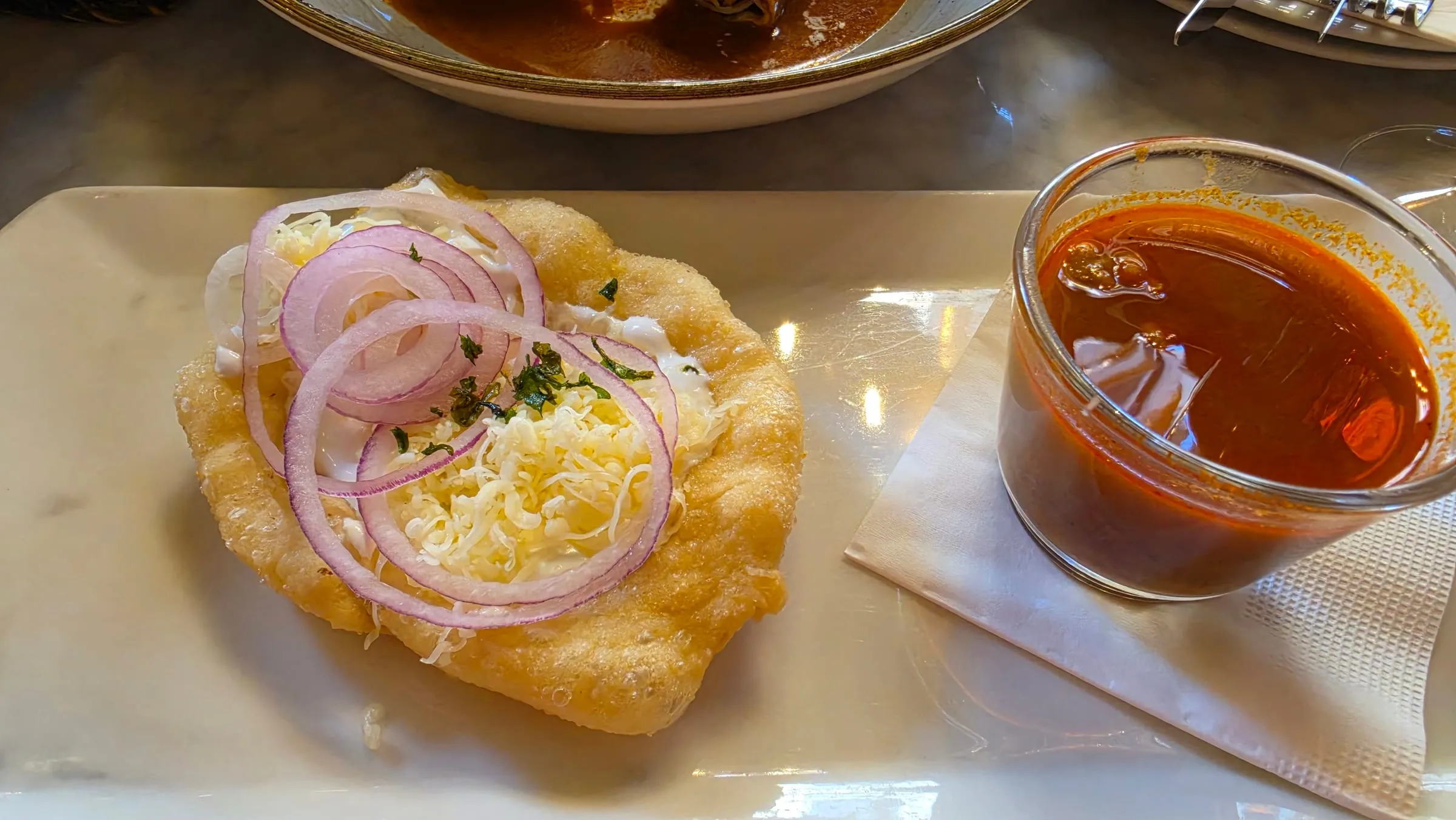
Lángos and goulash on one tray, September 2026. Two compulsory exercises at once and a new item on the menu at Centrál Kávéház. It is no coincidence that it is my favourite café in Pest.
Hortobágy pancake, hortobágyi palacsinta in Hungarian. A savoury pancake filled with stewed meat and covered in a paprika sauce with sour cream. It has nothing to do with the Hortobágy steppe, though. It was invented for the 1958 World’s Fair in Brussels, the very same one where somlói galuska won its award. Brussels 1958 was clearly a good vintage for Hungarian cuisine.
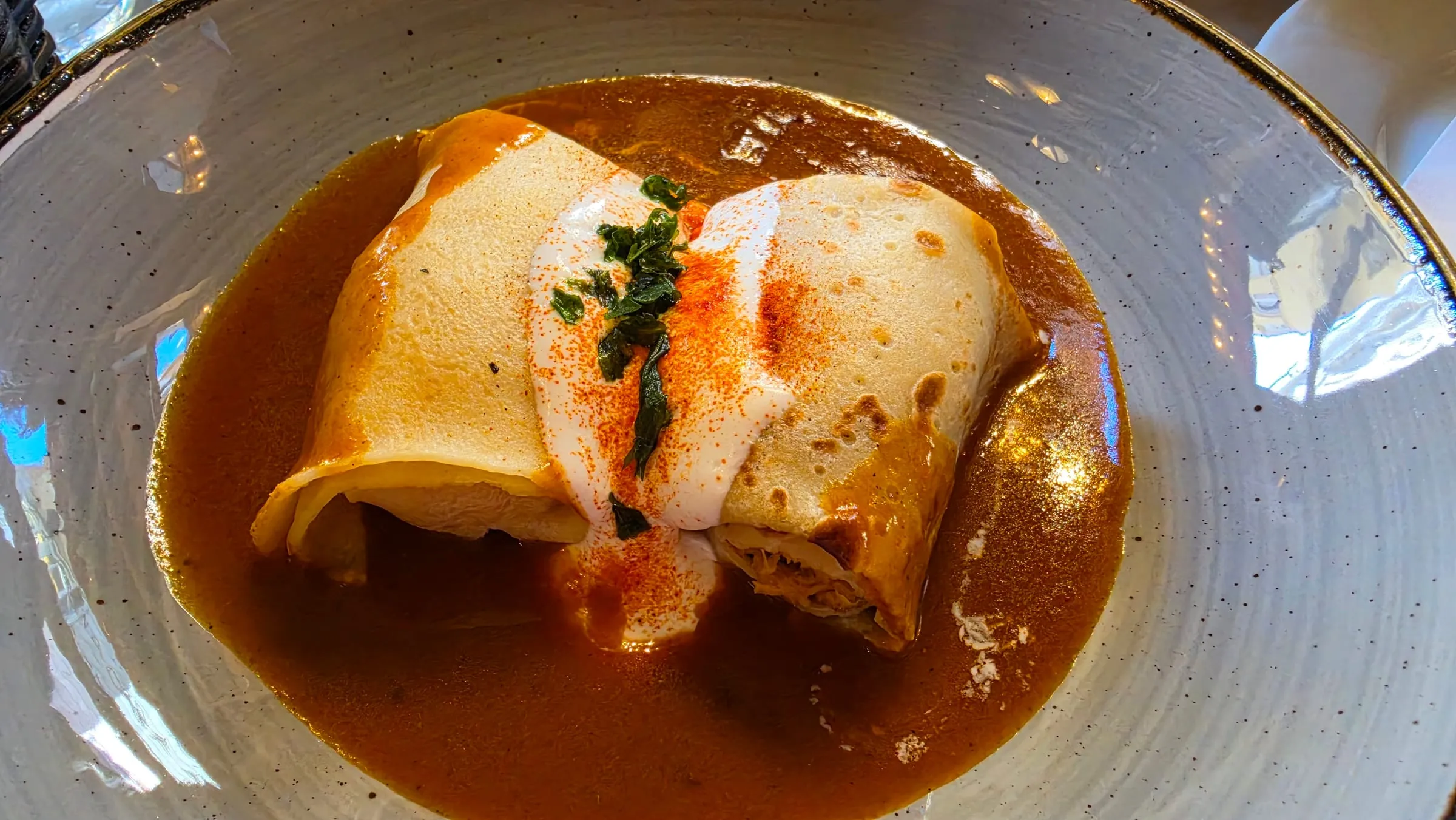
Hortobágy pancake, September 2026.
And the cakes. Legend has it that around 1900 Budapest had some five hundred coffee houses. There are fewer today, but the display cases are still full. The Dobos torte with its caramel top dates from 1885 and the Esterházy torte with its walnut layers from the end of the 19th century. In September 2026 I managed Centrál, Café Gerbeaud and Szamos Gourmet Ház in a single day. Not bad for someone who does not drink coffee.
Of the places I keep going back to — Regős Vendéglő, where in April 2025 I had a lunch menu for 2,800 forints. Alba Regia Vendéglő, where dinner with a colleague from the university came with quince pálinka, birspálinka in Hungarian. Hungarians take pálinka seriously — Hungarian law reserves the name for fruit spirit made from home-grown fruit, with no flavouring and no sweetening. Escobar for an Aperol or a prosecco. And Haxen Király was full in 2023. Book ahead.
VakVarjú
VakVarjú is a group of Budapest restaurants. The first one opened in Buda in 2008 and today the group runs seven venues. The name is a lesser-known word for kenyérlángos, a bread lángos. In my top 10 it holds spot number nine, which it inherited. The spot belonged to the Ruszwurm confectionery on Castle Hill, founded in 1827 and one of the oldest in the country. It has been closed since 6 August 2025 — after a fifteen-year dispute over the lease, the premises were taken over by the municipality of the first district. Its mayor hopes to see it reopen for its two-hundredth anniversary in 2027, but no new operator has been named yet. If that works out, VakVarjú will have competition.
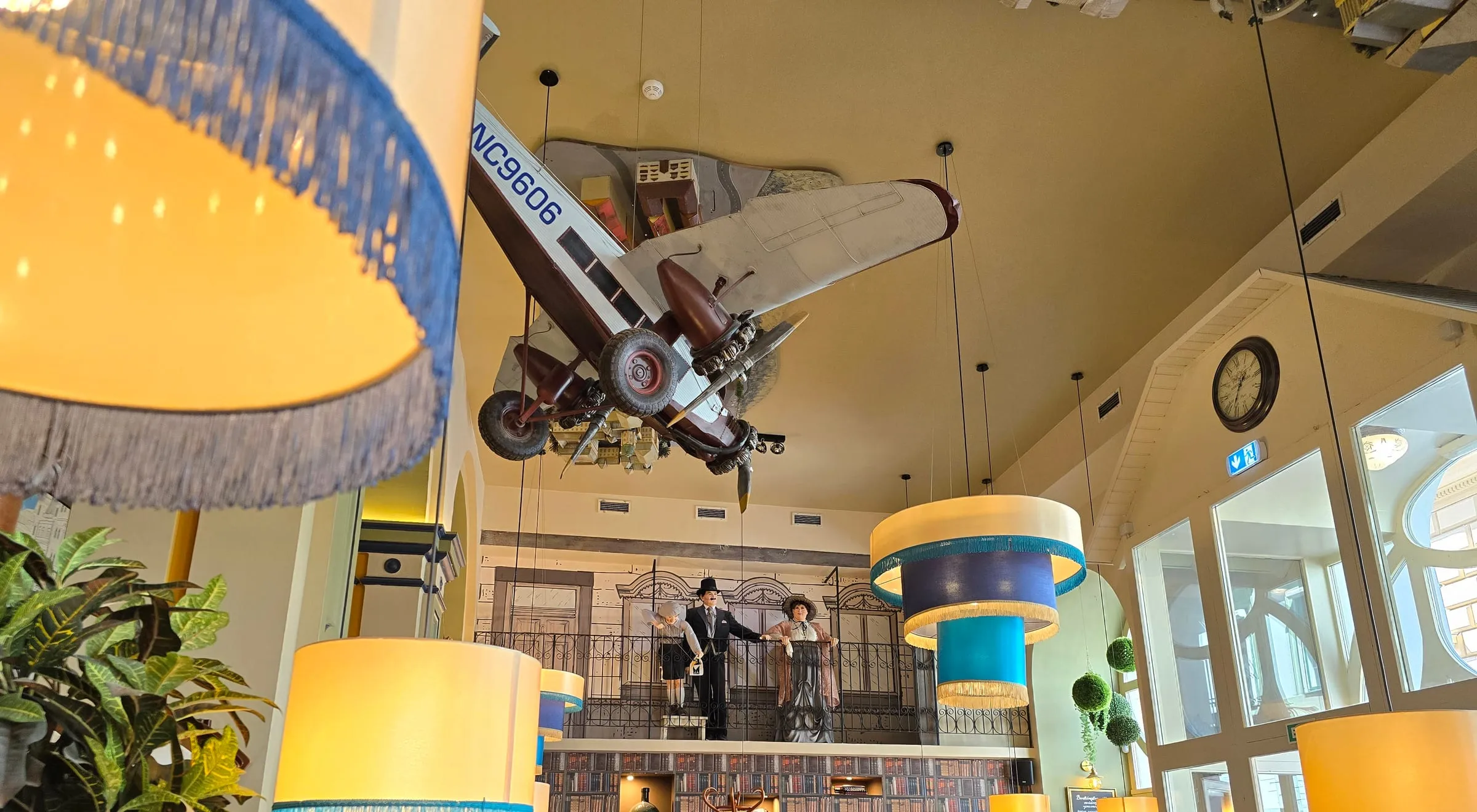
VakVarjú, May 2024. The plane under the ceiling is part of the décor, not of the menu.
What to bring home
Chocolate-covered plums from Stühmer. They are called Szilvás Betyár — a whole dried plum dipped in a wine-flavoured chocolate cream and coated in dark chocolate. The brand was founded in 1868 by Frigyes Stühmer, a confectioner from Hamburg, nationalised in 1948 and revived in 2006. Today it is made in Maklár near Eger. I found their shop in the Allee shopping centre, but every Spar stocks them too.
Marzipan from Szamos. Mátyás Szamos learnt to make marzipan roses in the early 1930s from a Danish confectioner and set up his own company in 1968. Szamos Gourmet Ház near Vörösmarty tér is a confectionery, a café and a chocolate workshop in one.
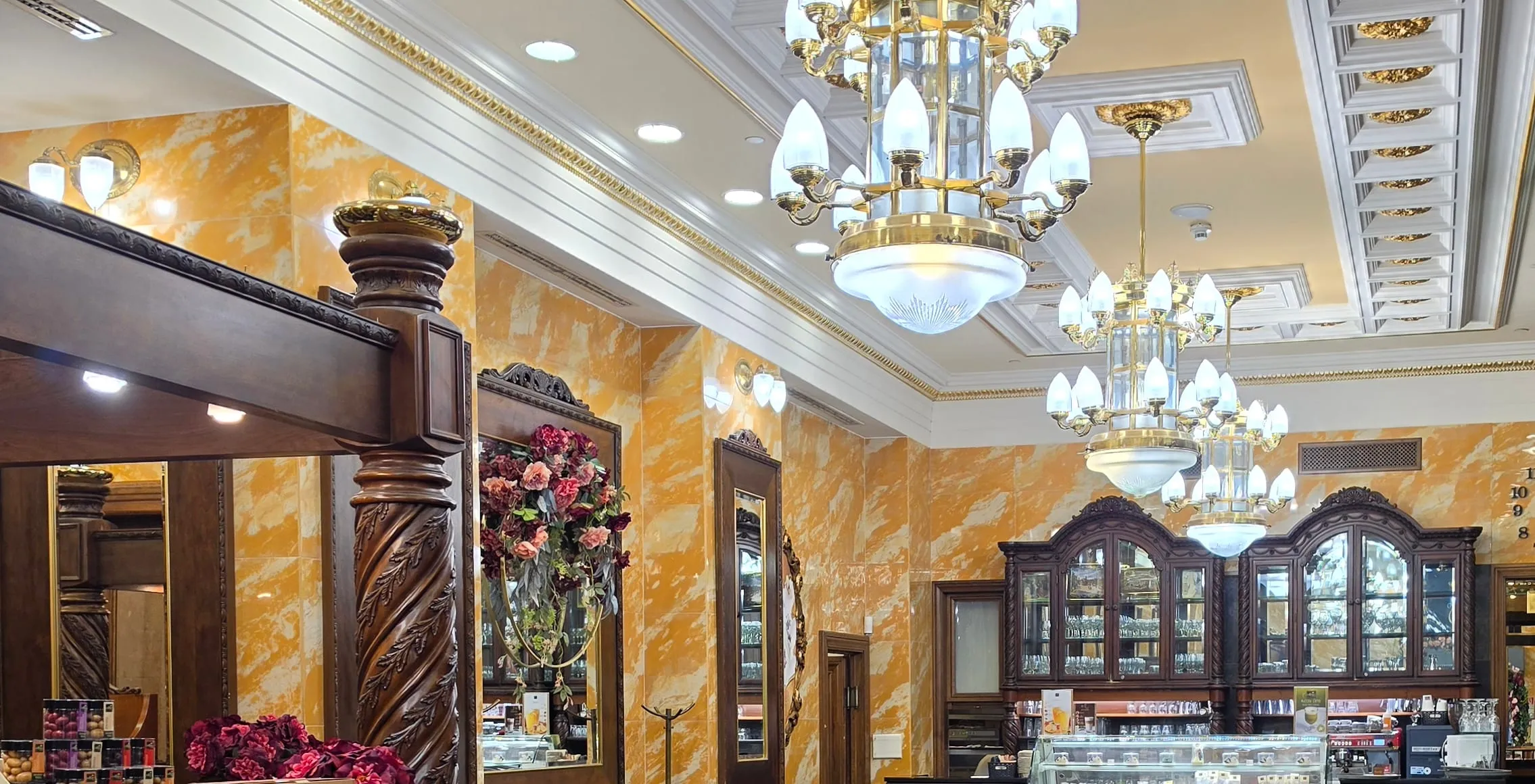
Szamos Gourmet Ház, September 2026. Marzipan is sold here in suitably grand surroundings.
Smoked ground paprika. Ground paprika from Szeged and from Kalocsa carries the European Union’s protected designation of origin. I admit that smoked paprika is no Hungarian classic. Traditionally paprika here is air-dried, and smoking it is more of a Spanish thing. Small producers make it all the same, and that is the one I bring home.
Pumpkin seed oil from the Great Market Hall. It is a must. Hungarian pumpkin seed oil from the Őrség region in the west of the country has had a protected geographical indication since 2021. It is dark green and tastes of nuts.
And Bacardi Breezer from an ordinary Spar. Do not ask :)
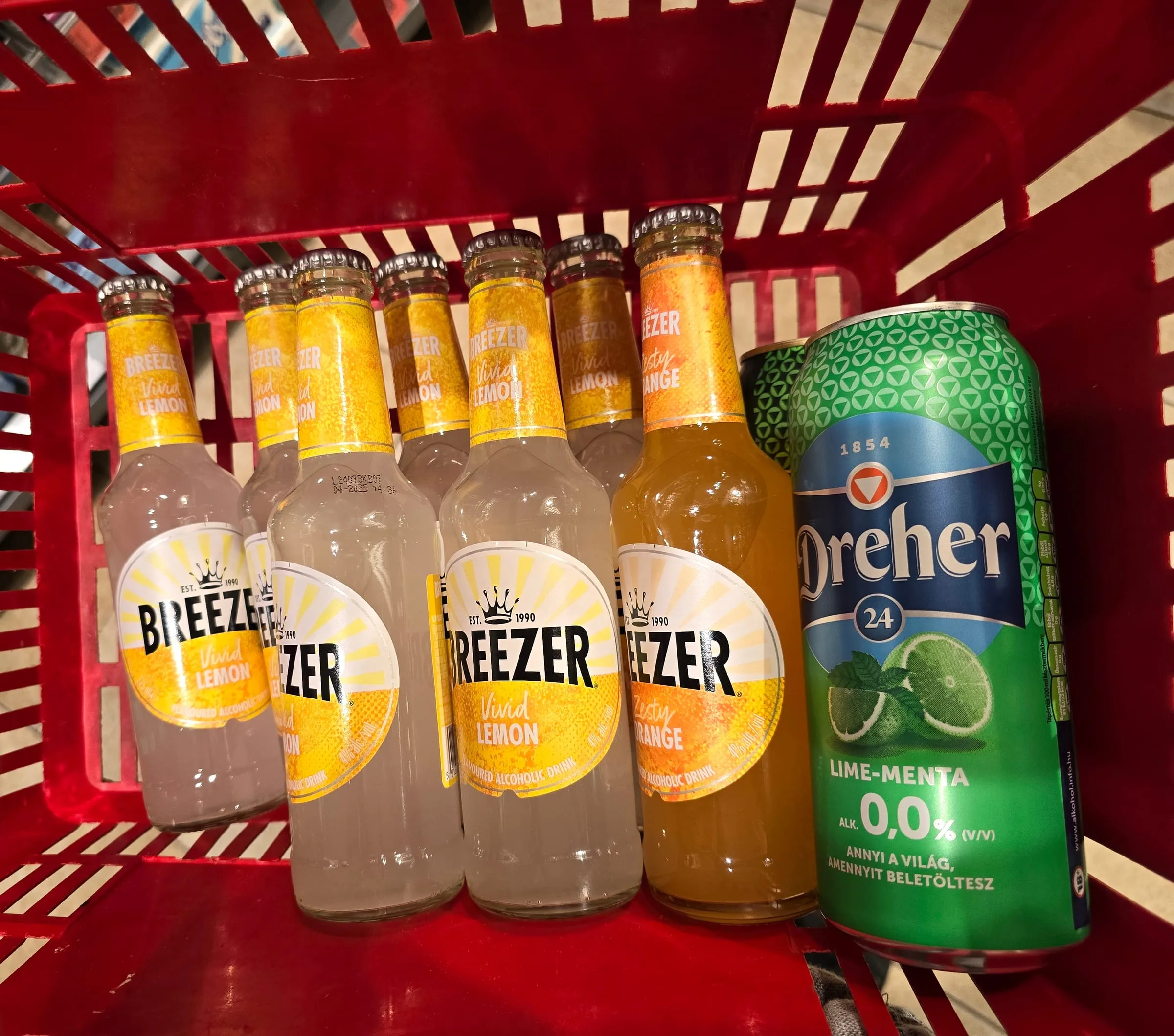
Exhibit A, May 2024.
Not seen yet
After eight working stays I have probably seen it all :) Should something new turn up in Budapest after all, it will be added here.
Updated: September 2026 — first published, summary of the 2022–2026 trips.